Some people deal with interpersonal conflict via fisticuffs, and others do so with art—George Harrison’s “Isn’t It A Pity” places the ex-Beatle firmly in the latter category. Harrison’s iconic track from his 1970 solo release, his first post-Beatles breakup, was his alternative to resorting to violence.
Although Harrison wrote the song years before the Fab Four split, under the shadow of their disunion, Harrison’s “Isn’t It A Pity” took on a whole new context. But through all of its various iterations over the years, the Quiet Beatle’s message of non-violent conflict resolution remained the same.
Videos by American Songwriter
The Inspiration Behind George Harrison’s “Isn’t It A Pity”
George Harrison’s first solo album after the Beatles’ infamously arduous breakup was bursting at the seams with creative inspiration—so much so that Harrison released the first two singles as double A-sides: “Isn’t It A Pity” and “My Sweet Lord.” Both singles quickly became two of Harrison’s most popular tracks that would hold their cultural status for decades to come.
In his 1980 memoir I Me Mine, Harrison explained that “Isn’t It A Pity” is about “whenever a relationship hits a down point—instead of whatever other people do (like breaking each other’s jaws), I wrote a song. It was a chance to realize that if I felt somebody had let me down, then there’s a good chance I was letting someone else down. We all tend to break each other’s hearts, taking and not giving back—isn’t it a pity.”
The lyrics to Harrison’s A-side aren’t particularly verbose, but they pack a big punch. Isn’t it a pity, now, isn’t it a shame how we break each other’s hearts and cause each other pain? He sings repeatedly throughout the song. How we take each other’s love without thinking anymore, forgetting to give back—isn’t it a pity? The song’s message was blatantly universal, and that’s precisely what Harrison set out to do when he first wrote the track.
How A Sidewalk Interview Helped Inform The Iconic Song
There are notable discrepancies as to when George Harrison first wrote “Isn’t It A Pity,” but video footage of the Quiet Beatle speaking with his bandmates in the Get Back sessions about the track proves that he completed it at least by 1969. Others claim Harrison had presented it to the group as early as 1966 while the band was compiling the tracklist for Revolver. In any case, the song never made it to an official Beatles album’s final cut.
In a 2001 interview with Billboard, Harrison reflected on what the track might have become had the Beatles not split up. “The songs on All Things Must Pass, maybe some of them I would probably only just got ‘round to do now, you know, with my quota,” he said with a laugh. “ “Isn’t It A Pity” would just have been a Beatles song, wouldn’t it? And now that could be said for each one of us. “Imagine” would have been a Beatles song, but it was with John’s songs. It just happened that the Beatles finished.”
Harrison went on to explain that part of the inspiration behind “Isn’t It A Pity” (besides finding a better conflict resolution tactic than breaking jaws) was from a sidewalk interview. “They were having all these surveys out on the street to find out what was a hit record. And apparently, as I was told, a hit record is something about ‘love gained or lost between 14- and 19-year-olds,’ or something really dumb like that. So, that’s why I wrote “Isn’t It A Pity.” I thought, ‘Oh, I’ll get in on that!’”
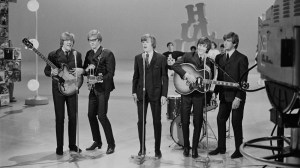
Photo by ITV/Shutterstock
More Behind The Song
-
DON GIBSON, Country Sänger, 70er. (Photo by kpa/United Archives via Getty Images) -
Photo by Hulton Archive/Getty Images -
THE TONIGHT SHOW WITH JAY LENO — — Pictured: Musician Trace Adkins performing on April 8, 1998 — (Photo by: Margaret Norton/NBCU Photo Bank/NBCUniversal via Getty Images via Getty Images) -
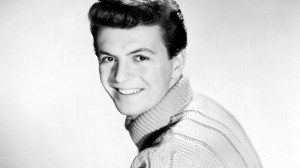
CIRCA 1960 Rock and Roll singer Dion DiMucci of "Dion And The Belmonts" poses for publicity photo after going solo circa 1960. (Photo by: Michael Ochs Archives/Getty Images) -

LONDON, UNITED KINGDOM – JANUARY 11: Debbie Harry of Blondie performs on stage at Hammersmith Odeon on January 11th, 1980 in London United Kingdom. (Photo by Pete Still/Redferns) -
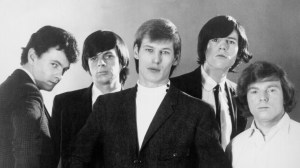
LONDON – 1965: Rock band "Them" featuring Van Morrison (right) and an ever changing line up of session musicians pose for a portrait in 1965 in London, England. (Photo by Michael Ochs Archives/Getty Images) -
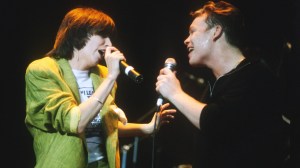
Pretenders, Chrissie Hynde and UB40, T/W, Torhout/Werchter, Belgium, 5th July 1986. (Photo by Goedefroit Music/Getty Images)