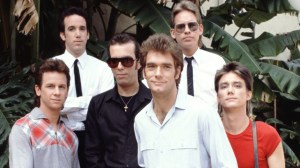
Before he was the “King of Country Music,” George Strait learned how to be country from a different ruler of the ranch—his father, John Byron Strait. The country star has long been open about his close relationship with his father and how John influenced his approach to life, work, and family.
Indeed, George Strait’s music has always felt authentic because it comes straight from a 2,000-acre ranch outside of Big Wells, Texas, where he, his older brother, and his father lived.
Videos by American Songwriter
How George Strait Learned How to Be Country
The National Cowboy and Western Heritage Museum awarded George “King of Country Music” Strait the Lifetime Achievement Award in 2021. When the time came to accept his award, the musician was sure to give credit where credit was due. “My dad, he’s, you know, the one that taught me the ways of the cowboy life,” Strait explained to the audience. “He was a cowboy.”
Strait described his father as growing up in a little South Texas town called Big Wells, which had a population of around 150 people. Strait’s grandmother was a teacher, his grandfather was a rancher, and his father grew up following both his parents’ occupations. John Byron Strait taught mathematics at a nearby junior high school and ran a cattle ranch on the weekends and over the summers. John raised George and his older brother, Buddy, as a single father after he and his boys’ mother divorced and moved away with her sister.
“That was a tough job for him as a single dad, but he did alright,” the musician said behind the podium. “All of the things that I learned from him—the ranch and what cowboys do and how they work, you know, there’s certain things you do. You do what needs to be done, you do stuff to improve your land, and you take care of it to take care of you—[these] were the things that he tried to teach me back then. I’ve still got a lot to learn, but I tried to take that Western heritage with me in my life and my career and pass it on to my family.”
The Country Star Had a Close Relationship With His Father
John Byron Strait’s influence on his son, George Strait, has stayed with the country singer throughout his entire life and career. When he was still a green signee to MCA Records, the future “King of Country Music” revealed that label executives tried to get him to get rid of his signature cowboy hat and change his name to Cain Cooper. As history would show, George refused to do either, something he and his father were both happy about as George’s career continued to grow.
When the time came to choose between being with his family and pursuing major career obligations, George easily chose the former. Just one day before George was to perform at the 2013 CMT Music Awards, John passed away on June 4. Although the Strait family didn’t release his official cause of death, a statement revealed that the former rancher and school teacher had been in the hospital for a month prior to his passing.
“We are grateful for the time over the last few weeks we were able to spend with Daddy before he passed away,” the singer said (via Taste of Country). “I want to thank everyone for their prayers and support during this difficult time as we mourn our family’s loss.”
Photo by Ray Garbo/Shutterstock
More Features
-
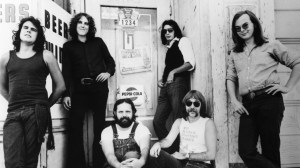
1972: (L-R) Jim Hodder, David Palmer, Denny Dias, Donald Fagen, Jeff "Skunk" Baxter and Walter Becker of the rock band "Steely Dan" pose for a portrait in 1972. (Photo by Michael Ochs Archives/Getty Images) -
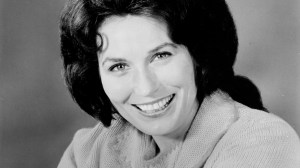
Photo by Michael Ochs Archives/Getty Images -

Kyu Sakamoto. (1941-1985) Japanese singer, best known outside Japan for his international hit song "Ue o Muite Aruko" (known as "Sukiyaki" in English-speaking markets), which was sung in Japanese and sold over 13 million copies. It reached number one in the United States Billboard Hot 100 in June 1963, making Sakamoto the first Asian recording artist to have a number one song on the chart. (Photo by Sjöberg Bildbyrå/ullstein bild via Getty Images) -
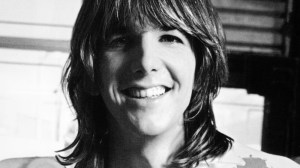
American singer, songwriter and musician Gram Parsons (1946 – 1973), circa 1969. (Photo by Silver Screen Collection/Getty Images) -

NASHVILLE, TENNESSEE – Jo Dee Messina performs during the 2026 CMA Fest at Nissan Stadium on June 05, 2026 in Nashville, Tennessee. (Photo by Taylor Hill/FilmMagic) -
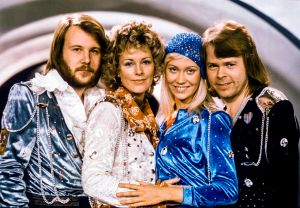
Picture taken in 1974 in Stockholm shows the Swedish pop group Abba with its members (L-R) Benny Andersson, Anni-Frid Lyngstad, Agnetha Faltskog and Bjorn Ulvaeus posing after winning the Swedish branch of the Eurovision Song Contest with their song "Waterloo". – Sweden's legendary disco group ABBA announced on April 27, 2018 that they have reunited to record two new songs, 35 years after their last single. The quartet split up in 1982 after dominating the disco scene for more than a decade with hits like "Waterloo", "Dancing Queen", "Mamma Mia" and "Super Trouper". (Photo by Olle LINDEBORG / TT News Agency / AFP) / Sweden OUT (Photo credit should read OLLE LINDEBORG/AFP via Getty Images)