Before music became a commercial behemoth, it was folk art shared between people. Indeed, before it was packaged in records and CDs, music was almost like a rumor, shared and spread via the oral tradition.
Here below, we wanted to dive into three folk songs from back in the day that remind us of that simpler, bygone time. These are three folk songs from the 1950s you forgot were essential listening.
Videos by American Songwriter
“Where Have All The Flowers Gone?” by Pete Seeger (Single, 1955)
When it comes to folk music of the past, there is no name bigger and more important than Pete Seeger. The songwriter and performer helped to spread the good word of folk music for decades, recording and sharing traditional songs as well as ones he wrote. The result was a walking, talking (er, singing) library of music. Indeed, Seeger’s career touched so many after him, including a young Bob Dylan, whom Seeger helped mentor in the 1960s. But in the 1950s, he was writing and singing songs that would go on to become timeless, like the anti-war tune, “Where Have All The Flowers Gone?”.
“Sixteen Tons” by Tennessee Ernie Ford from ‘Ford Favorites’ (1955)
Folk songs are supposed to entertain their audiences, but they are also supposed to teach something, too. They are supposed to shed light on the human experience in a way that feels both essential and timeless. Enter: “Sixteen Tons” by Tennessee Ernie Ford. The track is about hard work—labor. Just hearing it can make your back feel weak with work. But that’s why we love it. In that same way, the song offers empathy and commiseration. It’s a way for working people to feel whole, unified. That’s a beautiful thing.
“On Top Of Old Smoky” by The Weavers (Single, 1951)
Folk music of a certain era often boasts a connection to gospel music. For centuries, the music of the people was the music of the church. That’s why when you listen to a 1951 song like “On Top Of Old Smoky” by The Weavers, you can practically hear a gospel choir in the background. Indeed, folk music was meant to uplift, meant to inspire hope in the people. So, it’s no wonder spirituality was a part of that endeavor.
Photo by Brian Shuel/Redferns
More The List
-
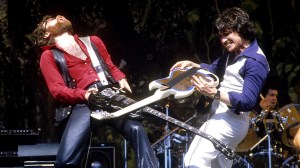
OAKLAND, CA – SEPTEMBER 2: Joe Bouchard and Buck Drama playing with 'Blue Oyster Cult' performing at Oakland Coliseum in Oakland, California on June 6, 1981. (Photo by Larry Hulst/Michael Ochs Archives/Getty Images) -
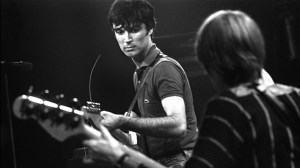
NEW YORK – 1977: David Byrne and Tina Weymouth of The Talking Heads perform live at GBGB in 1977 in New York City, New York. (Photo by Stephanie Chernikowski/Michael Ochs Archive/Getty Images) -
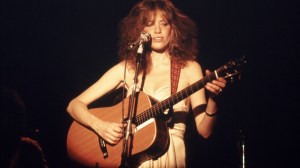
Photo by Richard E. Aaron/Redferns -
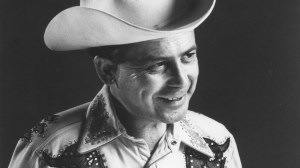
UNSPECIFIED – CIRCA 1970: Photo of Little Jimmy Dickens Photo by Michael Ochs Archives/Getty Images -
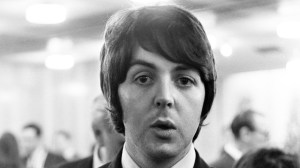
Paul McCartney of The Beatles, at press conference to announce Leicester University's art festival, held at the Royal Garden Hotel, London, 5th February 1968. (Photo by Blandford/Mirrorpix/Getty Images) -
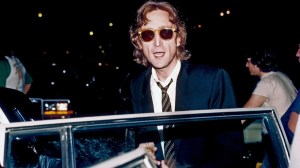
NEW YORK – AUGUST 1980: Former Beatle John Lennon arrives at the Times Square recording studio 'The Hit Factory' before a recording session of his final album 'Double Fanasy' in August 1980 in New York City, New York. (Photo by Vinnie Zuffante/Getty Images) -
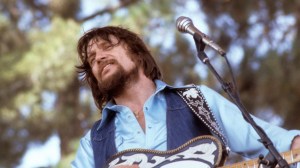
Waylon Jennings, who had a major hit with a Ray Pennington song -
Photo by Jeff Hochberg/Getty Images