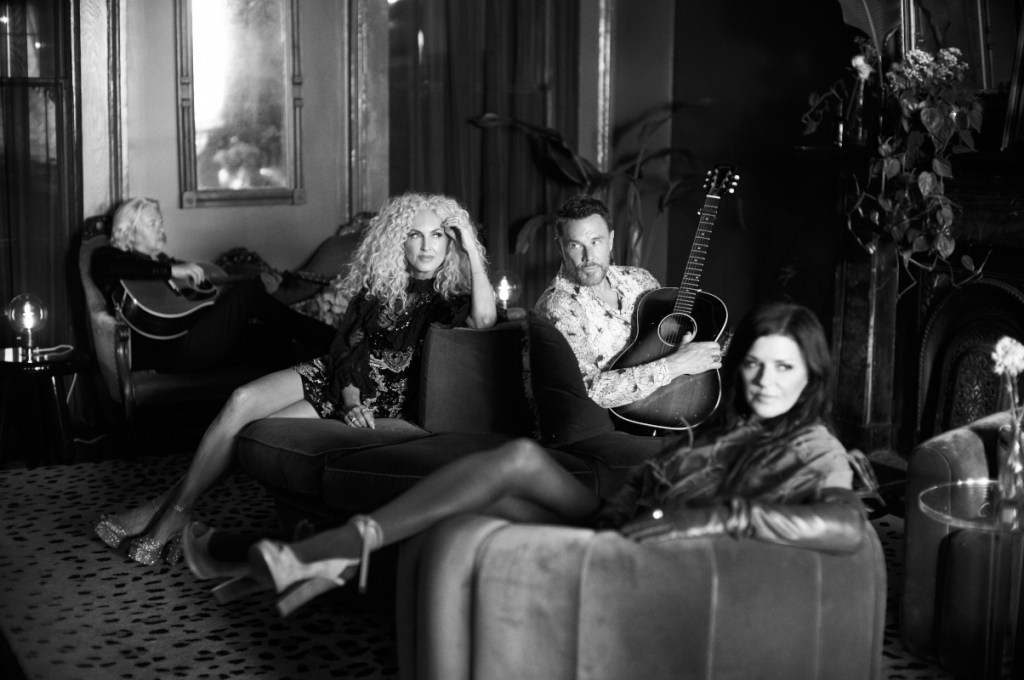
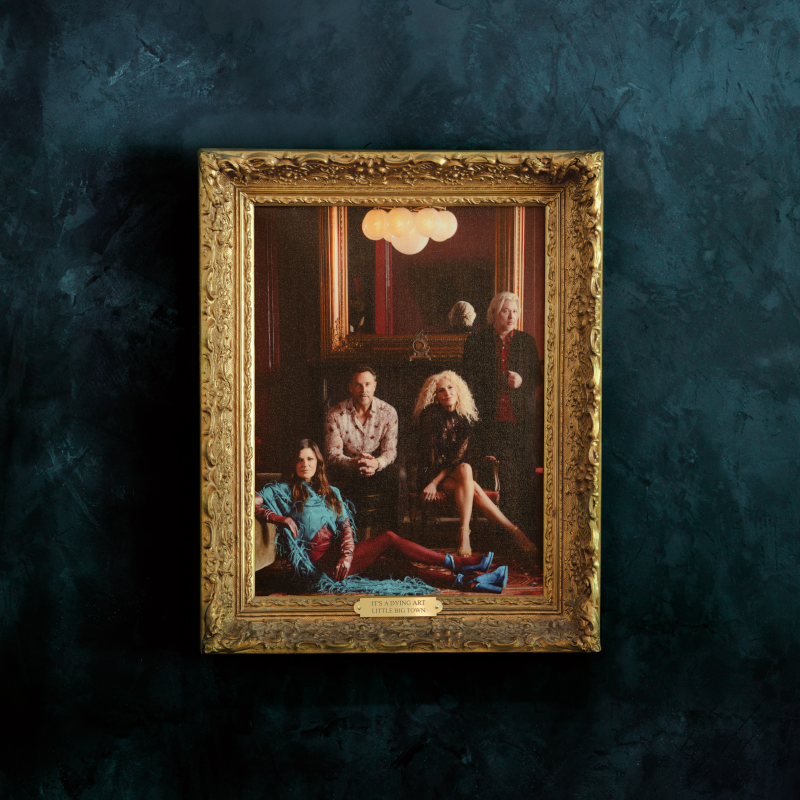
It’s been 24 years since Little Big Town—Karen Fairchild, Kimberly Schlapman, Jimi Westbrook, and Phillip Sweet—released their self-titled debut album in 2002, and the fabulous foursome, who have recorded 11 studio albums and boast more than 25 Hot Country hits and countless award wins, are not resting on their laurels. On August 28, the group released their 12th studio album, It’s a Dying Art.
Co-produced by Gena Johnson (Dolly Parton, Brandi Carlile) and Fairchild, the record combines the group’s signature harmonies with visionary songwriting while embracing raw imperfection and lived-in performance.
Videos by American Songwriter
“[The album] is a timestamp of the moment we’re in right now,” Sweet tells American Songwriter. “For me, it takes everything that we’ve experienced into a new place, a new expansion, a new evolution—refined, but also in ways raw and more real than ever before.”
Tracks that feature outside voices—Kelsea Ballerini (“Closing Time”), Ashley Monroe (“Sucker for a Sad Song”) and Jason Isbell (“The Door”)—add depth and new perspective without pulling away from the band’s core sound.
[RELATED: Little Big Town Debuts Brand New Song at 2026 ACM Awards}
Little Big Town sat down with American Songwriter to discuss It’s a Dying Art, being together for 25+ years, and their favorite tracks.
American Songwriter: If 1999 Little Big Town were to walk into the room today and see you guys, what would surprise them the most?
Karen Fairchild: How much we’ve accomplished
Jimi Westbrook: Yeah. Y’all are still around?
KF: And how much better our hair is. Our hair and our clothes.
JW: They’re like, “What? We did it that long
KF: I think they would be so proud of all the things that we were able to accomplish. Things that we couldn’t have, we wanted to dream about them and we did, because if you don’t believe, you’re not going to get there. But when you get to do things like record a song with Barry Gibb, or Lionel Richie, or sing on stage with Dolly Parton, you want to believe it, but you just can’t imagine it.
Kimberly Schlapman: I think they would also be so excited about… I mean, we were already excited way back then, but also extremely naive. But then if we realized back then that 26 years later we’d be here, I think that we would be super excited.
Phillip Sweet: They would be impressed with the fashion upgrades.
AS: What advice would you give to them now knowing what you know today?
PS: Don’t eat as much sugar.
KF: Don’t let people talk you into things that you don’t ring true with. Just because people have more expertise than you do, don’t let them talk you into something that you just feel innately in your gut doesn’t feel right. “No” is a powerful word. But we learned that lesson pretty fast.
JW: Really early.
AS: So, talk about what we’re going to hear on this new album, It’s a Dying Art.
PS: It’s a timestamp of the moment we’re in right now. For me, it takes everything that we’ve experienced into a new place, a new expansion, a new evolution—refined, but also in ways raw and more real than ever before.
KF: Yeah. It dissects some difficult moments in relationships. And then it also gives a lot of hope and, hopefully, joy for the things that matter the most. That kind of ebbs and flows through the record. “Dying Art” is a song about love that can endure when you stick it out. But it’s also a theme that pours through the record about holding on to making art, holding on to what we can do with our voices and instruments and what we can do in a room.
And in this artificial age of intelligence, you still can’t replace the humanity that happens when harmonies are sung imperfectly. Flat, sharp. That is the beauty of why the harmony buzzes and feels like it has life in it. When you take that out, it’s very vanilla and stale. So this record especially, Gena [Johnson] (producer), is so good at getting very intimate. You can hear the throat. Feel like you’re in the room. And that was really important.
AS: Do you think, listening to this album, that it’s so different than what you’ve done before? It’s great, but it’s not what people are probably going to expect from you guys.
JW: I feel like my take on stepping back from it was that it felt like there are familiar types of things that we’ve done before that are us. Those are the things we’re drawn to. So I feel like those things are there, but just with a kind of refreshed sonic picture. With Gena, the way, the sound, the vocals she gets, are in your face; the instruments are in your face. There’s not a ton of layering of instruments. It’s more sparse, but in your face, which I love. I’ll say we’ve never heard our vocals sound like this before on the record, for sure.
KF: Yeah, they definitely stand out. But just the sound of it, I wouldn’t say it sounds country. I would give it like a Santana kind of vibe-ish, if you will. We don’t like doing the same thing over and over again.
JW: And that was what was fun about this was that it did feel like a different thing. It was inspiring.
AS: “Hey There Sunshine” was the first release. Why did you want that to represent the album?
KF: Well, the world needs “Hey There Sunshine.” And in what feels like very divisive times, we felt like that was an important thing to say, to give people that push to get up and live their life again when they’ve been in a dark spot. I think that has always been something that we’re passionate about as a band: hopefully giving someone that nudge to get up and dream, dream your dreams, get up, live your life. We did get so many sweet comments.
A friend said that his mom had lost her husband and then fallen in love again, and then he passed away, just in a dark spot. And he sent her that song, and he said, “This is your sign, Mom. You have to get outside and live.”
KS: That song is special, and it’s healing. I think all in all, the reason that song was first was because that message was so important. Probably the most important message on the whole record is that. And so that’s why we chose it first. We didn’t know that the title was going to be It’s a Dying Art when we decided to cut “Dying Art,” the song. It just kind of evolved into that as we were maybe halfway through the record.
AS: Talk about creating the album and what that process was like.
KF: It started just coming together. We were kind of tired. I mean, creatively tired after the 25th, and we added a couple of songs.
Then we made the Christmas record with Dave Cobb, and we had always wanted to make a Christmas record. And then we toured those records. I think when we got to December, we were all like, “Oh my gosh, I’m so tired.” And we took a little bit; we never really take breaks. We’re always working, but we were just writing and doing other creative things, and still singing at shows and stuff. And then when we started playing songs for each other, we realized we had a really great group of songs to begin with. So it was just a conversation of who’s going to produce? I don’t know. We don’t know. And I don’t know.
We’re getting older and stubborn. But I think we kind of know what we want to do, and we do love having a collaborator or a producer. Gena was the perfect fit. I had done a little bit of recording. Well, a lot of recording with her on the Shelby Lynn record. I knew they would love her. I just knew Gena’s nurturing joy when she listens to music. She’s joyful about it. And so we were like, “Well, let’s ask Gena to engineer and mix. And then if it turns into more, we’ll ask her to produce. Let’s just make music and see what happens.” And that’s kind of how it happened.
AS: Kimberly sings lead on the song “Jet Plane.” Jimi, you wrote that song; can you share the story behind it?
JW: That was just one of those days where I was hanging out with those guys (Joe Ginsberg and Ashley Ray), and we just had fun, and it’s really chill. And if we get a song, we get one. If not, whatever. But just hanging out, and we had actually started writing another idea, but Joe kind of started playing. I was like, “Oh man, that feels so classic and good.” And Ashley started singing a little bit of melody, and the song just kind of fell out pretty fast.
AS: So how did you (Kimberly) decide that you wanted to sing lead on this one?
KS: I forced them to let me. I said the only way we’re doing this is if I’m going to sing with you (laughs).
KF: No, her voice is perfect for that.
JW: It’s so great.
KS: I love it. I love the song.
AS: What about “The Idea”? You didn’t write that song, but what drew you to it?
KF: It was written by Liz Rose of The Love Junkies, Tofer Brown, and Lauren Hungate. So the three of them together- I wasn’t surprised, but Tofer knows exactly when to get me because we’re all so close to him. And he’s like, “How’s the recording going?” I said, “It’s going really, really well.” He said, “I can’t wait to hear it. Can I play you one thing?” He goes, “One or two things?” I said, “Yes, of course, please.” And so he sent them to me, and I don’t know. I just got to the, You don’t love me; you just love the idea part. I said, “Can I have ‘The Idea’?” And he was like, “Well, yes, that’s why I played it.” That was a gift.
AS: Do you guys have a favorite song on this album?
KF: I really love “Over and Over.”
PS: It changes day to day. I’m excited to play “Coming Around.” Just because that kind of, for me, brought us back to the roots of Little Big Town and that stomp, that four on the floor.
KS: I don’t know what my favorite song is. Favorite, favorite. But the one I’m most excited about people hearing is “The Idea.”
AS: After listening to this album, what’s the message you want the audience to take away with them from the album?
JW: I hope some hope. And good vibes.
PS: Don’t give up too soon.
KS: Yeah. Unity. Come together.
KF: Yeah. And don’t forget about the things that our parents and grandparents did, like writing letters and baking cakes and quilting and all those things that kids are coming back to now.
Tracklist: It’s a Dying Art
1. Intro
2. Sucker For A Sad Song (with Ashley Monroe)
3. The Door (with Jason Isbell)
4. Dying Art
5. Hey There Sunshine
6. Over And Over
7. The Idea
8. We Could Have It All
9. Crickets
10. Closing Time (with Kelsea Ballerini)
11. Long Way To Your Heart
12. It’s Coming Around
13. Jet Plane
Photos by Becky Fluke
More Features
-
Photo by Gijsbert Hanekroot/Redferns -
American rock & roll band the Bobby Fuller Four, circa 1966. From left to right, they are singer Bobby Fuller, bass player Randy Fuller, guitarist Jim Reese and drummer Dalton Powell. (Photo by Don Paulsen/Michael Ochs Archives/Getty Images) -
LOS ANGELES, CALIFORNIA – JUNE 14: Ringo Starr performs onstage with his All Starr Band at The Greek Theatre on June 14, 2026 in Los Angeles, California. (Photo by Kevin Winter/Getty Images) -

Faith Hill on 11/2/00 in Chicago, Il. (Photo by Paul Natkin/WireImage) -
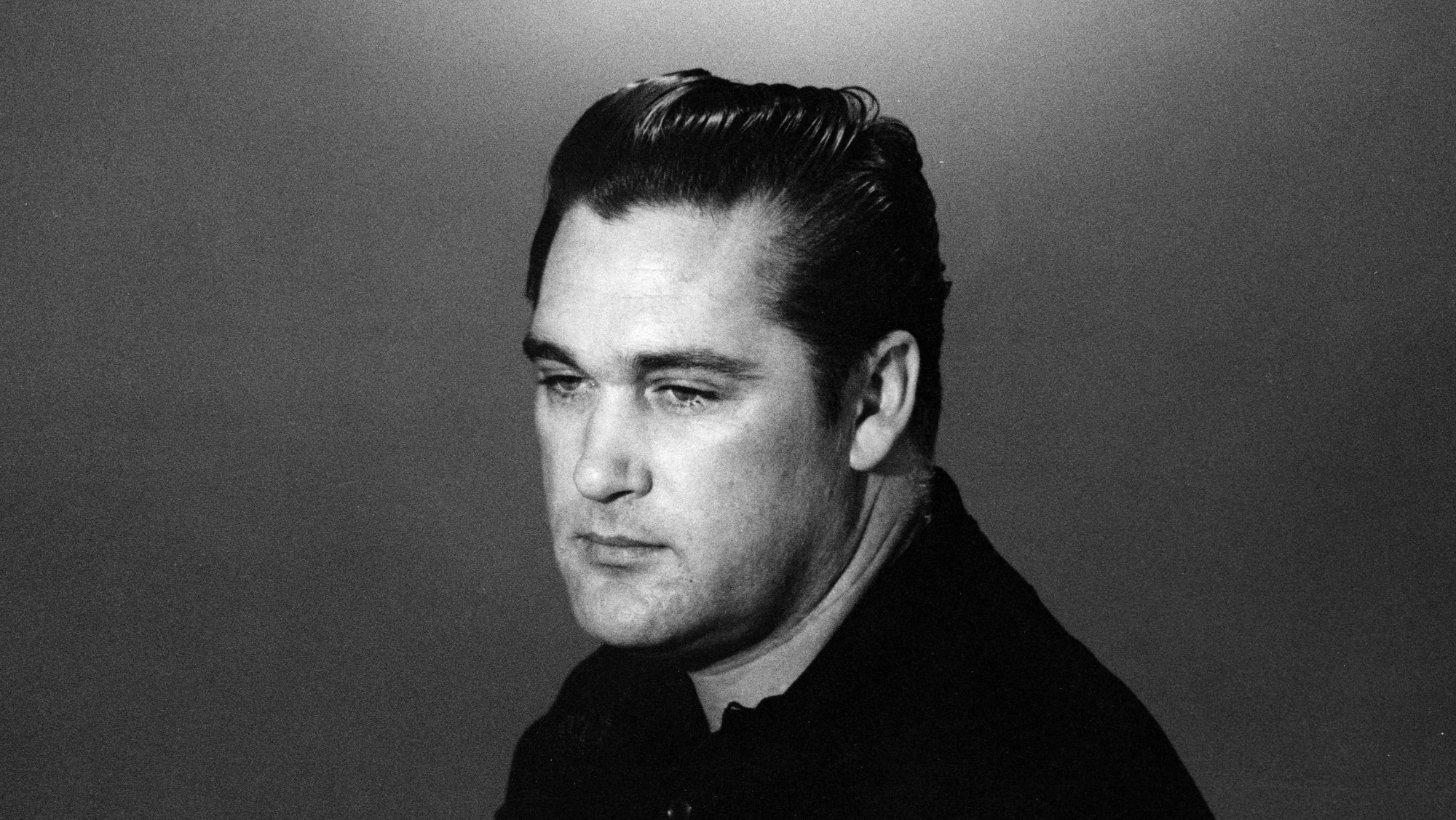
Charlie Rich, who released several hit songs featuring Pete Drake on steel