When you lead a long-running band and face defections in your lineup, you have a decision to make. Do you close up shop, disappointing fans who want to hear your music? Or do you plod ahead with new members, in which case you might disappoint folks anyway?
Mick Fleetwood chose the latter path when Fleetwood Mac made the 1995 album Time. On this record, several new members tried to coalesce on the fly. If nothing else, it paved the way for the reunion of the most beloved lineup of the group a few years later.
Videos by American Songwriter
Don’t Stop
The breakdown of the most successful version of Fleetwood Mac, the one that made the groundbreaking Rumours album and released a series of hit albums in the 70s and 80s, began when Lindsey Buckingham left following the making of Tango In The Night in 1987. Replacement guitarists Billy Burnette and Rick Vito joined for Behind The Mask in 1990.
A year later, Stevie Nicks, miffed at Mick Fleetwood due to a dispute concerning the use of one of her songs, also skedaddled. Vito and Burnette, also sensing that the band was headed for a period of inactivity, left the band. And Christine McVie insisted that she’d only record in the future, but she’d no longer tour.
In 1993, the classic lineup came together to play at President Bill Clinton’s inauguration. Although it didn’t spark a reunion, it did put the Fleetwood Mac brand in the spotlight again. Fleetwood decided that was the perfect time to try to fill in the gaps left by the departures.
Veterans and Newcomers
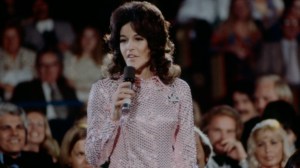
To replace Nicks, he hired Bekka Bramlett. She had sung with a Fleetwood side project band, and she brought name recognition as the daughter of rock legends Delaney and Bonnie Bramlett. Her bluesy vocals were a bit of a new feel for the band.
Finding a lead guitarist proved a bit more difficult. When Fleetwood mentioned his struggles in this department to his friend Dave Mason, Mason offered himself up for the job. The rock legend, famous for his work in Traffic and as a solo act, was eventually joined on guitar by Billy Burnette, who returned to the band for live shows in 1994 and 1995.
The sessions for the album Time tested the solidarity of his outfit. Christine McVie mostly steered clear of the new members of the band for her songs, instead bringing in her own players. She and Bramlett also struggled to get along with Mason. Still, the album arrived in October 1985. And it largely sank without a trace.
About ‘Time’
Perhaps the most honest assessment of Time came from Mick Fleetwood himself in his 2014 memoir Play On:
“There were too many essential pieces missing from the machine this time,” he explained. “We were a totally different band, with only the original drummer and bass player, and our original name.”
It didn’t help that the Mac’s record company mostly ditched their promotional duties on Time, perhaps hoping that the record’s failure might spur a proper reunion. And that’s just what happened. Buckingham and Nicks both returned for the 1997 live album The Dance and a subsequent tour to promote it.
Burnette, Bramlett, and Mason all either quit or were sent packing. Time remains a fascinating document of an attempt to form a Fleetwood Mac supergroup, one that turned out to be less than the sum of its parts.
(Photo by Donna Santisi/Redferns)
More Features
-
Photo by Michael Ochs Archives/Getty Images -
UNITED STATES – JANUARY 01: Photo of Nick GILDER (Photo by Richard E. Aaron/Redferns) -
Madonna, who had one of the biggest hit songs of 1985 -
Temptations 050 MichaelOchsArchives.com -
LOS ANGELES, CALIFORNIA – Natalie Maines of The Chicks at The Chicks concert held at Yaamava' Theater on June 12, 2026 in Los Angeles, California. (Photo by Katie Flores/Billboard via Getty Images) -
Bruce Springsteen