It was the late 1960s, and the whole world was in the throes of Beatlemania. The Fab Four were practically invincible by the May 1967 release of their seminal concept album Sgt. Pepper’s Lonely Hearts Club Band. Arguably one of the most influential musical works of all time, the LP spent 15 straight weeks atop the all-genre Billboard 200. But on this day (October 18) in 1967, a Mississippi-born singer-songwriter named Bobbie Gentry pulled off the unthinkable when her debut album, Ode to Billie Joe, knocked the Beatles from the coveted number-one spot.
Bobbie Gentry’s Accidental Stardom
Despite performing regularly with her mother in the mid-1960s, Bobbie Gentry wanted no part of the spotlight. Her main ambition was to write songs and sell them to other artists.
Videos by American Songwriter
But when she decided to pitch a track she’d written called “Ode to Billie Joe” to Capitol Records, Gentry sang on the demo herself to save money.
She brought that one, along with “Mississippi Delta,” to Capitol Records, which officially signed her on June 23, 1967. Wasting no time, the label released “Ode to Billie Joe” the following month.
Within five weeks, the song had climbed to number one on the Billboard Hot 100. After six weeks, “Ode to Billie Joe” had officially sold more than one million copies.
It also cracked the top 10 in several other countries, including Ireland, Australia, and New Zealand.
Wanting to capitalize on the success of “Ode to Billie Joe”, Capitol Records hastily assembled a full-length album from a selection of demos for which Gentry had already recorded guitar and vocal tracks.
Released on August 21, 1967, Ode to Billie Joe blended blues, folk and jazz music, featuring Gentry’s recollections of her rural Mississippi upbringing on tracks like “Chickasaw County Child” and “Papa, Won’t You Take Me to Town with You”.
“Bobbie Lee Gentry, in her cameos of American life, is adding a durable new dimension to our contemporary folklore,” wrote music critic Leonard Feather in a Los Angeles Times review.
Behind the Enigmatic Title Track
“Ode to Billie Joe” is a sparse, half-spoken recounting of the suicide of Billie Joe McAllister, a local boy without “a lick of sense” who recently jumped to his death from the Tallahatchie Bridge.
Bobbie Gentry’s Southern Gothic tale drifts along like a sultry summer night in the Deep South. That night is practically humming with secrets: And wasn’t I talkin’ to him after church last Sunday night? / I’ll have another piece-a apple pie; you know, it don’t seem right / I saw him at the sawmill yesterday on Choctaw Ridge / And now ya tell me Billie Joe’s jumped off the Tallahatchie Bridge.
To this day, “Ode to Billie Joe” ignites a firestorm of speculation. Who was Billie Joe? Why did he jump? And what did he and his girlfriend hurl from the bridge into the murky waters of the Tallahatchie River below?
For her part, Gentry has refused to clear up any confusion.
“People have found a lot more significance in that than I intended,” she told the Los Angeles Times. “You have to establish some motivation. What happened the day before on the bridge was the motivation, but I left it open, so the listener could draw his own conclusion.”
Through the early 1980s, Bobbie Gentry collected multiple Grammy Awards and landed 11 singles on the U.S. pop chart. She retired from music after attending the Academy of Country Music Awards ceremony on April 30, 1982.
Much like Billie Joe, no one quite knows what happened to Bobbie Gentry after that. But the folk-blues trailblazer’s legacy still looks large all these decades later.
Featured image by David Redfern/Redferns
-
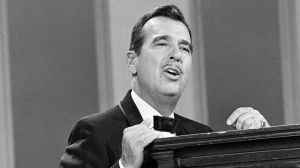
THE DEAN MARTIN SHOW — Episode 15 — Pictured: Tennessee Ernie Ford — (Photo By: NBC) via Getty Images) -
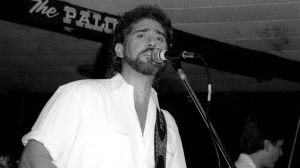
UNSPECIFIED – CIRCA 1970: Photo of Earl Thomas Conley Photo by Michael Ochs Archives/Getty Images -
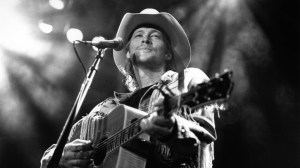
UNITED STATES – JANUARY 01: NASHVILLE Photo of Alan JACKSON, Alan Jackson performing on stage (Photo by Beth Gwinn/Redferns) -
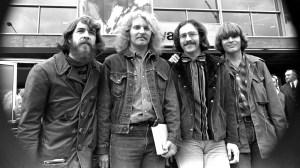
Creedence Clearwater Revival -

NASHVILLE, TN – Musician Jim Ed Norman speaks onstage during the GMA Honors Celebration and Hall of Fame Induction at the Allen Arena at Lipscomb University on April 29, 2014 in Nashville, Tennessee. (Photo by Rick Diamond/Getty Images for GMA) -
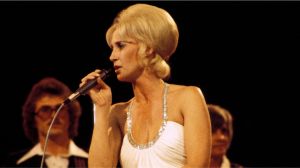
UNITED KINGDOM – WEMBLEY EMPIRE POOL Photo of Tammy WYNETTE, performing live onstage at the Country Music Festival (Photo by Andrew Putler/Redferns)