On this day (August 31) in 1973, Jeanne Pruett was in the middle of an eight-week run at No. 1 with Satin Sheets. It was the second-longest run at the top of the country chart for a woman, at the time. The LP’s popularity was spurred by its title track. MCA released the full-length shortly after its sole single reached the top of the chart for the first of three weeks.
It took some time for Pruett’s career to take off. She was a songwriter for Marty Robbins’ publishing company. In 1966, Robbins found some success with her song “Count Me Out.” She also had a recording contract with RCA in the early 1960s. However, none of her singles reached the charts. So, she focused on writing hits for other artists.
Videos by American Songwriter
She signed with Decca in 1969. Her first charting single came two years later. “Hold to M Unchanging Love” reached No. 66. Then, “Love Me”–the title track from her debut album–peaked at No. 34 in 1972. The album failed to chart, and only the title track reached the top 40. Then, she released Satin Sheets in 1973. Its title track and sole single became a career-defining hit for Pruett.
“Satin Sheets” Made Jeanne Pruett a Star
Jeanne Pruett is a trailblazer. She was one of the first women to start as a songwriter before having a successful recording career. She also developed the Grand Ole Opry’s first all-woman show. Moreover, her songs were empowering for women, which went against the Nashville grain.
“Satin Sheets,” a song she didn’t write, helped make all of that possible. Its success helped drive the album up the chart. At the same time, the single was her gateway into the Grand Ole Opry, where she performed for decades. It also earned her multiple CMA and Grammy Award nominations.
[RELATED: 3 Country Songs From 1973 That Undeniably Sound Even Better Today]
According to the Grand Ole Opry, Jeanne Pruett didn’t record “Satin Sheets” and hope her label would promote it. Which is fortunate, because they were reluctant to push the song due to its message. Instead, she cut 1,600 pieces of pink satin fabric and sent them along with the single to radio stations across the United States. As a result, it was in rotation across the country, introducing Pruett to countless listeners.
“It’s easier to be accepted in the music business by your peers as a performer after you have proven yourself as a writer,” Pruett told the Opry. “The acceptance of fans is another thing. You sell them after you have gone into the studio and come up with the best you have.”
Featured Image by Andrew Putler/Redferns
-

NASHVILLE, TN – Hoot Hester, Dawn Sears, and Vince Gill perform with The Time Jumpers at 3rd and Lindsley on October 21, 2013 in Nashville, Tennesse. (Photo by Beth Gwinn/Getty Images) -

THE JOHNNY CASH SHOW – "History of Country Music" – Airdate: January 21, 1971. (Photo by ABC Photo Archives/Disney General Entertainment Content via Getty Images)LYNN ANDERSON -

UNSPECIFIED – JANUARY 01: Photo of Kitty WELLS (Photo by David Redfern/Redferns) -

Roy Orbison. (Photo by © Hulton-Deutsch Collection/CORBIS/Corbis via Getty Images) -
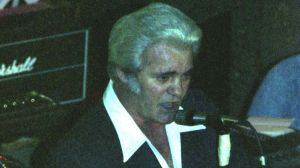
LONDON, UK – MARCH 6: Rockabilly artist Charlie Feathers performs at The Royalty, on March 6, 1980 in Southgate, London, England. (Photo by Charles Paul Harris/Michael Ochs Archives/Getty Images) -

Musician Don Schlitz performs, Chicago, Illinois, December 1, 1994. (Photo by Paul Natkin/Getty Images)