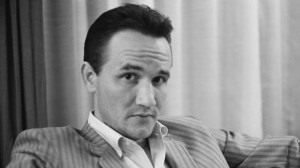
When one of the greatest rock icons of all time said his 40th anniversary tour would be his last, everyone (including his bandmates) wondered if there were a chance he would change his mind. No one would have had any way of knowing that on October 2, 2017, just days after the final tour date, Tom Petty would tragically prove himself right. There would be no more tours, no more albums, no anything—he died from complications of mixed drug toxicity in his home.
Tragically, the general assumption is that the Heartbreakers frontman was trying to self-treat his pain at the time of his death. Throughout his final national tour, Petty was suffering from “emphysema, knee issues, and a fractured hip,” Rolling Stone reported. A statement from Petty’s family read, “Despite this painful injury, he insisted on keeping his commitment to his fans, and he toured for 53 dates with a fractured hip, and, as he did, it worsened to a more serious injury.”
Videos by American Songwriter
“On the day he died,” the statement continued, “he was informed his hip had graduated to a full-on break, and it is our feeling that the pain was simply unbearable and was the cause for his overuse of medication.”
On the morning of October 2, 2017, Petty was found in his Malibu home, unconscious and in full cardiac arrest. When EMTs arrived, they found a pulse and rushed the musician to the hospital. Doctors placed him on life support, but after finding no brain activity, Petty’s family made the heartbreaking decision to let him go. He was 66 years old.
The World Lost One of the Greatest Rock Icons of All Time
Unlike so many of his contemporaries, Tom Petty’s rock ‘n’ roll legacy doesn’t have to do with his wild, raucous antics or scandalous mishaps. His music wasn’t the loudest, nor was his guitar playing the fastest. Petty’s forté was feel. At face value, Tom Petty and the Heartbreakers songs can be straightforward—even easy to some. But Petty was a master at capturing a certain groove in a way that lodges itself into the listener’s brain. He didn’t need to add any bells and whistles to his music. The songs spoke for themselves, and that’s where their power was.
Petty was responsible for some of the greatest rock songs of all time, from “Refugee”, “I Won’t Back Down”, “Free Fallin’”, “Mary Jane’s Last Dance”, and “American Girl” (to name a few). He combined musical elements evocative of Heartland rock, coastal rock, folk, and blues to create a sound inherently his own. He wasn’t quite gritty enough for Southern rock, but his music had more of a whimsical nostalgia to it than most Heartland rockers singing about the working class. Petty’s music was as hopeful as it was defiant, as it was catchy. Unsurprisingly, he was one of the best-selling artists of all time.
His death in 2017 sent shockwaves through the musical community and beyond, especially given the success of the Heartbreakers’ 40th Anniversary tour. Speaking to Rolling Stone ahead of the tour, Petty said, “I want to make it celebratory. I need something to do, or I tend to be a nuisance around the house.”
Petty’s family held a private service at the Self-Realization Fellowship Lake Shrine in Pacific Palisades, California, to honor the rock icon’s remarkable life and enduring legacy.
Photo by Christian Rose/Roger Viollet via Getty Images
-
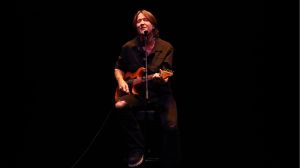
MELBOURNE, AUSTRALIA – Keith Urban performs during "The Songs Of John Farnham, The Celebration Concert" at Rod Laver Arena on September 20, 2026 in Melbourne, Australia. (Photo by Graham Denholm/Getty Images) -
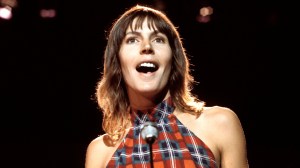
Australian-American singer, songwriter, author, actress, and activist Helen Reddy (1941 – 2020), 1975. (Photo by Tony Russell/Redferns) -
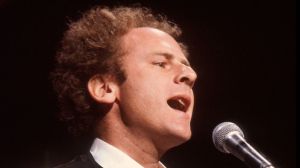
Art Garfunkel performs on TV show, USA, 1975. (Photo by Michael Putland/Getty Images) -

EUGENE, OR – (EDITORS NOTE: Multiple exposure made in camera) Phil Lesh of the Grateful Dead performs at Autzen Stadium on June 23, 1990 in Eugene, Oregon. (Photo by Tim Mosenfelder/Getty Images) -
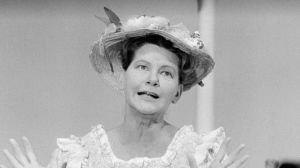
American country comedienne Minnie Pearl (1912 – 1996) performing, circa 1970. (Photo by Silver Screen Collection/Getty Images) -
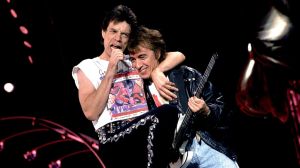
British musicians Mick Jagger (left) and Bill Wyman of the Rolling Stones performs on stage during the band's 'Steel Wheels' tour, late 1989. (Photo by Paul Natkin/Getty Images) -

UNSPECIFIED – CIRCA 1970: Photo of Jim Reeves Photo by Michael Ochs Archives/Getty Images