
Critics and music lovers have been scouring the Beatles discography for deeper hidden meanings and profound messages from the Fab Four for decades, but the track Paul McCartney chose as his iconic band’s “most philosophical song” is honestly a bit surprising. To his credit, McCartney offered his pick for the most metaphysical Beatles song in 1967, which predates albums like their eponymous “White Album,” Abbey Road, and their final record, Let It Be.
Nevertheless, even in 1967, McCartney’s choice seems a little odd. But then again, maybe that’s a consequence of assuming philosophy needs to be complex and near-indecipherable.
Videos by American Songwriter
Paul McCartney Picks Most Philosophical Beatles Song
In 1967, Paul McCartney sat down for an interview with British artist, designer, and illustrator Alan Aldridge. The contemporaries discussed hidden meanings behind Beatles songs that, for the most part, McCartney said were largely fan-produced. “We write songs. We know what we mean by them,” he said. “But in a week, someone else says something about it, says that it means that as well, and you can’t deny it. Things take on millions of meanings. I don’t understand it.”
These “millions of meanings” include covert references to psychedelics, á la “Lucy in the Sky with Diamonds.” Other misinterpretations included “Dr. Robert,” who some believed to be a psychiatrist, when in actuality, the character was just an inside joke in the Fab Four about doctors who freely prescribed pills in the States. Some creative listeners discovered that if you played a Sgt. Pepper’s Lonely Hearts Club track backward, it sounded like the band was saying, ‘Fug your fugging Superman.’ However, this was never their intention. McCartney later added, “It’s amazing people should think we go into it to that extent.”
“We just write what we like to write,” McCartney explained. “If it comes out clever, okay. You get to the bit where you think, if we’re going to write great philosophy, it isn’t worth it. “Love Me Do” was our greatest philosophical song. Love me do, you know I love you, I’ll always be true, so love me do. Please, love me do. For it to be simple and true means that it’s incredibly simple.”
“Love Me Do” Was More Than A Simple Philosophy Song, It Was A Career Milestone
As the old adage goes, out of the mouth of babes can come some of life’s most profound wisdom. This seems to have been the case for Paul McCartney in 1967, who believed “Love Me Do” to be one of the Beatles’ most philosophical songs over other seemingly worthy tracks like “She Said She Said” or “Within You Without You.” McCartney wrote “Love Me Do” when he was still a teenager, making it one of the earliest original songs the Beatles performed live around their hometown of Liverpool and, later, during their Hamburg days.
The track was also one of the driving forces of Beatlemania, with fans immediately taking to the song’s straightforward pop style. “In Hamburg, we clicked,” McCartney later said (via BeatlesBible). “At the Cavern, we clicked. But if you want to know when we ‘knew’ we’d arrived, it was getting in the charts with “Love Me Do.” That was the one. It gave us somewhere to go.”
Photo by Keystone/Getty Images
More Behind The Song
-
UNITED KINGDOM – JANUARY 01: Photo of Paul ANKA; Posed portrait of Paul Anka, (Photo by CA/Redferns) -
American soul singer and songwriter James Brown (1933-2006) performs live on stage at The Venue in London in September 1979. James Brown would go on to play 5 nights at the venue from 5th to 9th September 1979. (Photo by David Redfern/Redferns) -
ATLANTA – August 8: Commodores with Lionel Richie perform at The Omni Coliseum in Atlanta Georgia. August 8, 1980 (Photo By Rick Diamond/Getty Images) -
Singer Leo Sayer performing at the Greek Theatre, Los Angeles, California. 26th July 1977. (Photo by Kent Gavin/Mirrorpix via Getty Images) -
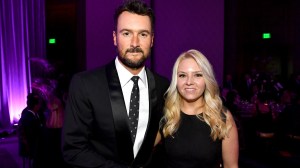
NASHVILLE, TN – APRIL 24: Singer-songwriter Eric Church and Katherine Blasingame Church attend Best Cellars Wine Dinner hosted by T.J. Martell Foundation on April 24, 2017 in Nashville, Tennessee. (Photo by Jason Davis/Getty Images for T.J. Martell) -
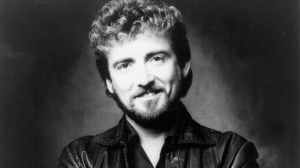
Keith Whitley Portrait Session Country singer and songwriter Keith Whitley poses for and RCA Records publicity still in 1984. (Photo by Michael Ochs Archives/Getty Images) -
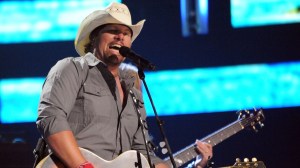
Musician Toby Keith performs on stage during the 2009 CMT Music Awards at the Sommet Center on June 16, 2009 in Nashville, Tennessee. (Photo by Jeff Kravitz/FilmMagic) -
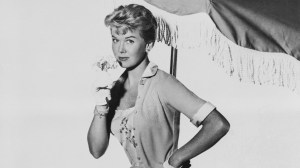
(Original Caption) 2/17/56-Hollywood, California: Singing actress Doris Day models one of the American-girl-look outifts she's designing for Little Miss English Ltd. The full skirt and matching sleeveless camisole blouse are of silk-finish cotton satin in a leaf print on soft blue. The companion sweater, a feature of all Miss Day's designs, picks up one of the leaf colors and is trimmed with French cuffs and Peter Pan collar of the print material. The three pieces may be bought separately.