In 1984, you were wise to make friends with MTV if you were trying to make it as a musician. The marketing power of music videos was expanding by the moment as artists realized the scope and power of this new method of song delivery.
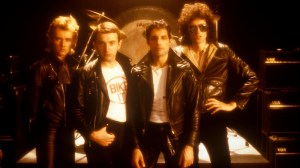
Queen deserves credit for daring to suggest that something was being lost in the new musical math. Their hit single “Radio Ga Ga” from ’84 criticizes the mitigation of radio in favor of the onslaught of videos.
Videos by American Songwriter
A Child’s Words
One of the most underrated aspects of Queen that helped make them such a juggernaut was the fact that all four of the band’s members were accomplished writers. They each could spin out a hit single. In the case of “Radio Ga Ga”, it just so happened to be drummer Roger Taylor’s turn at bat.
Taylor discovered that sometimes a great protest song comes not from forethought but from an unexpected inspiration. In this case, his young son provided it. The boy uttered the phrase “radio ca-ca”, a mild French expletive that described how he felt about the music that Taylor and his wife were playing on their radio one day.
The proverbial lightbulb struck. Taylor saw an opportunity to deliver a commentary on the music scene. His bandmates suggested that he change the name to “Radio Ga Ga”. He obliged and constructed the track for the song via a bundle of synthesizers and drum machines. If he was going to comment on modern music, he was going to do so via the latest technology at hand.
Raised on “Radio”
It’s important to understand that Queen was in no way anti-video. Their clip for “Bohemian Rhapsody” was one of the first widely seen rock videos. They also managed a couple of No. 1 hits off their album The Game with songs featuring accompanying videos. That album came out in 1980, a year before the debut of MTV.
Note that Taylor wasn’t simply targeting videos in the lyrics to “Radio Ga Ga”. He was also subtly calling out radio itself, specifically the programmers who were loath to take chances and were beginning to churn out playlists indistinguishable from other markets. The song warns about radio becoming just “background noise”, a far cry from its former potency.
But the second verse doesn’t hide its disdain for how people were ingesting music at that time. “We hardly need to use our ears,” Freddie Mercury sings with a touch of melancholy in his voice. The lyrics then go on to beg the radio to “stick around” in the hopes that it can one day return to its former glory.
The Anti-Video Video
Perhaps Queen could have made a bolder stand if they’d chosen to release “Radio Ga Ga” without a video. But at least the clip they did provide, which included scenes from the classic German film Metropolis, makes its points about how mechanized the listening experience had become, at least in the band’s view.
In a bit of rich irony, Queen would inadvertently discover just how powerful videos could be just a year after the song’s release. When the band played “Radio Ga Ga” at their legendary Live Aid set, the crowd, en masse, quickly joined in with Freddie Mercury’s arm movements and hand claps. After all, they’d already learned them from watching the video.
(Photo by John Potter/Mirrorpix/Getty Images)
More Features
-
UNSPECIFIED – CIRCA 1950: Photo of Grandpa Jones Photo by Tom Copi/Michael Ochs Archives/Getty Images -
Ronnie Milsap performs on stage in 1977 in the United States. (Photo by Gilles Petard/Redferns) -
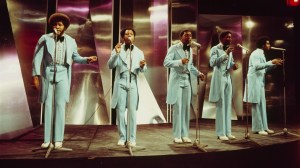
LONDON, UNITED KINGDOM – MAY 01: The Stylistics perform on Top of the Pops tv show in London, England in May 1974. (Photo by David Redfern/Redferns) -
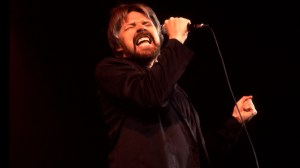
Musician Bob Seger performs at the Poplar Creek Music Theater, Hoffman Estates, Illinois, August 13, 1986. (Photo by Paul Natkin/Getty Images) -
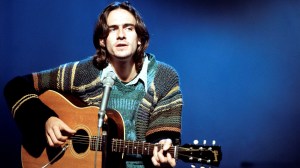
American singer-songwriter James Taylor at a BBC TV studio, London, 20th October 1970. (Photo by Michael Putland/Getty Images)