Occasionally, an artist or band can stumble upon a winning formula that they didn’t realize had always been within their grasp. Only when the audience positively reacts to it do they realize that they have something special.
Throughout the early years of their existence, Styx didn’t seem like the type of band that would go the soft-rock route. But when they did, they ended up with the only No. 1 pop hit of their career.
Videos by American Songwriter
Styx’s Herky-Jerky Rise to the Top
Styx didn’t follow the typically steady upward trajectory to rock glory. The Chicago band was four albums into their career with little to show for it in terms of commercial success. But in 1975, “Lady”, a song from their second album, became a belated Top 10 hit two years after the fact.
Even then, however, the band wasn’t quite able to secure the mainstream public’s attention. After a few more middling albums, Styx went nuclear all at once with The Grand Illusion, the triple-platinum 1977 LP that finally ensconced them in the rock elite for good.
From that point forward, the mainstream rock world eagerly awaited each new album and single. And they came to expect from the band an epic sound that combined prog ambition with hard-rock crunch. But what they couldn’t possibly have expected was “Babe”.
Better Than Flowers
Styx generally divvied its songwriting chores up between Dennis DeYoung, Tommy Shaw, and James “J.Y.” Young. When DeYoung wrote “Babe”, he had no intent of bringing it to the entire band as a possible Styx song. Instead, he penned it as a birthday gift to his wife Suzanne, to whom he is still married today.
Once he wrote the song, he wanted to make a recording of it that he could present to her as a gift. He enlisted Styx’s fraternal rhythm section of Chuck Panozzo (bass) and John Panozzo (drums) to help fill out the sound.
DeYoung originally intended to play his part on the piano, but the one in the studio was out of tune. Instead, he sat behind a Fender Rhodes, which he didn’t usually play. The intro to “Babe”, which is separate from the main melody of the song, is essentially DeYoung warming up and trying to get a feel for the unfamiliar instrument.
Finding the Soft Spot
“Babe” might have remained for DeYoung’s wife’s ears only if the other members of Styx hadn’t learned of the impromptu recording. They immediately heard the potential of the song, even if it was a good deal softer than their usual fare. To toughen it up a tad, Tommy Shaw played a guitar solo.
Not only did Styx include it on their 1979 album Cornerstone, but they also made “Babe” the lead single. And pop music fans, many of whom had likely never heard of Styx’s harder-edged material, ate it up. It soared to the top of the charts.
Considering the success of the song, it’s no surprise that similarly romantic numbers like “The Best Of Times” and “Don’t Let It End”, also written and sung by Dennis DeYoung, came out as singles from subsequent Styx albums. In other words, “Babe” turned out to be the birthday gift that just kept on giving for this legendary band.
(Photo by Richard E. Aaron/Redferns)
More Features
-
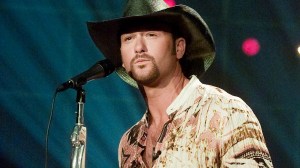
THE TONIGHT SHOW WITH JAY LENO — Tim McGraw — Air Date 05/15/2003 — Episode 2490 — Pictured: (l-r) Musical guest Tim McGraw performs on May 15, 2000 (Photo by Paul Drinkwater/NBCU Photo Bank/NBCUniversal via Getty Images via Getty Images) -
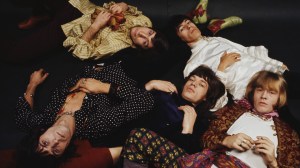
Group shot of English rock and roll band The Rolling Stones posed in 1968. Clockwise from top left: Charlie Watts, Bill Wyman, Brian Jones (1942-1969), Mick jagger and Keith Richards. (Photo by Mark Hayward Archive/Redferns) -

MEXICO CITY, MEXICO – OCTOBER 27: Singer Steven Tyler of Aerosmith performs onstage at Arena Ciudad de Mexico on October 27, 2016 in Mexico City, Mexico. (Photo by Victor Chavez/WireImage) -
Photo by Jack Robinson/Getty Images -
NITED STATES – JANUARY 01: Photo of Joe COCKER; Joe Cocker performing on stage (Photo by Robert Knight Archive/Redferns) -
UNSPECIFIED – JANUARY 01: Photo of Huey LEWIS & The News; (Photo by David Redfern/Redferns) -
UNITED KINGDOM – WEMBLEY ARENA Photo of Gene WATSON, Country Music festival (Photo by David Redfern/Redferns)