
Their fans called them “the only band that matters.” For much of their career, The Clash came on like a band to whom it didn’t matter much at all whether their songs broke out in the mainstream pop world.
In 1982, however, they suddenly found themselves all over the radio, especially in America. Yet instead of a new beginning, those hits acted as more of a last gasp.
Videos by American Songwriter
Proudly Uncommercial
The Clash evolved beyond their punk contemporaries in a hurry because of their restless musical spirit. Although they could do the high-tempo guitar assault with the best of them, their music sprawled over a wide variety of genres.
That eclecticism wowed critics but made them a tougher sell on pop radio. This was especially true in America, where playlists were a bit less adventurous than in the UK. “Train in Vain” sneaked into the Top 25 after being a late addition to their famed London Is Calling album. But beyond that, their UK hits went generally unheard in America.
The band was making a habit of recording a ton and including it all on their releases. London Calling was a double album. Sandanista!, released in 1980, went even further. It crammed 36 songs onto six LP sides. They were headed in a similar direction on their 1982 album Combat Rock before changing direction at the last minute. That decision helped spur their biggest US pop success.
Radio Clash
Mick Jones of The Clash was enamored of the hip-hop and club scenes in America, where extended mixes were common. Along those lines, he devised an early mix of Combat Rock that was once again meant for a double album, in large part because the songs ran on for miles.
But Joe Strummer fought against this trend. With the band’s management in his corner, Strummer brought in noted rock producer Glyn Johns. Johns hacked away at the original album, cutting songs and reducing running times. With that, Combat Rock became a single disc.
The decision to streamline helped the two songs that splattered the band all over MTV and, eventually, pop radio. Mick Jones’ “Should I Stay Or Should I Go”, a slamming rocker about his rocky romance with actress Ellen Foley, started the ball rolling. The next single from the record, which would be their first and only US Top 10 single, came from an unlikely source.
“Casbah” Then Calamity
Jones and Strummer generally handled the singing and songwriting duties for The Clash. But one day in the studio before the other members arrived, drummer Topper Headon put together a disco-like piece of music with undeniable panache. Strummer added lyrics, and “Rock The Casbah” was born.
In an instant, The Clash became a belated mainstream sensation in America. But the glory was short-lived. They fired Headon around the time of the album’s release because of his drug use. And they did the same to Jones following the tour for the LP, with artistic and personal differences being the cause.
Those moves robbed The Clash of much of what made them unique. After one more listless album with Strummer leading a pack of fill-ins, they called it a day. If only they’d bowed out with Combat Rock. They could have tied a bow on the band with the album where the commercial tendencies they often tamped down came thrillingly to the fore.
(Photo by Julian Yewdall/Getty Images)
More Features
-
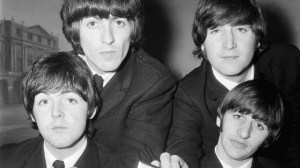
The Beatles pose with their MBEs at a press conference held at the Saville Theatre, London, following their investiture at Buckingham Palace. Top left to right: George Harrison, John Lennon. Bottom: Paul McCartney and Ringo Starr. 26th October 1965. (Photo by Mirrorpix via Getty Images) -
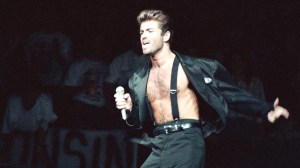
George Michael performing in 1989. (Photo by Jim Steinfeldt/Michael Ochs Archives/Getty Images) -

FRANKLIN, TN – Jimmy Wayne performs onstage during A Welby Street Christmas: Hosted by Serene & Pearl at Franklin Theater on December 9, 2016 in Franklin, Tennessee. (Photo by Jason Davis/Getty Images for Bandtwango) -

American singer-songwriter Donna Summer (1948 – 2012) performing on stage, USA, July 1979. (Photo by Michael Putland/Getty Images) -
Photo by Michael Ochs Archives/Getty Images -

ROSEMONT, IL – JUNE 7: Phil Collins of Genesis performs at the Rosemont Horizon on June 7, 1980 in Rosemont, Illinois (Photo by Paul Natkin/WireImage) -
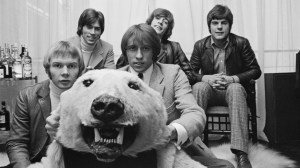
Pop group the Bee Gees posed with a stuffed polar bear in an office in London circa April 1968. Members of the band are, from left, Colin Petersen, Barry Gibb, Maurice Gibb (1949-2003), Robin Gibb (1949-2012) and Vince Melouney. (Photo by Ivan Keeman/Redferns)