
Bob Dylan infamously going electric at the Newport Folk Festival in 1965 caused such an uproar because it directly challenged traditions and beliefs pertaining to the folk music world specifically, and another 1960s star believed her music did the same thing but in a different way—who else but the virtually incomparable Joni Mitchell? Mitchell might not have been the first folkie to trade their acoustic for humbuckers. (By the time she got on board, it was already on its way to mundanity).
Videos by American Songwriter
But Mitchell did open new doors, in her own way. Albums like Blue weren’t electric in instrumentation, but they very much were in terms of emotional vulnerability and power. During an interview with Elton John, Mitchell said she believed her music didn’t get the recognition it deserved when she was first finding her footing in the late 1960s and early 1970s. “It took a lot of fflak if anything,” she said. “People thought it was too intimate, you know.”
“I think it upset the male singer-songwriters,” Mitchell continued. “They go, ‘Oh, no. Do we have to bare our souls like this now?’ I think it made people nervous. It took to this generation. They seem to be able to face those emotions more easily than my generation.”
Joni Mitchell Said She Was Fine With Always Being a “Freak of Nature”
Older millennials and Gen Z-ers might have a greater capacity to sit with the emotions Joni Mitchell lays out in her music, but her contemporaries weren’t as willing in the early 1970s. During a 1996 interview, Mitchell recalled showing Blue to Kris Kristofferson. She said he replied, “God, Joan, save something of yourself.” She continued, “He was embarrassed by it. I think generally at first that people were embarrassed by it, that in a certain way it was shocking especially in the pop arena. People [usually sing], ‘I’m bad, I’m bad, I’m great, I’m the greatest.’ It’s a phony business. And people accept the phoniness of it. It’s fluff. It’s this week’s flavor, and it gets thrown out, and it isn’t supposed to be anything really more than that.”
But just like Bob Dylan foreshadowed the rise of folk-rock as the dominating genre of the 1970s with his transition to electric at the Newport Folk Festival, Joni Mitchell’s earliest, most vulnerable works signal a significant change in the act of songwriting. Pop hooks and opaque poetry à la Dylan had their place, but so, too, did the ultra-personal journal entries set to music that encourages listeners by saying, “Your pain is intense, but it is shared, and that can help.”
While Joni Mitchell later admitted that the younger generation seems to take to her emotional, unique songwriting better than previous ones, comments from her 1996 interview prove she has no problem remaining on the cusp of normality. “I don’t want to develop too many defenses,” she said. “I’m a kind of experiment. A freak of nature.”
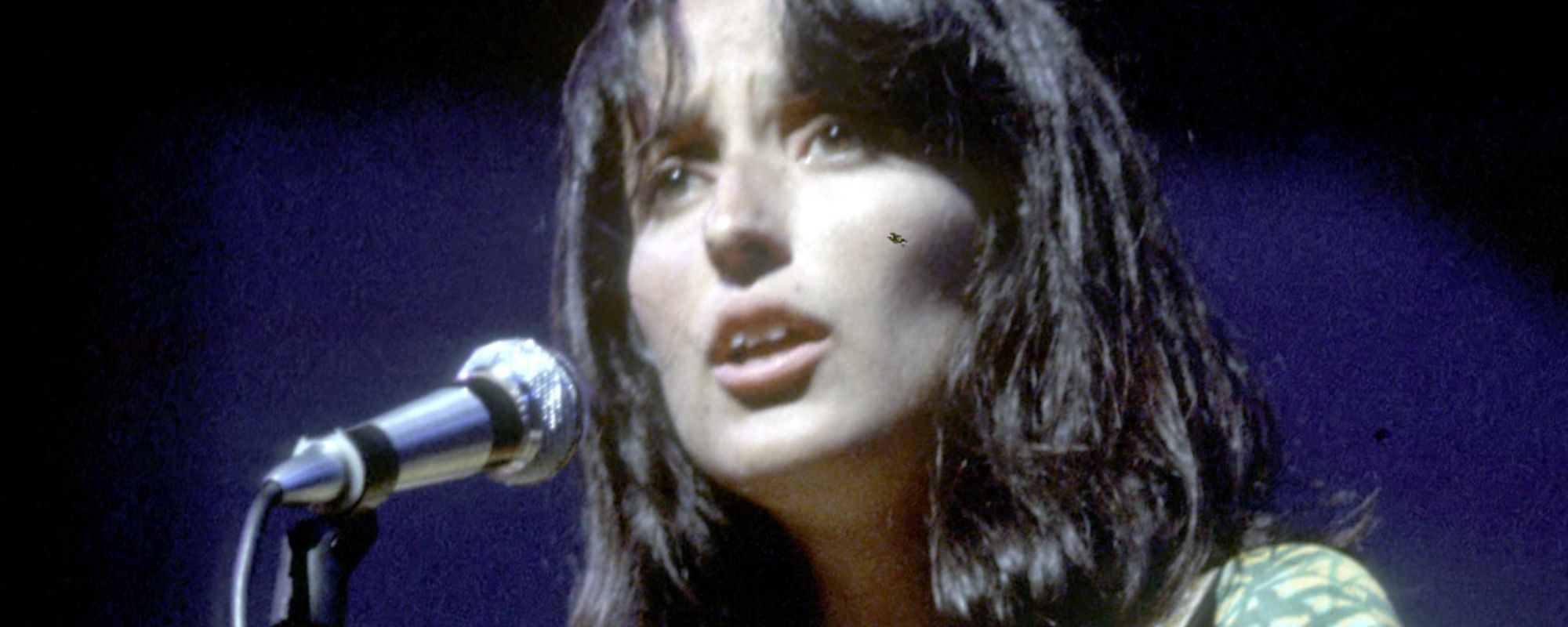
Photo by Alice Ochs/Michael Ochs Archives/Getty Images
Leave a Reply
Only members can comment. Become a member. Already a member? Log in.