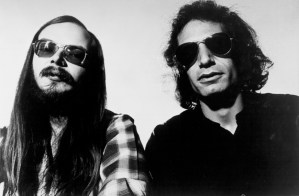
More often than not, an artist will describe a song’s feel in non-musical terms that sound like gibberish at face value. Dolly Parton once asked Jeff “Skunk” Baxter to make “fireworks” out of a synthesizer, without actually replicating the booms, pops, and sizzles that an actual firework would create. I’ve personally gone so far as to use the word “sploinky” to describe a bass tone, which is less of a word and more of an onomatopoeia that, amazingly, the studio engineer understood—music brain.
For worldwide hits that virtually everyone knows, like “Dreams” by Fleetwood Mac, learning what odd adjectives and descriptors the band used is even more fascinating. We know the song sounds good. That’s why people are still listening to it decades after its release. That’s why it’s one of the most iconic rock songs, even though it only uses two chords throughout the entire song. But what’s that weird, non-musical, strangely descriptive, and equally puzzling word for “Dreams”?
Videos by American Songwriter
Here’s a hint, free of charge: fast food.
What Gives “Dreams” Its Distinct Feel, According to Mick Fleetwood
Taking a relatively simple and repetitive song and turning it into a classic rock anthem that people will sing word-for-word decades later is no small feat. But that’s exactly what Fleetwood Mac did when they arranged a song Stevie Nicks brought to them called “Dreams”. Although it seems ludicrous in hindsight, Nicks had to fight for the band to consider her song seriously. They thought it was too simple. And to be fair, before they incorporated the distinct grooves that help break up the two-chord progression, it was. But these sections—and a specific feel, courtesy of drummer Mick Fleetwood—turned “Dreams” into the hit we know it as today.
Speaking to Music Radar in 2012, Fleetwood called “Dreams” a “given” when listing his all-time greatest Fleetwood Mac recordings. “The intro, I think, is one of those stupidly simple things that came from the drummer who played with Al Green and The Staple Singers. So, it’s from my love of what I call ‘greasy music.’ It has a real feel, and it’s lazy. Behind the beat. Stupidly simple, but well thought-out.”
“This doesn’t work,” Fleetwood continued, “unless you attach yourself to my little speech to the band before we go on stage. ‘Keep it greasy, guys.’ So, this is me keeping it greasy and letting go to form a groove that is infectious.’ The tempo of the song, I’ve been finding out, is something that really appeals to drummers. So, I take that as a compliment. It’s something I took from great players who I love so much. Keep it greasy, and stay in the slot. Gotta be in the slot.”
Photo by Fin Costello/Redferns
More Behind The Song
-
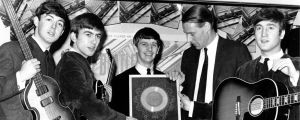
LONDON – 1964: Rock and roll band "The Beatles" poses for a portrait with their producer George Martin. (L-R) Paul McCartney, George Harrison, Ringo Starr, producer George Martin, John Lennon. (Photo by Michael Ochs Archives/Getty Images) -
Musician Dave Wakeling, founder of 'The English Beat' performs before thousands of rock fans at the US Festival, May 29,1983 in Devore, California. (Photo by Bob Riha, Jr./Getty Images) -
Miranda Lambert performs "Kerosene" at the Madison Square Garden in New York City, New York (Photo by Rick Diamond/WireImage) -

British singer Dusty Springfield (1939 – 1999) performing during a rehearsal for her TV show, 'It Must Be Dusty', at ATV Studios in Borehamwood, Hertfordshire, 1968. (Photo by Keystone/Hulton Archive/Getty Images) -
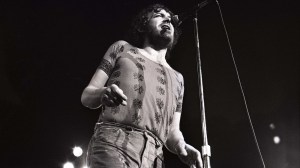
NITED STATES – JANUARY 01: Photo of Joe COCKER; Joe Cocker performing on stage (Photo by Robert Knight Archive/Redferns) -
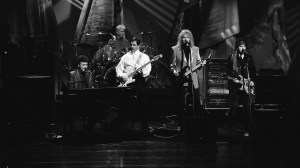
THE TONIGHT SHOW STARRING JOHNNY CARSON — Pictured: James Young of the musical guest Styx performs on March 12, 1991 — (Photo by: NBCU Photo Bank/NBCUniversal via Getty Images via Getty Images) -
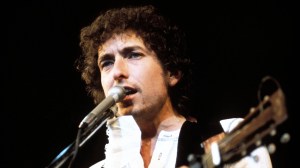
UNITED STATES – MAY 09: Photo of Bob DYLAN; performing live onstage at the benefit for ousted Chileans: Felt Forum, New York (Photo by Steve Morley/Redferns)