
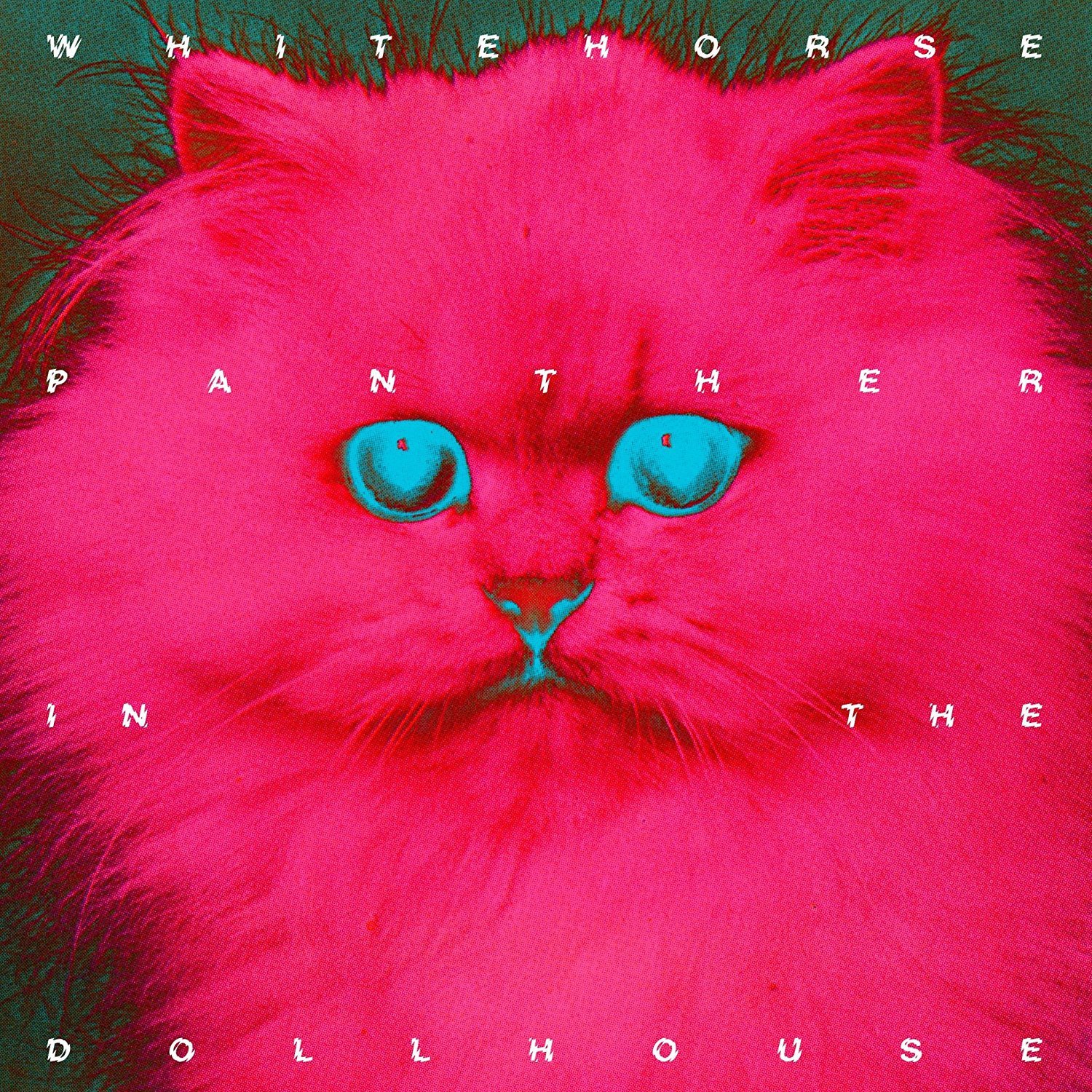
Whitehorse
Panther in the Dollhouse
(Six Shooter/Thirty Tigers)
Rating: 4 out of 5 stars
Toronto-based Whitehorse lends itself to flowery adjectives such as “retro psychedelic pop,” “pop neo-noir,” “psychedelic Spaghetti Western” and, perhaps most vaguely but intriguingly, “space cowboy duo.” Once you spin this third studio full length you’ll probably add more of your own.
Married multi-instrumentalists/singer/songwriters Luke Doucet and Melissa McClelland have been traveling an impossible-to-pigeonhole style since their 2011 debut EP. Each release brought a mysterious, swampy, reverb-laden sound, gradually adding elusive, subtle elements of hip-hop and blues (their previous 2016 release was an often radical interpretation of classic blues gems) that expanded their boundaries while staying true to core roots values of creatively reworked/reimagined country, folk and rock.
There is more than a little Cowboy Junkies to Whitehorse’s flair and not just because both hail from Canada. It’s evident by McClelland’s languorous vocal similarity to Margo Timmins and Doucet’s often thickly reverbed guitar lines. But Whitehorse creates a unique sonic edge by moving in a more DIY-oriented aesthetic, while keeping one foot in the dusky atmospherics that have remained consistent throughout their eclectic catalog.
On Panther in the Dollhouse, the couple wraps their voices — solo and in harmony — and instruments around a nebulous concept of sexual freedom. It’s a moody, often stripped-down but not stark vibe that shifts from the ominous lonely funeral strains of “Die Alone” (“But damned if I’ll die alone,” sung by Melissa with equal parts anger and regret) to the light yet potent funky beats that power the breakup lament “I Can’t Take You with Me (Charlene’s Theme),” the latter a Luke vocal where he sings to his soon to be ex, “some things were never meant to be.” The couple even get punked up on the aggressively sexy, pounding rawk of “Pink Kimono,” (“I got things I want to do to you … up all night just living a dirty dream with you”).
But most impressive is how pop elements are delicately blended into this shadowy and often sexy gumbo. That’s especially the case in the very Timbuk 3 strains of “Nighthawks,” where McClelland repeats “let me in … it’s gonna break my little heart” against throbbing drums, tambourine and ghostly guitar and synth weaving through the melody. It’s an album highlight nearly hidden away as track nine (out of 10), an indication that this disc is filled with songs just as powerful, if perhaps not as sing-along ready.
Production (along with bass, percussion and additional guitars) by Gus Van Go and associate Werner F (returning from Whitehorse’s 2015’s similarly styled Leave No Bridge Unburned), infuses a perfectly textured and layered audio landscape with subtle overdubs that enhance an already idiosyncratic approach. All ten tunes are compact (only one breaks four minutes), yet there is never an indication anything is rushed.
On the contrary, most of these songs luxuriate in an unhurried groove which makes this 36-minute album feel longer. It’s certainly one you’ll replay multiple times to appreciate the intricate sonic structure and imbibe Whitehorse’s often oblique wordplay with a sure sense of a hyphenated musical mixture that is elusively familiar and wildly idiosyncratic.
More Album Reviews
-

Photo via cover of ‘Butter Miracle, The Complete Sweets!’ by Counting Crows -

Photo by Will Von Bolton -

Will Heath/NBC via Getty Images