Your cart is currently empty!



3 Controversial Country Songs That Were Banned or Received Backlash During the 2010s Yet Still Hit the Charts Hard
By the 1950s, radio began censoring or banning country songs deemed too suggestive. For Lester Flatt and Earl Scruggs, their 1955 single “I’m Gonna Sleep With One Eye Open” outed a cheating wife and her lover—You thought you were being wise running around with other guys And leaving me to spend my time alone—and was even banned at the Grand Ole Opry.
Other songs didn’t get much radio play for challenging gender norms, like Kitty Wells‘s 1952 hit “It Wasn’t God Who Made Honky Tonk Angels,” banned by NBC and the Opry for addressing the double standard in the industry and how female country artists were often ignored by the male-dominated radio. A year later, Webb Pierce was blacklisted by radio for singing There stands the glass that will ease all my pain / That will settle my brain, it’s my first one today, from his No. 1 hit “There Stands the Glass,” but the ban didn’t stop the song from staying at the top of the Country chart for 12 weeks.
Bans continued into the 1960s and throughout the decades that followed, with Tammy Wynette facing backlash in the ’60s during the women’s liberation movement for what was deemed a misogynistic anthem, “Stand By Your Man.” Loretta Lynn was banned multiple times and received little radio play for her 1966 “Don’t Come Home A-Drinkin’ (With Lovin’ on Your Mind)” and again with “Fist City,” in ’68, documenting her husband’s infidelities, and a year later with “Wings Upon Your Horns” and the implications of losing one’s virginity. Lynn was banned again during the 1970s with “Rated X,” and how a divorced woman is often perceived as loose or free, and her 1975 statement for female reproductive rights, “The Pill.”
Videos by American Songwriter
[RELATED: 3 Dolly Parton Songs Radio Refused to Play, and One Banned in School in 2023]
“Risk taker, no, I just write what I feel, what is going on with me and my life,” said Lynn in 2021 of her more controversial songs. “It just happened that a lot of other women felt the same. I would never set out to write something just for it to shock someone. I am not that clever.”
Sensitivities around certain country songs continued well into the 1990s when Garth Brooks threatened to walk off Super Bowl XXVII in 1993 if NBC did not play his video for “We Shall Be Free,” depicting cross burning, riots, and two men kissing in a church. By the ’00s, stations refused to play Tim McGraw‘s cover of Jason White’s “Red Rag Top,” centered around a couple’s decision to have an abortion. Years earlier, McGraw also faced criticism for his 1994 single “Indian Outlaw” and its Native American clichés.
During the 2010s, several more artists had their run-in with bans for lyrics suggesting drug use or for a presumed sexual orientation.
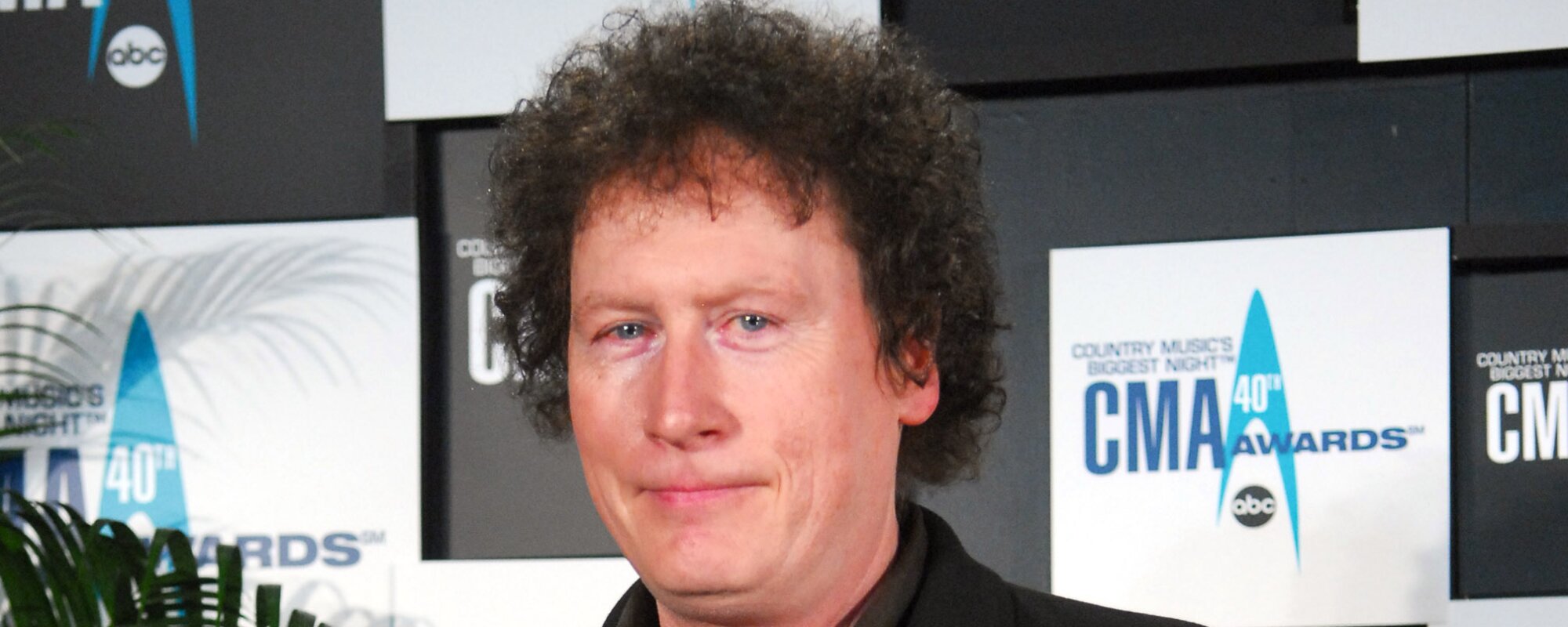
“Smoke a Little Smoke,” Eric Church (2010)
Written by Eric Church, Driver Williams, and Jeffery Hyde
At one point, Eric Church threatened to leave his label if they didn’t release his single “Smoke a Little Smoke” in 2010 for its blatant language around drug use. “I went to the label, I said ‘This is what we’re putting out, or I’ll never make another album—I’ll never record for you again,’” recalled Church. They responded, “It’s your funeral.”
Church proved everyone wrong. Once released, the song got little radio play yet still managed to hit the Top 20 on the Country chart at No. 16. Co-written by Church, Jeff Hyde, and Driver Williams, The lyrics faced controversy for the references to using drugs, specifically marijuana: Wanna little more right and a little less left / Little more right now, a little less what’s next / Act like tomorrow’s ten years away / And just kick back and let the feelin’ flow / Drink a little drink, smoke a little smoke.
“Follow Your Arrow,” Kacey Musgraves (2013)
Written by Kacey Musgraves, Brandy Lynn Clark, and Shane McAnally
Kiss lots of boys or kiss lots of girls / If that’s something you’re into Kacey Musgraves sings in “Follow Your Arrow.” The third single from her debut album, Same Trailer Different Park, “Follow Your Arrow” was criticized for its support of the LGBTQ+ community when the lyrics call out more that’s judged within society—and beyond same-sex relationships—from rolling a joint to losing too much weight, and more. During her performance of the song during the 2013 Country Music Awards, Musgraves’ lyric roll up a joint was also censored and deemed inappropriate for television.
Regardless of the backlash around “Follow Your Arrow,” Musgraves’ song peaked at No. 10 on the Country chart and picked up a CMA Award for Song of the Year in 2014.
“Oh my gosh, it was so controversial,” recalled Musgraves in 2025 of the controversy around the song. “It ended up tanking. It was banned by country radio, but I would never trade that for the love and the people it brought to my world. I’m not going to present a watered-down version of myself to be accepted.”
“Girl Crush,” Little Big Town (2014)
Written by Liz Rose, Lori McKenna, and Hillary Lindsey
By 2015, Little Big Town‘s hit “Girl Crush” was getting pulled from country radio for its “gay agenda” by some same-sex sensitive stations. The lyrics I’ve got a girl crush / Hate to admit it but / I got a hard rush / It’s slowin’ down may have alluded to a jealous lesbian affair, but the song was centered around a heterosexual relationship. Written by the Love Junkies’ Lori McKenna, Hillary Lindsey, and Liz Rose, “Girl Crush” was still a success despite any radio play cuts and went to No. 1 on the Country chart.
Little Big Town’s Karen Fairchild said the song is more about a woman telling her ex, “‘Why do you love her and not me’ and not about a lesbian relationship.”
Fairchild continued, “The lyric of ‘Girl Crush’ is written in kind of a sexy way. So some people might turn it off when they get to the ‘I want to taste your lips’ and all that. But once they get to the hook, they go, ‘Oh’ … “You’ve got to lean in a little bit, but the fans are really loving this one.”
Photo: Eric Church (Jason Kempin/Getty Images for ABA)



Leave a Reply
Only members can comment. Become a member. Already a member? Log in.