
Many country songs, including the classics, are entirely autobiographical. Others spin yarns that are based on someone else’s life or a story made up entirely by their songwriters. The following country songs, though, are autobiographical; something that might surprise some listeners. Let’s dive into the real-life stories behind these country classics.
“Sunday Morning Coming Down” by Kris Kristofferson (1969)
Judging by the fact that so many musicians covered this song, from Johnny Cash to Waylon Jennings, you’d think this was just a general tune about an existential experience while having a hangover. However, according to Kristofferson, the song actually reflected his life in a big way. He was a restless writer at the time, and before “Sunday Morning Coming Down”, he had yet to experience substantial success as a songwriter. He worked as a janitor and struggled, and “Sunday Morning Coming Down” was a reflection of that period in his life.
Videos by American Songwriter
“I’m just real grateful for that song because it opened up a whole a lot [of] doors for me,” Kristofferson said. “So many people that I admired, admired it. Actually, it was the song that allowed me to quit working for a living.”
“Sissy’s Song” by Alan Jackson (2009)
While this country classic by Alan Jackson isn’t about himself specifically, it’s autobiographical in the sense that it was written about someone in Jackson’s life. That “someone” was one Leslie “Sissy” Fitzgerald, a woman who worked as a housekeeper for Jackson for many years. Tragically, Sissy passed away in a motorcycle accident in 2007, which led Jackson to pen this mid-tempo ballad about her. The song was later played at Sissy’s funeral.
“Run” by Miranda Lambert (2025)
Fans of Miranda Lambert likely know all too well how autobiographical this entry on our list of country songs is. However, some listeners might be out of the loop. This incredibly personal song follows the narrator’s realization that their relationship is falling apart, a long time before it actually comes to an end. But there’s no blame put on anyone else other than the narrator themself. Lambert later said that the song was an “admission of human error” and “an apology” and “resolve.” The song is widely believed to be about her divorce from fellow country music star Blake Shelton. She never confirmed this, but fans have put two and two together.
Photo by Don Paulsen/Michael Ochs Archives/Getty Images
More The List
-
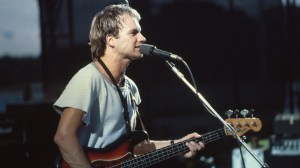
Original Caption) : 1981: Sting, of the British pop band The Police, sings and plays bass during a concert. (Photo by Lynn Goldsmith/Corbis/VCG via Getty Images) -
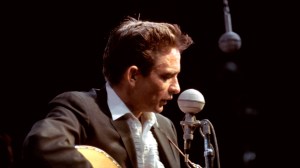
UNITED STATES – JULY 24: NEWPORT FOLK FESTIVAL Photo of Johnny CASH, Johnny Cash performing on stage (Photo by Gai Terrell/Redferns) -
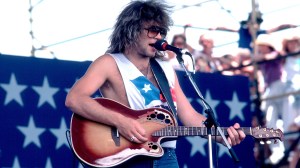
American musician Jon Bon Jovi performs at the Manor Downs Racetrack for the Farm Aid II Concert, Austin, Texas, July 4, 1986. (Photo by Paul Natkin/Getty Images) -
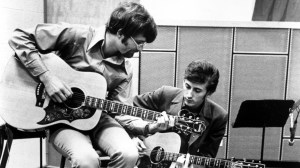
UNSPECIFIED – CIRCA 1970: Photo of Zager & Evans Photo by Michael Ochs Archives/Getty Images -
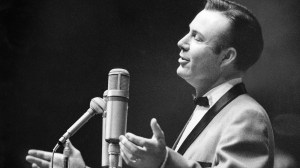
(Eingeschränkte Rechte für bestimmte redaktionelle Kunden in Deutschland. Limited rights for specific editorial clients in Germany.) Jim Reeves- 1964 (Photo by ullstein bild/ullstein bild via Getty Images) -
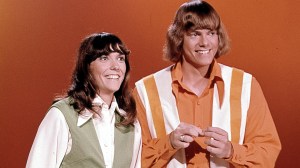
UNSPECIFIED – CIRCA 1970: Photo of Carpenters Photo by Michael Ochs Archives/Getty Images -
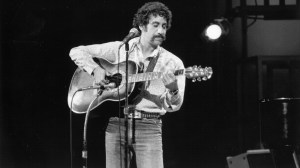
UNSPECIFIED – CIRCA 1970: Photo of Jim Croce Photo by Michael Ochs Archives/Getty Images -
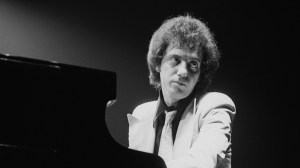
American singer-songwriter Billy Joel, performing in New York City, 7th December 1977. (Photo by Michael Putland/Getty Images)