Folk music in the 1960s, particularly in the Greenwich Village scene in New York, was almost always political in nature. So much legendary protest music came out during the Vietnam War era. But no other genre was getting as vulnerable with their political songwriting as folk music was. Let’s take a look at a few particularly legendary folk songs from the 1960s that changed the way songwriters viewed political songwriting.
“Blowin’ In The Wind” by Bob Dylan (1963)
“Yes, and how many times can a man turn his head and pretend that he just doesn’t see?”
Videos by American Songwriter
Unsurprisingly, Bob Dylan makes it to our list. A few different songs could have taken his spot. But I chose “Blowin’ In The Wind” because of how widely loved it is among fans of folk and protest singers alike, the broader part of a century since it was released. “Blowin’ In The Wind” offers the listener a number of rhetorical questions about peace and freedom. The overall theme of the song is intentionally ambiguous. That ambiguousness has made it adaptable for use among many political and anti-war causes. And it’s a protest song that has yet to be truly matched.
“A Change Is Gonna Come” by Sam Cooke (1964)
“It’s been a long / A long time comin’, but I know / A change gon’ come / Oh, yes, it will.”
This still-iconic protest anthem was actually written after Sam Cooke heard Bob Dylan’s “Blowin’ In The Wind” for the first time. There’s your proof that Dylan’s 1963 song was influential in the world of political songwriting! “A Change Is Gonna Come” balances Cooke’s anger with the plight of the Black American and racism while injecting a soulful, soothing gospel element that inspires hope. That takes some serious talent, and Cooke made that balance of justified anger and uplifting hope look easy.
“For What It’s Worth” by Buffalo Springfield (1966)
“Children, what’s that sound? / Everybody look what’s going down.”
Remember this classic from 1966? Stephen Stills’ “For What It’s Worth” makes it to our list of folk songs from the 1960s that changed political songwriting because it observed and challenged the generational gap between 1960s youths and those in authority. Written after the Sunset Strip curfew riots in 1966, “For What It’s Worth” ended up having a huge impact as an anthem of anti-war sentiments during the Vietnam War and beyond. And that chorus is instantly recognizable to just about anyone.
Photo by CBS Photo Archive
More The List
-
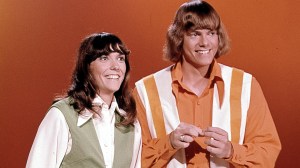
UNSPECIFIED – CIRCA 1970: Photo of Carpenters Photo by Michael Ochs Archives/Getty Images -
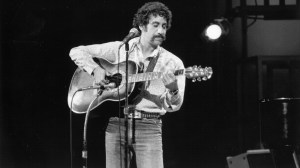
UNSPECIFIED – CIRCA 1970: Photo of Jim Croce Photo by Michael Ochs Archives/Getty Images -
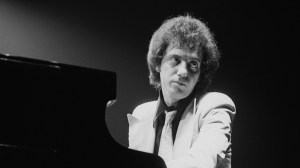
American singer-songwriter Billy Joel, performing in New York City, 7th December 1977. (Photo by Michael Putland/Getty Images) -
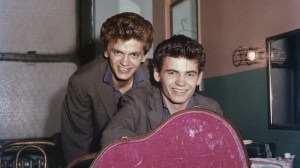
American rock and roll singers the Everly Brothers, Phil and Don Everly, circa 1958. (Photo by Archive Photos/Getty Images) -
Photo by Michael Ochs Archives/Getty Images -
UNSPECIFIED – CIRCA 1970: Photo of George Jones Photo by Michael Ochs Archives/Getty Images -
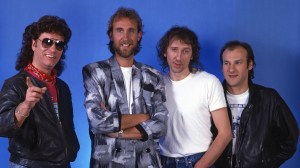
1986: British pop rock group Mike and the Mechanics (Paul Carrack, Adrian Lee, Mike Rutherford, Peter van Hooke, Paul Young) (Photo by BSR Agency/Gentle Look via Getty Images) -
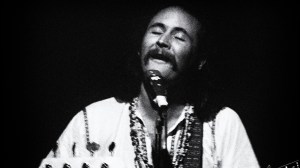
David Crosby of rock band “The Byrds” smiling as he performs in a club in a frontal, waist-high view, eyes half closed, with a mic, circa 1967 in Los Angeles, California. (Photo by Sulfiati Magnuson/Getty Images)