On this day (May 22) in 1892, Ralph Peer was born in Missouri. He was a trailblazing producer who oversaw the sessions that yielded the first country and blues songs. Additionally, Peer led the Bristol Sessions, which introduced the world to Jimmie Rodgers and the Carter Family. A shrewd businessman, he created the modern system that allows artists to collect royalties on their songs.
Peer’s career in the music business began with Columbia Records in Kansas City, Missouri. Then, in 1920, he moved to Okeh Records, where he became the label’s recording director. It was with this label that he oversaw his first history-making session. He produced Mamie Smith’s “Crazy Blues,” the first blues recording in history. It was also the first recording marketed specifically to Black people.
Videos by American Songwriter
According to the University of Oregon, the success of “Crazy Blues” led Peer to seek out white artists from the rural South. He understood that they were another group of people who were largely overlooked by the popular music of the day. Like the Black listeners who bought “Crazy Blues,” he assumed rural whites would be hungry for music that reflected their culture.
Ralph Peer Recorded the First Country Song
The Bristol Sessions are called the Big Bang of Country Music. However, those sessions didn’t create a style or genre of music, nor were they the first recordings of what would become country music. Instead, those sessions produced the first country stars in Jimmie Rodgers and the Carter Family and began marketing the music to a wider audience.
Ralph Peer produced the first country recording four years before he set up shop in Bristol, Tennessee. In 1923, Okeh Records allowed him to experiment with what was then called “hillbilly music.” He then went to Virginia to record the winner of a fiddle competition. Fiddlin’ John Carson’s “Little Old Log Cabin in the Lane” backed with “That Old Hen Cackled and the Rooster’s Goin’ to Crow” became the first hillbilly single. The label produced a limited run of 500 copies, not expecting the solo instrumental recording to sell well.
Everyone was shocked when Carson’s single quickly sold out. This laid the foundation for future excursions into the South to record rural musicians. Peer then returned to the South and recorded the Hill Billies, the Stoneman Family, Vernon Dalhart, and other early hillbilly and old-time artists, according to the Country Music Hall of Fame.
Recording studios were nearly nonexistent in the South at the time. As a result, Peer had to use mobile equipment to capture the music. Today, the strategy is called field recording. It is another entry on the list of things Peer helped create.
The Bristol Sessions
Ralph Peer left Okeh Records in 1925. The next year, he went to the Victor Talking Machine Company, which was looking to capitalize on the growing popularity of hillbilly music. Peer made them a deal. “This was a business of recording new copyrights. I would be willing to go to work for nothing with the understanding that there would be no objection if I controlled these copyrights,” he recalled.
With that plan in place, Peer returned to the South to record more sessions with the Stoneman Family. Wanting to get as much out of his trip as he could, Peer took out an ad in the local paper, advertising auditions for recording sessions to all musicians. Then, in late July 1927, he set up a makeshift studio on the empty second floor of the Taylor-Christian Hat Company on State Street in Bristol, Tennessee.
Between July 25 and August 5, Peer oversaw sessions for a long list of musicians. The most prominent among those who recorded under Peer during that window were the Carter Family, Jimmie Rodgers, and the Stoneman Family.
How Ralph Peer Forever Changed the Music Industry
In the above quote, Ralph Peer discussed recording and controlling new copyrights. To facilitate this, he started the Southern Music Company, a publishing company to which artists sold the songs they recorded with Peer. They were paid between $25 and $50 for those songs. Peer, the label, and his publishing company then owned the masters and collected all money generated from sales.
Adjusted for inflation, the musicians who recorded during the Bristol Sessions received between $481 and $962 for their songs. At the time, Peer and the Victor Talking Machine Company were taking a major risk. Sure, a handful of hillbilly records had sold well. However, they couldn’t be sure that the new recordings wouldn’t flop.
Peer changed his approach in the 1930s, when hillbilly music proved to be consistently profitable. He began offering musicians 50% of the copyrights of their songs. Through his publishing company, he created the modern system used by the music industry in which earned money from recordings and other uses of their songs.
In short, Ralph Peer forever changed the music world. He brought country and blues music to the masses and made recording lucrative for everyone involved. It is hard to imagine how things would have gone without his pioneering entrepreneurial spirit.
Featured Image by Donaldson Collection/Getty Images
-
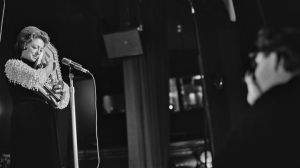
American singer and musician Maybelle Carter (1909-1978) of The Carter Family, playing the autoharp as the band perform live at Columbia Recording Studios, possibly during the recording of 'An Historic Reunion' at Columbia Recording Studios in Nashville, Tennessee, June 1966. Maybelle and her daughters had also performed as The Carter Sisters and Mother Maybelle. (Photo by Don Paulsen/Michael Ochs Archives/Getty Images) -
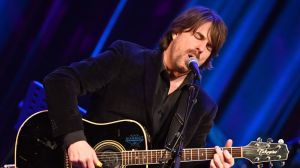
FRANKLIN, TN – Jimmy Wayne performs onstage during A Welby Street Christmas: Hosted by Serene & Pearl at Franklin Theater on December 9, 2016 in Franklin, Tennessee. (Photo by Jason Davis/Getty Images for Bandtwango) -

CHICAGO, ILLINOIS – American Country musician Dwight Yoakam performs onstage at the Chicago Theater, Chicago, Illinois, August 5, 1988. (Photo by Paul Natkin/Getty Images) -
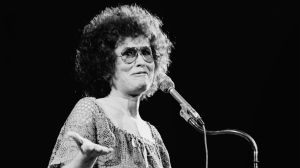
American lyricist, singer-songwriter and poet Dory Previn (1925 – 2012), circa 1975. (Photo by Gus Stewart/Getty Images)