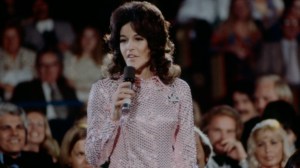
Glen Campbell set country music ablaze in the 1960s. The singer-songwriter seemingly churned out hit after hit with songs like “By the Time I Get to Phoenix” and “Wichita Lineman”. He continued that streak with “Galveston”, a heartbreaking war song about a soldier yearning for his love and the sea breezes of his coastal Texas hometown. Written by Jimmy Webb—just like the aforementioned two songs—”Galveston” topped the country music charts and hit number four on the all-genre Hot 100. It also served as the title track for Campbell’s 12th studio album, which hit number one on the country albums chart on this day (May 22) in 1969.
Galveston marked Glenn Campbell’s seventh No. 1 country album in 14 months, maintaining that spot for 11 weeks. And it didn’t only resonate with country audiences, either, climbing to number two on the Billboard 200 as well.
Videos by American Songwriter
Don Ho First Recorded This Glen Campbell Hit Song
Jimmy Webb penned “Galveston” as the Vietnam War raged on. He set the song in the beachside resort town he frequently visited with his Baptist minister father as a child.
Don Ho was the first artist to record the song. The native Hawaiian performed “Galveston” as a mournful lament in stark contrast to Glen Campbell’s up-tempo rendition. I’d go home if they would let me / Put down this gun / And go to Galveston.
The Hotly Debated Meaning of “Galveston”
Deciding to record the song after hearing Ho perform it on The Glen Campbell Goodtime Hour, Campbell tweaked the lyrics. While I watch the cannons flashing / I clean my gun / And dream of Galveston.
What’s more, the six-time Grammy winner performed “Galveston” sporting full military attire in the song’s original promo video. This confused some listeners who had interpreted Webb’s lyrics as an anti-war sentiment.
In a 2010 interview with WFUV Public Radio, Webb clarified his lyrical intentions… sort of.
“If there was a statement, and obviously I was saying something, I prefer to say it wasn’t anti-war – that it was more about an individual getting involved in a war and realizing that he’d rather be somewhere else,” the songwriter said.
Featured image by Jasper Dailey/Michael Ochs Archives/Getty Images
-
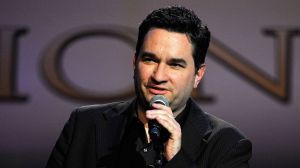
NASHVILLE, TN – Dean Miller accepts the Poet's Award on behalf of his father Roger Miller at the 6th Annual ACM Honors at Ryman Auditorium on September 24, 2012 in Nashville, Tennessee. (Photo by Frederick Breedon IV/Getty Images for ACM) -
Photo by Michael Ochs Archives/Getty Images -
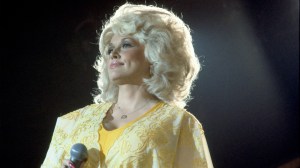
LOS ANGELES – CIRCA 1975: Country singer Dolly Parton performs onstage wearing a yellow dress in circa 1975 in Los Angeles, California. (Photo by Michael Ochs Archives/Getty Images) -
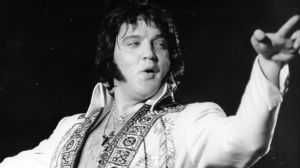
UNSPECIFIED – CIRCA 1977: Elvis Presley in concert circa 1977. (Photo by R.D/Images Press/Getty Images) -
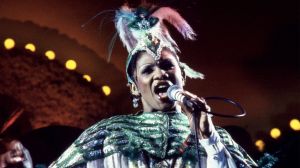
LONDON, ENGLAND – Jamaican-British singer Marcia Barrett, of the German vocal group Boney M., sings during a concert in London, England, December 1, 1978. (Photo by Soxphotos/Getty Images) -
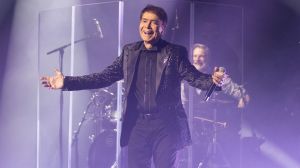
LONDON, ENGLAND – Cliff Richard performs onstage during a concert at Royal Albert Hall on December 08, 2025 in London, England. (Photo by Jo Hale/Redferns)