So much music about the Vietnam War was released in droves in the 1960s. The Beatles, who were easily the biggest band of the decade and century, didn’t release that many songs that directly touched on the then-raging war. According to John Lennon, that was because their manager Brian Epstein refused to let them do so, lest they potentially tank their careers.
“For years, on The Beatles’ tours, Brian Epstein had stopped us from saying anything about Vietnam or the war,” said Lennon in 1980. “And he wouldn’t allow questions about it.”
Videos by American Songwriter
Fortunately, the Fab Four did release some songs that many believe to be about the Vietnam War in more subtle ways. Let’s look at a few of those songs, shall we?
“Revolution” from ‘The Beatles’ (1968)
“Revolution”, also known as “Revolution 1”, is easily the most direct critique of the Vietnam War in The Beatles’ discography. However, it was also a bit of a critique of protest songs of the time in tandem, with John Lennon-penned lyrics that outwardly supported change but opposed the use of violence to get there. Some would say this song was too passive. The deeper you dig, though, the more it really is a solid protest song from the era.
“Yellow Submarine” from ‘Revolver’ (1966)
Alright, this one isn’t exactly a Vietnam War anthem, nor was it intended by Paul McCartney to be one. Allegedly. But that didn’t stop countless counterculture figures from using the song as a sort of anti-authoritarian song during Vietnam War protests and rallies. In a way, what was once just a children’s song with a touch of psychedelia became an anthem against the raging war. Around the time the song was released, the band also made their opposition to the war known in interviews. Controversy aside, “Yellow Submarine” was a No. 1 hit across the board by 1967.
“All You Need Is Love” (1967)
A song designed to spread positivity and love can also be a protest song. The Beatles demonstrated that beautifully during the Summer of Love in 1967 with “All You Need Is Love”. This Lennon-penned Beatles tune is utopian in its ideals and came about at the height of the Vietnam War. The song was called “a distinctly political statement” with the intention of “selling peace,” and I don’t disagree with that.
Photo by Evening Standard/Hulton Archive/Getty Images
More The List
-
Photo by Paul Natkin/Getty Images -
American country singer Bill Anderson on stage, USA, circa 1970-1980. (Photo by David Redfern/Redferns/Getty Images) -
UNSPECIFIED – JANUARY 01: Photo of Phil COLLINS (Photo by Ian Dickson/Redferns) -
UNITED KINGDOM – NOVEMBER 16: WEMBLEY ARENA Photo of RADIOHEAD and Thom YORKE, Thom Yorke performing live onstage (Photo by Patrick Ford/Redferns) -
Photo by Michael Putland/Getty Images -
NETHERLANDS – JANUARY 01: NETHERLANDS Photo of Liam GALLAGHER and Noel GALLAGHER and OASIS, L-R:Tony McCarroll, Paul 'Bonehead' Arthurs, Noel Gallagher, Liam Gallagher, Paul 'Guigsy' McGuigan – posed, group shot (Photo by Michel Linssen/Redferns) NETHERLANDS – JANUARY 01: NETHERLANDS Photo of Liam GALLAGHER and Noel GALLAGHER and OASIS, L-R:Tony McCarroll, Paul 'Bonehead' Arthurs, Noel Gallagher, Liam Gallagher, Paul 'Guigsy' McGuigan – posed, group shot (Photo by Michel Linssen/Redferns) -
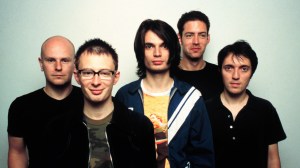
LOS ANGELES – JUNE 12: Rock band Radiohead (Thom Yorke 2nd from left) poses for a portrait at Capitol Records during the release of their album OK Computer in Los Angeles, California on June 12, 1997. (Photo by Jim Steinfeldt/Michael Ochs Archives/Getty Images)