When people think of songs that are considered one-hit wonders, the general sense is that the tune is humorous, silly, or goofy. But in the history of music, there have actually been a few one-hit wonder tracks that have been banned from various institutions. Hard to believe? Well, it’s true.
Here below, we wanted to explore three such musical offers. Let’s explore a trio of one-hit wonders that actually had haters, detractors, and folks campaigning against their public consumption. Indeed, these are three one-hit wonders that were banned for ridiculous reasons.
Videos by American Songwriter
“Relax” by Frankie Goes To Hollywood from ‘Welcome To The Pleasuredome’ (1983)
In January of 1984, Radio 1 DJ Mike Reed expressed his displeasure with this hit single from the 1983 LP, Welcome To The Pleasuredome. Reed expressed loudly that he thought the lyrics of the song were too explicit and suggestive. And around this same time, the BBC also said they were going to ban the track from its airwaves. Of course, this type of “negative” publicity only benefited the new wave tune, pushing it to no. 1 on the UK singles chart and no. 10 on the Billboard Hot 100. Later, though, the BBC took back their ban, and the song was allowed to be heard by all. The song opens with:
“Relax, don’t do it
When you want to go to it
Relax, don’t do it
When you want to come.”
“Timothy” by The Buoys from ‘The Buoys’ (1970)
This strange song is about a mining accident. Two of the survivors then, according to the lyrics, eat a third friend, cannibalizing him. Though the track wasn’t initially promoted by record execs, fans began to take notice of the lyrics and started requesting it at radio stations. Those stations began to wise up to what the lyrics were about and soon the tune was banned. Like “Relax”, that ban only served to increase popularity. “Timothy” went on to hit no. 17 on the Billboard Hot 100. The song opens with:
“Trapped in a mine that had caved in
And everyone knows the only ones left
Were Joe and me and Tim
When they broke through to pull us free
The only ones left to tell the tale
Were Joe and me.”
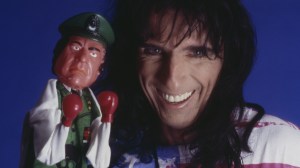
“Black Betty” by Ram Jam from ‘Ram Jam’ (1977)
While the above two songs were banned in real-time, the controversy over this classic rock hit came several decades after its release. Indeed, in 2006, the University of New Hampshire banned the song, which was popularized first by Lead Belly in the early 20th century, from its school hockey games, thinking that the track insulted a “segment of society.” School officials thought the tune was insulting a black woman named Betty and had racist undertones. But the band’s lead singer said it was about pinup star Bettie Page. (Whether that’s true or not, who knows.) Regardless, the original tune was written by one of the most famous black blues musicians of all time. And the song’s subject could very well refer to a type of whisky or motorcycle.
The students at the school didn’t take it lying down, they started a campaign to bring the song back. And it worked, as “Black Betty” was played again at a game in 2013. Sings Ram Jam lead vocalist Bill Bartlett:
“Whoa, Black Betty, bam-ba-lam
Whoa, Black Betty, bam-ba-lam
Black Betty had a child, bam-ba-lam
The damn thing gone wild, bam-ba-lam
Said, “It weren’t none of mine,” bam-ba-lam
The damn thing gone blind, bam-ba-lam
I said, oh, Black Betty, bam-ba-lam
Whoa, Black Betty, bam-ba-lam.”
Photo via Ram Jam music video screenshot
More The List
-
CIRCA 1966: Singer Mick Jagger of the rock and roll band "The Rolling Stones" performs onstage in circa 1966. (Photo by Michael Ochs Archives/Getty Images) -
Aerosmith Aerosmith, Steven Tyler, Vorst-Nationaal, Brussels, Belgium, 31st October 1993. (Photo by Goedefroit Music/Getty Images) -
UNSPECIFIED – JANUARY 01: John LENNON between 1970 and 1973. (Photo by Keystone-France/Gamma-Keystone via Getty Images) -
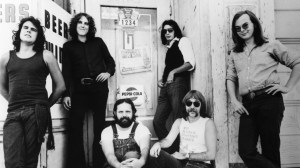
1972: (L-R) Jim Hodder, David Palmer, Denny Dias, Donald Fagen, Jeff "Skunk" Baxter and Walter Becker of the rock band "Steely Dan" pose for a portrait in 1972. (Photo by Michael Ochs Archives/Getty Images) -
Photo by Michael Ochs Archives/Getty Images -
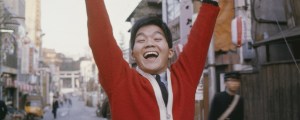
Kyu Sakamoto. (1941-1985) Japanese singer, best known outside Japan for his international hit song "Ue o Muite Aruko" (known as "Sukiyaki" in English-speaking markets), which was sung in Japanese and sold over 13 million copies. It reached number one in the United States Billboard Hot 100 in June 1963, making Sakamoto the first Asian recording artist to have a number one song on the chart. (Photo by Sjöberg Bildbyrå/ullstein bild via Getty Images) -
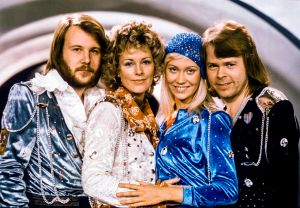
Picture taken in 1974 in Stockholm shows the Swedish pop group Abba with its members (L-R) Benny Andersson, Anni-Frid Lyngstad, Agnetha Faltskog and Bjorn Ulvaeus posing after winning the Swedish branch of the Eurovision Song Contest with their song "Waterloo". – Sweden's legendary disco group ABBA announced on April 27, 2018 that they have reunited to record two new songs, 35 years after their last single. The quartet split up in 1982 after dominating the disco scene for more than a decade with hits like "Waterloo", "Dancing Queen", "Mamma Mia" and "Super Trouper". (Photo by Olle LINDEBORG / TT News Agency / AFP) / Sweden OUT (Photo credit should read OLLE LINDEBORG/AFP via Getty Images)