
These rock songs from the 1970s have deeply visual lyrics. Listening to them feels like walking through a gallery. Your mind can’t help but visualize scenes and portraits instead of notes and melodies. Revisit these rock songs to get the visceral reaction their lyrics provide.
[RELATED: 3 Folk Songs From the 1960s That Are as Visual as Any Painting]
Videos by American Songwriter
“Echoes” — Pink Floyd
Pink Floyd’s songs were always more than just hit material. They imbued their songwriting with imaginative lyrics, powerful imagery, and weighty concepts. Take “Echoes”, for example. This rock song about empathy and human connection is among their most visual songs, completely building a world for the listener to inhabit.
“Overhead the albatross / Hangs motionless upon the air / And deep beneath the rolling waves / In labyrinths of coral caves,” the lyrics read. All of this band’s efforts feel tangible. They are more than catchy riffs and memorable lyrics. This song is one of the best showcases of their ability to make more out of a song than many thought possible.
“Kashmir” — Led Zeppelin
Led Zeppelin is another band that takes its listeners on epic journeys. “Kashmir”, one of their most recognizable songs, does just that. “Oh, let the sun beat down upon my face / With stars to fill my dream / I am a traveler of both time and space / To be where I have been,” the lyrics read. It’s easy for the listener to step away from whatever scenery they are in and take a moment to travel somewhere else.
The visuals in this song require very little for the listener to see them plainly. Words are instantly synthesized into scenes without the listener’s help.
“The Carpet Crawlers” — Genesis
Genesis got majorly existential on “The Carpet Crawlers”. “There is lambswool under my naked feet / The wool is soft and warm / Gives off some kind of heat / A salamander scurries into flame to be destroyed / Imaginary creatures are trapped in birth on celluloid,” the lyrics read. This almost stream-of-consciousness-style song drops the listener into a fully realized scene, instantly imbuing them with the lyrics’ emotions.
Inspired by Islamic prayer, the song sees characters kneeling down in search of the divine. The band conveyed that idea with cinematic visuals. If you close your eyes while listening to this song, you can nearly feel the carpet underneath the narrator’s feet and the other visceral experiences they go through.
(Photo by Smith Collection/Gado/Getty Images)
More The List
-

American pop singer Cyndi Lauper, Hawaii, October 1986. (Photo by Michael Putland/Getty Images) -

Retro des concerts de Prince car il entame une tournée mondiale avec son album a Los Angeles, 1 janvier 1986. (Photo by Bill Marino/Sygma via Getty Images) -
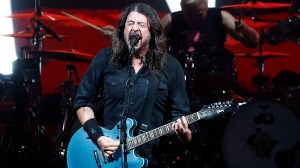
WASHINGTON, DC – MARCH 05: Dave Grohl (L) and Josh Freese (R) of Foo Fighters perform at the Power to the Patients concert at The Anthem on March 05, 2024 in Washington, DC. (Photo by Paul Morigi/Getty Images) -
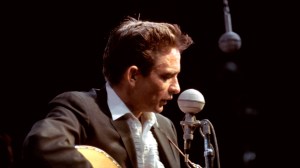
UNITED STATES – JULY 24: NEWPORT FOLK FESTIVAL Photo of Johnny CASH, Johnny Cash performing on stage (Photo by Gai Terrell/Redferns) -

Photo By Rick Diamond/Getty Images -
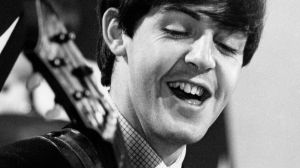
UNITED KINGDOM – DECEMBER 15: THANK YOUR LUCKY STARS Photo of BEATLES and Paul McCARTNEY, of the Beatles, performing at Alpha Television Studios, Aston, Birmingham (Photo by David Farrell/Redferns) -

UNITED STATES – JANUARY 01: BOTTOMLINE Photo of Carly SIMON (Photo by Richard E. Aaron/Redferns) -
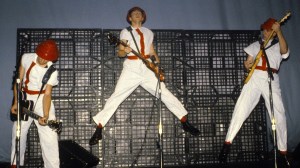
PETALUMA, CA – AUGUST 1980: Devo performs at the Phoenix Theater in August 1980 in Petaluma, California. (Photo by Ed Perlstein/Redferns/Getty Images)