Songwriters and artists sometimes must use language that others find upsetting or offensive when creating their material. That’s when the censors occasionally step in and make some changes.
These four songs were changed somewhat for radio consumption, sometimes without the artist’s control. And yet they overcame that to become giant hits anyway.
Videos by American Songwriter
“Brown-Eyed Girl” by Van Morrison
Although it’s become a pop music staple, Van Morrison, who wrote and recorded the song, has never been all that complimentary of “Brown-Eyed Girl”. That could be because the contract that he signed back in the day prevented him from ever earning any royalties from the track. Then there’s the fact that his line “makin’ love in the green grass” proved problematic with censors. By the late 60s free-love era, the idea of “makin’ love” had changed from the American Songbook era, when composers could get away with it. Instead, the censors simply substituted a phrase (“laughin’ and runnin’”) that Morrison had used earlier in the song.
“Locomotive Breath” by Jethro Tull
This is one song on this list that wasn’t a hit single. Still, the album track off Jethro Tull’s breakthrough 1971 album Aqualung earned plenty of airplay at the time. And it has since become one of the band’s most well-known tracks. Written and sung by the band’s frontman Ian Anderson, “Locomotive Breath” features a thunderous groove and some lyrics that were meant as a commentary about overpopulation. But one Anderson line gave the censors fits. When he sang, “And the all-time winner/Has got him by the balls,” the word “fun” replaced “balls” in some radio edits. Others simply bleeped the word out. These days, you’ll mostly hear “Locomotive Breath” without the strange edits.
“Money” by Pink Floyd
Like their British rock royalty peers Led Zeppelin, Pink Floyd generally thumbed their noses at the idea of releasing singles for radio consumption. They believed in the purity of their theme albums and didn’t like bite-sized bits out of them being promoted. But when The Dark Side Of The Moon took off in 1973, there was no way to stop the onslaught. “Money”, with its ridiculously catchy off-kilter groove and Roger Waters’ pointed lyrics, found its way to the airwaves. One of Waters’ lines was a little too pointed for the guardians of radio. When David Gilmour spits out the line about, well, let’s shorten it to “BS,” it was awkwardly edited out. That didn’t stop the song from becoming a Top 15 hit in the US.
“You Don’t Know How It Feels” by Tom Petty
It was often unintentionally amusing to hear just how some of these edits were done. Tom Petty chose “You Don’t Know How It Feels” as the lead single from Wildflowers, his 1994 LP that would go on to become one of his most celebrated. The song is a somewhat wry treatise on being comfortable within your own skin, regardless of what might befall you. The narrator suggests some recreational activity to deal with the hardship. Petty sings, “Let’s roll another joint.” Well, that was an issue for many of the gatekeepers. That included the video channels that played Petty’s clever clip. The edit most commonly heard featured a backward rendering of the word “joint.” That sounded much more hallucinogenic than the actual word.
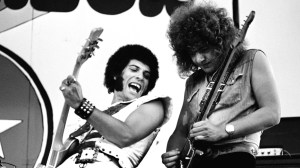
(Photo by Koh Hasebe/Shinko Music/Getty Images)
More The List
-
UNSPECIFIED – CIRCA 1970: Photo of Iron Butterfly Photo by Michael Ochs Archives/Getty Images -
CheapTrickA_11A_crop Cheap Trick, Copenhagen 1979 ©Jorgen Angel www.angel.dk -
American pop singer Bobby Vee. Original Publication: People Disc – HM0348 (Photo by Hulton Archive/Getty Images) -
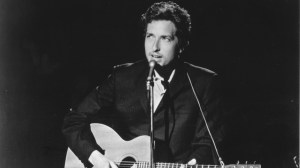
NASHVILLE, TN – JUNE 07: Bob Dylan appearing on 'The Johnny Cash Show' for ABC/TV taped at Ryman Auditorium on June 7, 1969 in Tennessee, Nashville. (Photo by Michael Ochs Archives/Getty Images) -
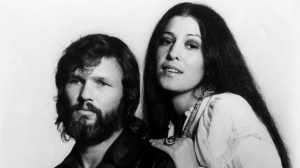
LOS ANGELES – CIRCA 1973: Husband and wife musicians Rita Coolidge and Kris Kristofferson pose for a portrait circa 1973. (Photo by Michael Ochs Archives/Getty Images) -
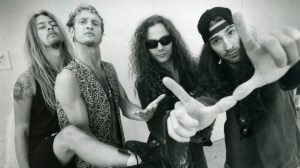
Rock group Alice in Chains. Left to right Jerry Cantrell, guitar; Layne Staley, vocals, Michael Starr, bass and Sean Kinney in Hollywood for rehearsal July 1991. -
Photo by Larry Hulst/Michael Ochs Archives/Getty Images