
Al Stewart, the British singer/songwriter best known for his melodic 1976 soft-rock hit “Year of the Cat,” celebrated his 80th birthday on September 5.
Born in Greenock, Scotland, in 1945, Stewart grew up in Wimborne, England. He began his music career playing in Beatles inspired beat groups, but soon became enamored with Bob Dylan and started playing acoustic guitar as part of the London folk scene of the mid-1960s.
Videos by American Songwriter
[RELATED: The Story of Dogged Determination Behind Al Stewart’s “Year of the Cat”]
Stewart released his debut album, Bedsitter Images, in 1967. His second studio effort, Love Chronicles (1969), featured contributions from Led Zeppelin’s Jimmy Page and John Paul Jones, as well as from members of Fairport Convention.
By the mid-1970s, the singer/songwriter/guitarist had begun to move away from folk and embraced a more melodic rock sound. In 1974, Stewart began working with producer Alan Parsons, with their first collaboration, Modern Times, arriving in ’75.
This marked the start of Stewart’s most successful commercial period. Over the next several years, Al scored four Top-40 hits on the Billboard Hot 100.
Stewart continued releasing new albums every few years over the next couple of decades, with his last studio effort to date, Spark of Ancient Light, coming out in 2008. Al currently is winding down the U.S. leg of a farewell tour that’s scheduled through a September 9 concert in New York City.
He also has a run of fall European dates plotted out from a September 9 concert in Amsterdam through an October 20 show in Dublin.
In celebration of Stewart’s milestone birthday, here’s a look at his four biggest chart hits:
“Year of the Cat” (1976)
“Year of the Cat” was Stewart’s breakthrough hit, and the title track of his follow-up to Modern Times. Al co-wrote the song with Peter Wood, who played keyboards on the Year of the Cat album. Wood was responsible for the piano riff that Stewart built the song around.
A musical highlight of the track was a jazzy saxophone solo by Phil Kenzie. Producer Parsons later tapped Kenzie to play sax on a couple of Stewart’s other hits.
“Year of the Cat” originally was called “Foot of the Stage,” and featured lyrics Stewart had written about British comedian Tony Hancock, who died by suicide in 1968. Unhappy with the lyrics, Al eventually was inspired to write new lyrics after a seeing “the Year of the Cat” mentioned in a book of Vietnamese astrology belonging to his girlfriend. He also incorporated imagery from the famous film Casablanca to tell the story of a man who has an affair with a mysterious woman while visiting Morocco.
“Year of the Cat” peaked at No. 8 on the Hot 100. It remains Stewart’s signature song.
The Year of the Cat album, meanwhile, reached No. 5 on the Billboard 200 and went on to be certified platinum by the RIAA for sales of 1 million copies in the U.S.
“Time Passages” (1978)
Stewart’s follow-up to Year of the Cat, Time Passages, also was produced by Parsons and was released in 1978. The album’s title track became Al’s highest-charting hit in the U.S., peaking at No. 7 on the Hot 100.
“Time Passages” also topped Billboard’s Easy Listening chart for 10 weeks, the longest run on the tally of any single during the 1970s.
Stewart co-wrote the song with Peter White, who played lead guitar with Al for many years.
Like “Year of the Cat,” “Time Passages” has a breezy, jazzy feel and featured a sax solo by Kenzie.
Despite its commercial success, Stewart was that enamored with the tune. He explained in multiple interviews that the song was the result of Clive Davis, the head of Al’s record label, pushing him to write something in the vein of “Year of the Cat” so he could score another hit.
The Time Passages album reached No. 10 on the Billboard 200, also was certified platinum.
“Song on the Radio” (1978)
“Song on the Radio” also appeared on the Time Passages album. Released as a single in January 1979, it reached No. 29 on the Hot 100.
As evidenced by its title, “Song on the Radio” was another attempt to please Davis and score a charting hit.
Once again, Kenzie was employed to play a saxophone solo.
“Midnight Rocks” (1980)
“Midnight Rocks” was Stewart’s fourth and final Top-40 hit on the Billboard Hot 100. The song appeared on Al’s 1980 studio album 24 Carrots, which Stewart co-produced with Chris Desmond.
The mellow pop-rock tune also was co-written by Stewart and White. “Midnight Rocks” reached No. 24 on the Hot 100.
(Photo by Donald Kravitz/Getty Images)
More The List
-
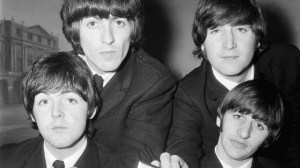
The Beatles pose with their MBEs at a press conference held at the Saville Theatre, London, following their investiture at Buckingham Palace. Top left to right: George Harrison, John Lennon. Bottom: Paul McCartney and Ringo Starr. 26th October 1965. (Photo by Mirrorpix via Getty Images) -
George Michael performing in 1989. (Photo by Jim Steinfeldt/Michael Ochs Archives/Getty Images) -
American singer-songwriter Donna Summer (1948 – 2012) performing on stage, USA, July 1979. (Photo by Michael Putland/Getty Images) -
Photo by Michael Ochs Archives/Getty Images -

ROSEMONT, IL – JUNE 7: Phil Collins of Genesis performs at the Rosemont Horizon on June 7, 1980 in Rosemont, Illinois (Photo by Paul Natkin/WireImage) -
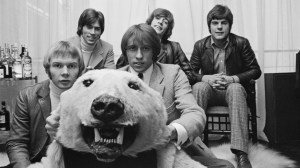
Pop group the Bee Gees posed with a stuffed polar bear in an office in London circa April 1968. Members of the band are, from left, Colin Petersen, Barry Gibb, Maurice Gibb (1949-2003), Robin Gibb (1949-2012) and Vince Melouney. (Photo by Ivan Keeman/Redferns) -
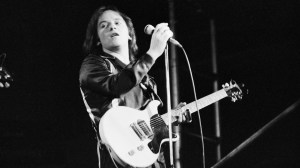
Singer, songwriter and musician Eric Stewart performing with English rock band 10cc, February 1976. (Photo by Michael Putland/Getty Images) -

Patrick Swayze and Jennifer Grey in a scene from the film 'Dirty Dancing', 1987. (Photo by Vestron/Getty Images)