Your cart is currently empty!



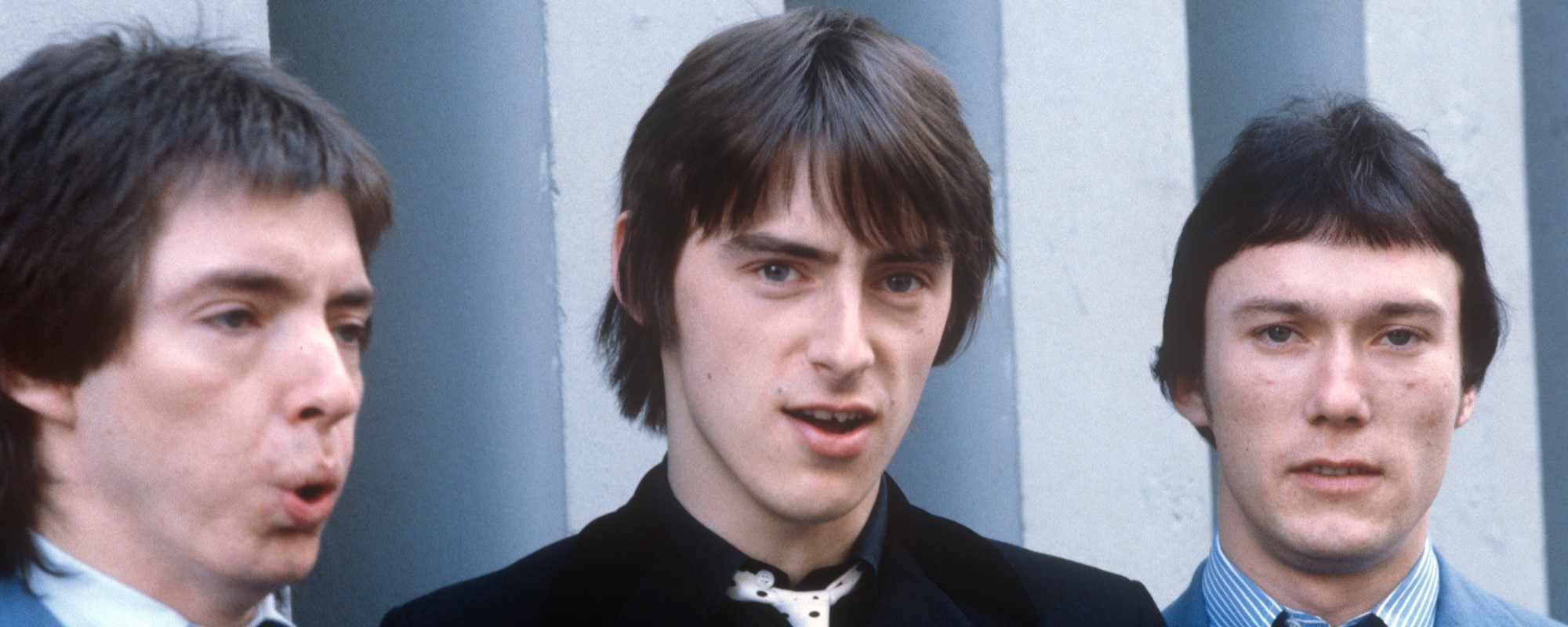
“That’s Entertainment” remains one of The Jam’s most popular songs. But the mostly acoustic track is a musical departure from the band’s signature punk. However, what wasn’t a departure for the mod icons was the trio’s run of iconic songs detailing working-class life in the U.K.
Videos by American Songwriter
About “That’s Entertainment”
On “That’s Entertainment”, Paul Weller describes a typical working-class day, using dreary anecdotes, boredom, and lazy-day listlessness to set up an ironic refrain. While many working-class anthems offer hope, here, Weller just acknowledges the ennui of daily life.
It appears on The Jam’s 1980 album, Sound Affects. The band, which included bassist Bruce Foxton and drummer Rick Buckler, released one more album, The Gift, in 1982.
Days of speed and slow time Mondays
Pissing down with rain on a boring Wednesday
Watching the news and not eating your tea
A freezing cold flat and damp on the walls.
Weller wrote the song while he observed life in London happening around him. “As I recollect, it was a very easy song to write,” Weller told BBC Radio 2, “because all the images were right in front of me, really, right down to the police car going past at night and the damp on the walls.”
Waking up from bad dreams and smoking cigarettes
Cuddling a warm girl and smelling stale perfume
A hot summer’s day and sticky black tarmac
Feeding ducks in the park and wishing you were far away.
Written Quickly and a Musical Departure
Weller said, “As the story goes, I came home from a pub and wrote it in like 10 or 20 minutes or something; just kind of dashed it all off, then got the music together afterwards.”
The mod revivalists became known as a power trio, with punk and new wave hits like “Town Called Malice”, “Going Underground”, and “In The City”. But Weller’s acoustic tune puts the lyrics front and center. Making it the kind of ideal anthem that foreshadowed future songs by Oasis and Blur.
Both bands used the same blueprint by writing melodic songs, then serenading listeners in a sneering punk voice. Though The Jam didn’t see much success in America, they became bona fide rock stars in the U.K. with four No. 1 singles and nine others reaching the top 10.
After The Jam broke up in 1982, Polydor Records reissued all 16 U.K. singles, and every one charted again. The Jam’s legacy and the Englishness in Weller’s songs helped shape domestic indie music, especially Britpop.
I say, that’s entertainment.
Photo by Tim Roney/Radio Times/Getty Images










Leave a Reply
Only members can comment. Become a member. Already a member? Log in.