Your cart is currently empty!



On This Day in 2003, We Lost the Outlaw Country Legend Who Helped Thousands Quit Their Jobs in Style and Penned Major Hits for Tammy Wynette and Ray Price
On this day (February 19) in 2003, Johnny Paycheck died at Vanderbilt University Medical Center in Nashville. He was 64 years old. Today, he is remembered as an outlaw country legend with hits like “Take This Job and Shove It” and “She’s All I Got.” Before his successful solo career, he was a session musician and a member of George Jones’ band.
Videos by American Songwriter
The story of Paycheck’s journey to country stardom sounds like the plot of an especially gripping movie. He began playing guitar at age six and was competing in talent shows three years later. When he was 15, he ran away from home and began hitchhiking, hopping trains, and singing in clubs around the country. A few short years later, he joined the United States Navy. However, his military career was short-lived. He was court martialed and sentenced to two years in the brig after assaulting a superior officer. After finishing his sentence, he moved to Nashville.
[RELATED: 4 One-Hit Wonders Who Left a Lasting Mark on Country Music]
Paycheck tried to start his solo career shortly after moving to Nashville. According to a biography, he released a pair of failed rockabilly singles on Decca Records. Then, he moved to Mercury Records, where he released a pair of country singles that also flopped. Soon, he started doing session work. He played bass, steel guitar, and sang harmony for the likes of Ray Price, Porter Wagoner, and Faron Young. However, his temper prevented him from staying with any of the performers for long.
Then, he joined George Jones’ Jones Boys, where he sang harmony and played bass. Fans can still hear his voice on classics like “The Race Is On” and “Love Bug,” among others. Paycheck and Jones’ volatile personalities meshed well, and they became friends. He stayed with the Jones Boys for four years before taking another shot at a solo career.
Johnny Paycheck Goes Solo
Johnny Paycheck’s second run at a solo career was much more successful. He linked with producer Aubrey Mayhew, who produced two singles for Hilltop Records–“A-11” and “Heartbreak Tennessee”–which peaked at No. 26 and No. 40, respectively. While “A-11” wasn’t a major chart hit, it helped put Paycheck on the map and garnered multiple award nominations.
After seeing some success, Paycheck and Mayhew formed Little Darlin’ Records. Shortly thereafter, he landed his first top 10 hit with “The Lovin’ Machine” in 1966. He would continue to see moderate success throughout the rest of the decade. His peak came in the mid-1970s.
Paycheck also found success as a songwriter as his recording career blossomed. Notably, he penned “Apartment No. 9” with Fuzzy Owen and Bobby Austin. It became Tammy Wynette’s first solo hit. He also wrote “Touch My Heart,” which was a top-five hit for Ray Price.
Paycheck scored a major hit in 1971 with “She’s All I Got,” which peaked at No. 2 on the country chart. He had a few more hits in the first half of the decade, including “Mr. Lovemaker,” “Song and Dance Man,” and “Someone to Give My Love To.” His biggest career hit, and sole No. 1, came in 1977 with the David Allan Coe-penned “Take This Job and Shove It.”
“Take This Job and Shove It”
Johnny Paycheck took the David Allan Coe-penned “Take This Job and Shove It” to the top of the country chart for two weeks. However, it was more than a hit song. It became a cultural phenomenon.
“Take this job and shove it” quickly became a popular phrase, helping countless underappreciated workers quit their jobs in style. Additionally, it was the inspiration for many book titles, including Take This Job and Love It.
The song also inspired a 1981 film of the same name. It starred Robert Hays and Art Carney, but both Paycheck and Coe had small roles.
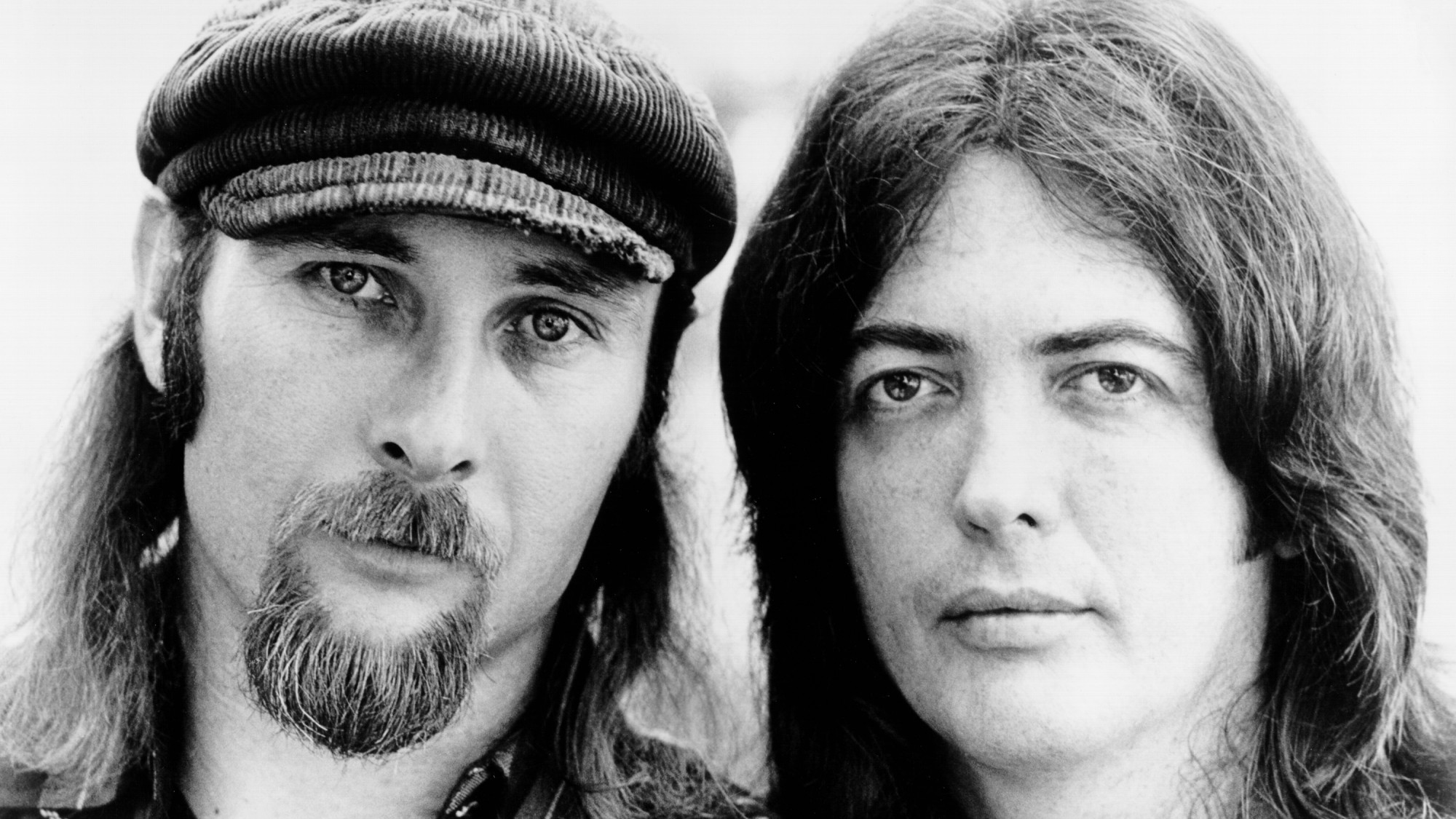
Featured Image by Paul Natkin/Getty Images



Leave a Reply
Only members can comment. Become a member. Already a member? Log in.