Your cart is currently empty!



Chris Hillman Reflects on the Collaborations, Friendships, and Musical Lessons That Defined His 60-Year Career
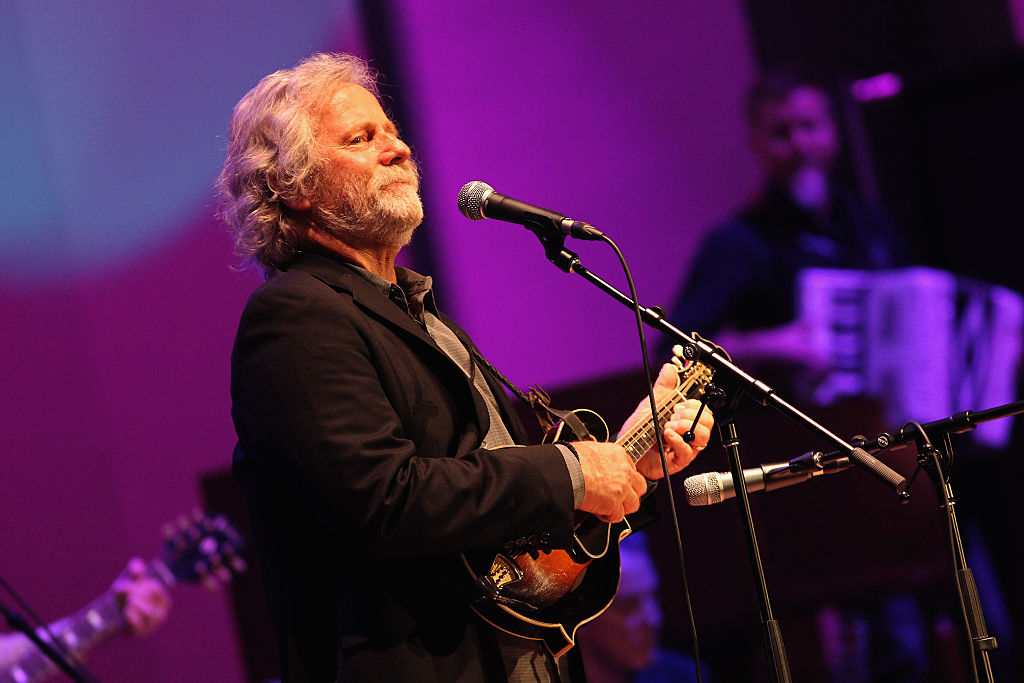
There’s no single artist who has been more responsible for initiating the brand that is now referred to as Americana than Chris Hillman. From his early beginnings as a teenager in the bluegrass bands The Scotsville Squirrel Barkers and the Hillmen, to his role as a co-founder of the Byrds, the Flying Burrito Brothers, and ultimately, his most recent outfit, The Desert Rose Band, Hillman has been at the forefront of each new initiative.
Videos by American Songwriter
“I was 19, and I had wonderful teachers in Roger McGuinn, Gene Clark, and David Crosby,” he says of his experience in the Byrds, the band that brought him his first taste of fame. “They had a lot of experience, and they were good singers. I could sing in tune, but at first, I didn’t have the commitment. Yet, I learned from the best.”
Early on, he was content to play the role of a reliable support musician while aspiring to little more. “I knew in my mind I wasn’t ready,” he says. “I knew in my heart, I wasn’t ready to be the leader, the front man, the Bruce Springsteen guy or whatever. I was a recording in progress. I saw myself as a band player, as a team player, and that’s what I enjoyed as a musician working in an entity with other guys.”
Eventually, he found he was ready to assume primary responsibilities for each of his efforts. The Flying Burrito Brothers was the first indication, as was his series of subsequent solo albums and those recorded with his esteemed associates. He gained added credence courtesy of several superstar collaborations, including the aforementioned Manassas, Souther-Hillman-Furay, and the trio of former Byrds—McGuinn, Clark & Hillman.
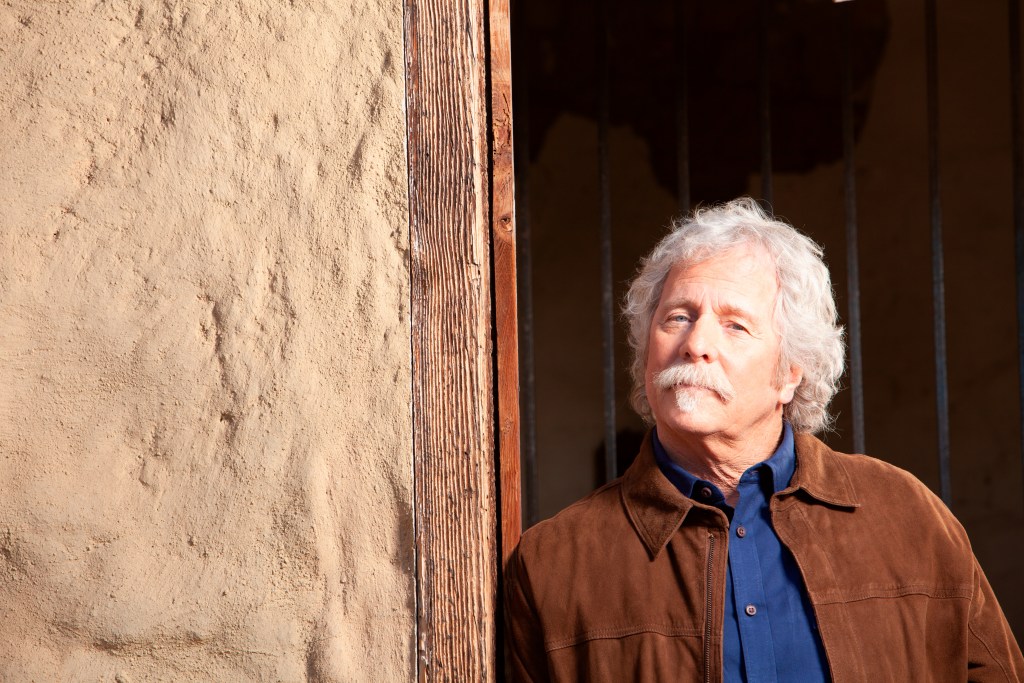
It’s hardly surprising, then, that Hillman looks back on each of those efforts with a great degree of fondness. “Manassas had a good two-year run,” Hillman says. “It was a really great live band. I learned a lot from Stephen, a lot of guitar playing, a lot of songwriting techniques, but then CSN got back together. Shortly after that, I got a phone call from David Geffen, our favorite music mogul, and he suggested I start a band with Richie Furay and JD Souther. I didn’t know JD, but I knew Richie, and eventually I did get to know JD. It was an interesting band, and JD and I became very close. He was a wonderful and very, very talented songwriter. David said we were up there on a level with Crosby, Stills and Nash, and I said, ‘You’re right.’ It really did work. However, it was a temporary thing for all of us, and then off we went to other things.”
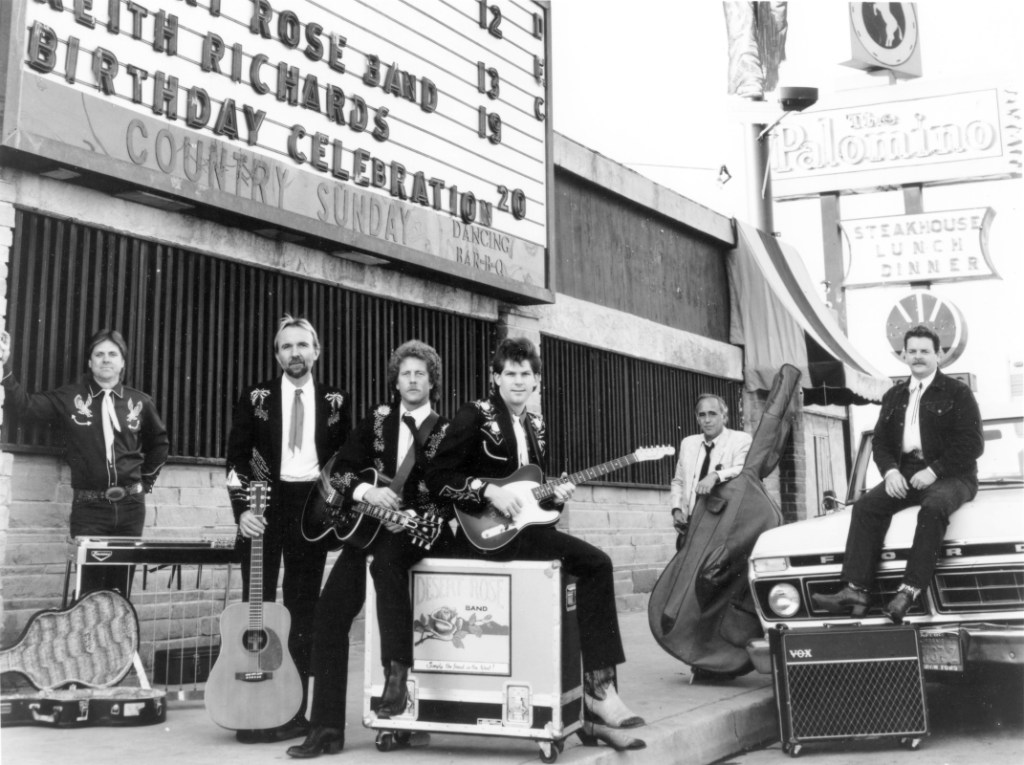
Those other things eventually included The Desert Rose Band. They recently released a swan song of sorts, The Desert Rose Band Live at the Country Music Hall of Fame and Museum CMA Theatre. Recorded three years ago as part of a one-off reunion, it represents the final chapter in Hillman’s iconic 60-year career. Indeed, Hillman refers to it as his final hurrah.
“It was a really amazing night,” he says. “We went out there and played better than we probably ever played before. And when we came off stage, everybody was going, ‘We’ve got to go on the road!’ And I said, ‘No, we don’t. We’re taking the gloves off tonight. We’re done. That was the last run, so enjoy it. Enjoy what we did.’ It was so much fun, because that was an amazing band.”
So too, his affection for that final effort is obvious. “It is a great album, a great last calling card,” he says. “Whether you like us or not, we were on the game that night. It’s obvious.”
It’s hardly surprising, then, that he refers to The Desert Rose Band as the best band he was ever associated with. “It was the professionalism,” he insists. “We were in the 90th percentile. We didn’t have any baggage to speak of. Figurative baggage, that is, with people getting in trouble and mischief and all that. Everybody was a really professional musician and so good. So, yeah, it was a wonderful night.”
The fact that the Desert Rose Band provided him with the longest tenure of all his outfits informs his feelings as well. “That’s where I became the captain of the ship,” he says. “I was the lead singer, and I was leading the band. And due to the experience I got from all the people I worked with, it all came to a head there. All the bands that I was with were good. They were all great, but they were leading up to that point where I became the captain of the ship. Prior to that, I was the first mate.”
Still, it’s somewhat surprising that Hillman demurs when it comes to claiming the role he played in formulating the growth of Americana.“I was following what I like to do,” he says. “Having come out of being a bluegrass mandolin player, I had a great love of country music and traditional bluegrass, and so I was really just doing what I wanted to do. And along comes Gram Parsons, and he was a good ally in that sense. We did the first Burrito Brothers album, and as far as the songwriting was concerned, that was a really good partnership. I enjoyed working with him then, but we just couldn’t connect after that.”
Still, he clearly recognizes the results of the efforts they attained early on. “I’ll tell you what I like about Americana,” he says. “It’s the fact that it conveniently puts everything into a nice arena, a nice place that covers delta blues to bluegrass to country to rock, to whatever you want to call it.”
Ultimately, he credits The Byrds with expanding the parameters of rock into the realms of folk, country, psychedelia, raga rock, space rock, and beyond.
“It was all there,” he says. “It was a convenient thing for a lot of journalists to talk about. We were adding something to a basic rock and roll entity. Plus, rock and roll and country weren’t that far apart anyhow. I was listening to Elvis Presley’s first album the other day. That song ‘Good Rockin’ Tonight’… it was so amazing where he was coming from.”
Nevertheless, with The Byrds and the Burritos, Hillman helped push the parameters even further. “I must say the Burritos had the songs,” Hillman muses. “Songs like ‘Sin City,’ which is where Gram shined. He was so ambitious at that point, and we really connected as far as writing lyrics and melodies.”
However, Hillman also adds that it took a while for the Burrito Brothers to attain the credit they deserved. “It’s funny, The Burrito Brothers couldn’t get arrested when we first came out, and then four or five years later, we started happening,” he says. Gram left. Rick Roberts came in. He was good. …very good. It was almost like I had a bit of a training ground, because we had these great players. So the Burritos changed slightly. We went from very country on the first album to a few other things that we were able to do musically. We still sell records. We’re actually receiving residuals and royalties. So there you go.”
Yet in retrospect, Hillman’s memories of Parsons tend to be a bit bittersweet.
“Well, to be really honest, he was a nice, good guy,” Hillman maintains. “The thing where Gram couldn’t make the grade was the fact that he didn’t suffer like everybody else who went out there to bean actor or a musician. He never had to suffer. He had a trust fund. He came from a very, very wealthy family. That ingredient wasn’t helpful for him in terms of achieving what he wanted to achieve. I think at first he wanted to achieve a certain something, and then he didn’t. He certainly got seduced by a lot of dark things. It was beyond me, because he was just not genuine with the rest of us. So I had to let him go, because he was being selfish. He wasn’t being a team player. It was affecting our performances. I loved the guy, and it’s a shame he died so young. At age 27, he died of drugs. Drugs were the worst scourge that ever hit this country. I don’t care what you do for a living, it’s still out there, and it makes me crazy.”
Naturally, the subject of his former bandmate David Crosby comes up, and there, too, he has nothing but praise for his former colleague, despite some personal and political differences.
“Deep down inside, David was a good person,” Hillman says. “He helped me out immensely when I was sick years ago. He helped me out in a lot of ways. We always stayed in touch. I’ll say it again. He was one of the most gifted singers I ever worked with. You hear his harmony vocals in The Byrds and CSN, and it’s amazing and so beautiful. He did a lot of choir-type singing and a lot of glee club kind of stuff like that in school.”
A few years ago, Hillman and McGuinn recruited Marty Stuart and his band, The Superlatives, for a tour that celebrated Sweetheart of the Rodeo, one of the most significant Americana albums. “It was oneof the better tours I’ve ever been on,” Hillman says. “Marty Stuart is a fantastic musician, as are the Fabulous Superlatives. What a great band, maybe the best band in America, because they can play anything. They can play a surf song, they can play blues, they can play country. They’re so good and such good guys. Talk about professionalism. We were on the game every single night, and they were a joy to work with. Marty has become a dear friend.”
Nevertheless, it was rumored that Crosby kept pressing McGuinn to put The Byrds back together. “When we did the Sweetheart of the Rodeo 50th anniversary tour, he thought The Byrds were going back out,” Hillman recalls. “So we wrote him a letter saying, ‘This is an album you weren’t involved in. You were gone, blah, blah, blah.’ It wasn’t meant to cause offense. I loved David, but he wasn’t always easy to work with.”
In 2020, Hillman chose to recount his career accomplishments in his acclaimed autobiography, Time Between: My Life As a Byrd, Burrito Brother, and Beyond.
“It did quite well,” he says. “That was fun, and I remembered everything. I purposely did not want to write a book denigrating people I worked with, nor did I want to talk about drugs or any of that other stuff. So when BMG Books came to me and talked about wanting to publish it, I said, ‘I’m not giving you a book full of the same cliches—the sex, drugs, rock and roll stuff. I’m not doing that.’ And they said, ‘We don’t want that,’ so I said, ‘Great, let’s do business.’ I talked about the music. And the subtext was about getting back up and keeping moving. You get knocked down. That’s life. That’s what life’s all about. But you get back up on your feet and keep moving forward. I wished that I had kept the journal, but I didn’t. I just started it with the earliest memories I had. Once you start, once you put that foot in the water, you start swimming. I would write an hour or two a day, and then all of a sudden, I had a big fat manuscript sitting on the shelf.”
Asked to sum up his thoughts about his career overall, Hillman replied by saying there was really only one reason for his success. “I was blessed,” he claims. “I was just a lucky kid. I wasn’t the greatest player in the world. I wasn’t the greatest writer or singer, but God blessed me beyond measure, and man, that was where I leaped off into the great unknown.”
Still, as far as the future is concerned, his mind is made up.
He asks, “What am I going to do at 81 years old? Make a record? Go on the road? Promote it? No, I have arthritis in my hand, I don’t sing like I used to, and it’s hard for me to travel. You’ve got to leave on a high note.
“It’s funny how people miss that applause and the attention, and then come back and try to keep doing it. It’s never the same. You’re never at your high point. It’s hard to replicate that. That’s why we never put The Byrds back together. We had unbelievable offers, big, big money offers, but it wouldn’t be the same. McGuinn, in his wisdom, said, ‘Look, it’s best to leave a good memory. After all, we made great records.’ I don’t really want to do ‘the next thing.’ The next thing for me is a nap after we’re done talking.”
Leave a Reply
Only members can comment. Become a member. Already a member? Log in.