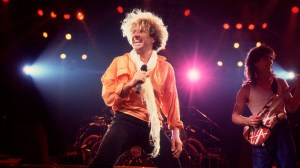
In the 2003 comedy movie, Old School, one of the most famous lines to come from the script was actor Will Ferrell yelling, drunkenly, “WE’RE GOING STREAKING!“
Well, if Ferrell was living in Omaha, Nebraska in the late 1980s, he may have found himself as part of the popular reggae-rock band 311 as a result of a similar outburst.
Videos by American Songwriter
But before we get into what that all means, let’s dive into the history of the band that gave the world hits like “Amber.” (And for more on “Amber” check out our behind-the-song interview with 311 frontman Nick Hexum HERE.)
Origins
311 is an American rock band from Omaha, Nebraska. The band formed in earnest in 1988 and rose to popularity in the 1990s, led by vocalist Nick Hexum. The group also included guitarist Jim Watson (more on him later), bassist Aaron “P-Nut” Wills, and drummer Chad Sexton. Watson was later replaced by guitarist Tim Mahoney in 1990, and in 1992, the band recruited Doug “SA” Martinez to provide backing vocals and turntable skills.
To date, the band has released a whopping 13 studio albums, two live albums, and four compilation records, along with four EPs and four DVDs. After a number of indie releases, the group was signed to Capricorn Records in 1992 and then released Music in 1993 and Grassroots in 1994.
But it was in 1995 when the band released its self-titled record that things changed. The album, 311, went triple-platinum and hit No. 12 on the Billboard 200 thanks to hit singles like “Down” and “All Mixed Up.” Indeed, “Down” topped the Billboard Hot Modern Rock Tracks in 1996.
Afterward, the band’s next three records all did well, including the 1997 LP, Transistor, which went platinum, as well the 1999 record Soundsystem and 2001 record From Chaos, each of which hit gold.
To date, 311 has sold about 10 million records in the United States alone.
Behind The Name’s Meaning
The group’s name comes from the police code, specifically that of its hometown, Omaha, Nebraska. It is short for the crime of indecent exposure (hello, Will Ferrell!).
The band, according to lore, decided to name itself for the police code after Watson, the group’s original guitarist, was arrested for streaking around their hometown.
While he wasn’t arrested for streaking (as far as we know), the band’s frontman, Hexum, is also one for the spotlight, telling American Songwriter that he was glad to be back performing after the pandemic.
“Music has an almost inexplicable capacity to help people relate through evoking emotions,” Hexum said. “Because if you were just to write the word ‘sad’ on a piece of paper, okay you know what that means. But if you play a piece of music you wrote while you were sad, people can really feel that.”
So, whether talking about sad emotions, giddy streaking exuberance or even feeling “all mixed up,” the band knows how to access its emotive multitudes.
(Photo by Ebet Roberts/Redferns)
More Features
-
CIRCA 1979: Loretta Lynn and Conway Twitty pose for a portrait in circa 1979. (Photo by Michael Ochs Archives/Getty Images) -
UNSPECIFIED – CIRCA 1970: Photo of Percy Sledge Photo by Michael Ochs Archives/Getty Images -
Bruce Springsteen and E Street Band perform in concert during the last show of the Born in the U.S.A. Tour, October 2, 1985 in Los Angeles, California. (Photo by Bob Riha, Jr./Getty Images) -
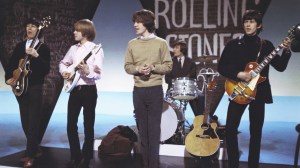
LONDON, ENGLAND – CIRCA 1965: British Rock Group "The Rolling Stones" perform on a TV Show in London, England circa 1965. Left to right: : Bill Wyman, Brian Jones, Mick Jagger, Charlie Watts, Keith Richards. (Photo by Cyrus Andrews/Michael Ochs Archives/Getty Images) -
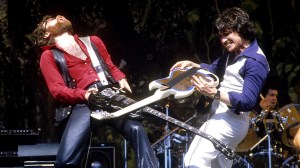
OAKLAND, CA – SEPTEMBER 2: Joe Bouchard and Buck Drama playing with 'Blue Oyster Cult' performing at Oakland Coliseum in Oakland, California on June 6, 1981. (Photo by Larry Hulst/Michael Ochs Archives/Getty Images) -
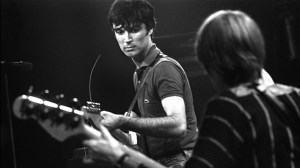
NEW YORK – 1977: David Byrne and Tina Weymouth of The Talking Heads perform live at GBGB in 1977 in New York City, New York. (Photo by Stephanie Chernikowski/Michael Ochs Archive/Getty Images) -
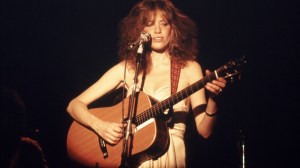
Photo by Richard E. Aaron/Redferns