It might be the catchiest song of all time.
It’s a ragtime-inspired song that’s funny, and goofy and creates community. That’s right, it’s “John Jacob Jingleheimer Schmidt.” Here, we will dive into the history and meaning of the popular North American song.
Videos by American Songwriter
The Lyrics
The lyrics to the song are short and simple, as you can see from the video below, taken from the popular and long-running ’90s children’s television show, Barney & Friends.
The lyrics are as follows, often sung in unison or even in a round, repeated often four times:
John Jacob Jingleheimer Schmidt
His name is my name too
Whenever we go out
The people always shout
There goes
John Jacob Jingleheimer Schmidt
[RELATED: Meaning Behind the Nursery Rhyme “It’s Raining, It’s Pouring”]
The Song’s Origins and “Yon Yonson”
As with many popular children’s songs that have been around for seemingly forever, the beginnings of “John Jacob Jingleheimer Schmidt” are a bit nebulous.
There is some evidence that it comes from the stage, particularly in vaudeville acts of the late 19th century. It was a popular song in American immigrant communities, too.
In the 19th and 20th centuries, America experienced a great deal of growth from immigrants. Many of them were from Europe and while, physically, they blended in, linguistically there were troubles. These issues were often highlighted in art and song to bring levity to the difficulties of many in foreign-born communities in the U.S. That is likely how “John Jacob Jingelheimer Schmidt” began.
Another song with similar origins is the traditional tune, “Yon Yonson,” which is also known as “Jan Jansen.” The song, which also dates back to pre-20th century Swedish vaudeville, goes like this:
My name is Yon Yonson,
I live in Wisconsin.
I work in a lumber yard there.
The people I meet as
I walk down the street,
They say “Hello!”
I say “Hello!”
They say “What’s your name?”
I say: My name is Yon Yonson… (repeated again and again).
More Recently
By the early-to-mid 20th century, “John Jacob Jingleheimer Schmidt” was widely known in North America. It was promulgated largely, perhaps to some surprise, by the Boy Scouts and Girl Scouts. For example, a newspaper article in The Times of Munster, Indiana said that during a Girl Scout event, the gals sat around a campfire, and “it was solemnly announced that John Jacob Jingleheimer Smith after a long and useful life had died from overwork on the way to Whiting. He was buried with due ceremony and his ghost is not to be seen until October first. All the favorite camp songs were sung.”
In addition, an article from 1927 in the Portsmouth Daily Times talked about a group of boys from a YMCA camp who sang camp songs, including “John Jacob Jingleheimer Schmidt.”
Infinite Songs
The best part of the song, perhaps, and the reason it is so popular for kids, especially when around a campfire, is that it is supposed to be sung repeatedly, even infinitely. Sing it once and keep going. Sing it 10 times and keep going. In this way, the song resembles others like “The Song That Never Ends.”
Other Renditions and Popular Culture
Over the years, the song has become so popular that it’s even appeared in other languages, including a Spanish version, “Juan Paco Pedro de la Mar.”
To date, the song has been sung and recorded many times. It even appears in a swath of popular culture offerings, from the 1997 film, Rocketman, and the 2000 movie, Disney’s The Kid, to an episode of the popular cartoon show, King of the Hill. Even Elmo sang it in the Sesame Street home video Kids’ Favorite Songs.
Final Thoughts
Due to its goofy lyrics and required repetition, the song only becomes sillier and sillier as it goes. That is aided, of course, by the goofy names involved: Jingleheimer Schmidt.
It’s funny, too, because the song starts out with relatively normal names: John and Jacob. But it quickly takes a left turn into the more unusual, creating a dichotomy that is hard to deny.
Photo by Buyenlarge/Getty Images
More Features
-
IRVINE, CA – AUGUST 14: Tom Petty and The Heartbreakers in concert at Irvine Meadows Amphitheater on August 14, 1989 in Irvine, California. (Photo by Jeffrey Mayer/WireImage) -
UNITED STATES – JULY 24: Photo of Johnny CASH; Johnny Cash performing on stage, (Photo by Gai Terrell/Redferns) -
NASHVILLE, TN – OCTOBER 29: Eagles, Timothy B. Schmit, Vince Gill, Don Henley, Decon Frey and Joe Walsh perform during the Eagles in Concert at The Grand Ole Opry on October 29, 2017 in Nashville, Tennessee. (Photo by Rick Diamond/Getty Images) -

NASHVILLE, TENNESSEE – SEPTEMBER 12: Honoree Vince Gill attends CMT Giants: Vince Gill at The Fisher Center for the Performing Arts on September 12, 2022 in Nashville, Tennessee. (Photo by Jason Davis/Getty Images for CMT) -
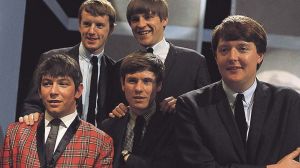
UNITED KINGDOM – JANUARY 01: BBC STUDIO Photo of ANIMALS, L-R: Eric Burdon, John Steel, Hilton Valentine, Alan Price, Chas Chandler, posed, group shot on set of TV Show (Photo by David Redfern/Redferns) -

LEXINGTON, KENTUCKY – JUNE 07: Tyler Childers performs during Day 2 of the 2026 Railbird Music Festival at The Infield at Red Mile on June 07, 2026 in Lexington, Kentucky. (Photo by Stephen J. Cohen/Getty Images)