
UP FROM THE DELTA
Henry C. Speir had good business sense, but more importantly he had good ears. In addition to running an enormous and enormously profitable store in Jackson, Mississippi, which catered to a predominantly African-American clientele despite the fact that Speir himself was white, he also worked as a talent scout for numerous labels around the country. In the upper floor of his store was a small recording studio where aspiring musicians could lay down a track or two, but most of his discoveries were made on the road. He traveled every two-lane and gravel trail in the South looking for anybody playing the kind of music he knew he could pass along to a label for the $150 finder’s fee. Paramount was not the only label he worked for, but knowing it had an open-door policy, he sent many artists up to Wisconsin.
In 1928, Charley Patton wrote a letter to Speir requesting an audition, and the businessman made the drive north to Dockery Plantation, an enormous sharecropper community outside Clarksdale, Mississippi. Patton had already been playing for twenty years, so by the late 1920s, his repertoire was large and diverse. Speir was impressed not only by his agile guitarwork and his gruff vocals, but also by his arsenal of original tunes, a rare commodity among blues musicians at the time.
Among those originals was “High Water Everywhere,” which was split across two sides of a Paramount 78. Patton’s lyrics map the Great Flood of 1927, when the Mississippi broke its banks and submerged towns along its banks. He tries to escape the rising waters, but finds every route flooded: “Backwater at Blytheville, done took Joiner town,” he sings, his stoical voices conveying the slow peril around him. “It was fifty families and children come to sink and drown.”
This was the foundation for Mississippi Delta blues, and Speir scouted some of its most popular artists for Paramount, including Son House, Tommy Johnson, Skip James, and King Solomon Hill. “He just had this incredible ear,” says Blackwood. “He was an unusual man, very much like Sam Phillips at Sun [Records in Memphis], in that he really responded personally to this music in a way that very few white businessmen did.”
According to Hollinden, the rise of Delta Blues has its roots in the Industrial Revolution of the late 19th and early 20th centuries, when new innovations allowed companies to produce and market relatively inexpensive steel string guitars. Starting in the first decade of the 1900s, instruments were available for mail order, which meant that aspiring musicians like Patton, House, and Johnson could not only afford guitars, but could have them delivered to their rural homes.
“By the mid 1920s, around the introduction of the electrical recording process, the steel string guitar was still a new instrument,” he says. “And the techniques that Patton and Blind Lemon Jefferson create and developed, the sounds they made – everything was very new and very modern. To put that in perspective, today people have been using turntables as an instrument longer than those guys had to develop all that amazing guitar technique. Those blues records represent a massive artistic achievement, and Paramount did humanity a service by documenting it.”
FALL AND RISE
Despite the commercial and creative success of Mississippi Delta blues, Paramount soon faltered. There is no fatal mistake that led to its downfall, no act of hubris or corporate espionage that shuttered the company. Instead, like so many independent labels, it simply could not survive the Great Depression. Hit hard by the country’s economic troubles, blues fans could no longer afford such luxuries as 78s, so Paramount’s sales suffered. In 1932, the label ceased recording new material. In 1935, it closed down completely. Patton died in 1934, his grave poorly marked until 1990, when John Fogerty donated the money to install a gravestone.
Even 80 years later, it’s difficult to calculate the label’s legacy. The posthumous anointment of Robert Johnson as the “King of the Delta Blues” – despite that fact that he didn’t even record his first side until 1936 – has obscured the roles of both Patton and Paramount in blues history. Yet, there are many fans around the world willing to spend a lot of money to own this music, whether it’s in one of the lavish Revenant/Third Man box sets or on one of the extremely rare original 78s that go up for sale every few years. In 2013, one of only two surviving copies of Tommy Johnson’s 1930 single “Alcohol And Jake Blues” sold for more than $37,000 via eBay. It’s a high price for a scratchy record, yet the music itself is priceless.
Perhaps that’s Paramount’s true legacy: The label produced great and lasting music despite itself. “We call it a curious tale because it has all these weird twists,” says Blackwood. “It should never have worked, and Paramount should never have been able to produce what I believe is the single greatest archive of American vernacular music. But they’re the only ones who really captured the depth and variety of what America really sounded like during this period.”
More Features
-

Photo by Chris Walter/WireImage -

UNITED KINGDOM – JANUARY 01: Photo of Paul ANKA; Posed portrait of Paul Anka, (Photo by CA/Redferns) -
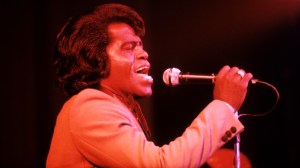
American soul singer and songwriter James Brown (1933-2006) performs live on stage at The Venue in London in September 1979. James Brown would go on to play 5 nights at the venue from 5th to 9th September 1979. (Photo by David Redfern/Redferns) -

NASHVILLE, TN – Singer/Songwriter Whitey Shafer performs during the All-Star Whitey Shafer Benefit, Hosted By Moe Bandy at The Nashville Palace on March 18, 2015 in Nashville, Tennessee. (Photo by Rick Diamond/Getty Images for Webster PR) -

THE JOHNNY CASH SHOW – "History of Country Music" – Airdate: January 21, 1971. (Photo by ABC Photo Archives/Disney General Entertainment Content via Getty Images) MERLE HAGGARD -
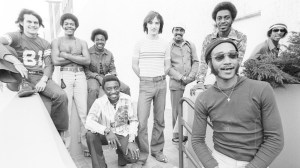
UNSPECIFIED – CIRCA 1970: Photo of KC & Sunshine Band Photo by Michael Ochs Archives/Getty Images