
When music fans think of The Cars, they might think of Ric Ocasek’s eyebrow arching over his RayBans, or the band’s stoic live performances, or maybe their albums full of up-tempo tracks rife with hooks aplenty, innuendo-laced lyrics, pristine production, and the almost robotic precision of the players. Yet, those who were around for the magical musical year of 1984, probably remember quite a different side to the band, the one they displayed on their heartbreaker of a hit, “Drive.”
Unlike “You Might Think” and “Magic,” the turbo-charged hits that preceded it as singles from The Cars smash ’84 album Heartbeat City, “Drive” was a ballad. And while those other two songs were sung by Ocasek, who wrote all the Cars material, he gave “Drive” over to bassist Benjamin Orr to sing.
Videos by American Songwriter
Orr, who sang on previous Cars hits like “Just What I Needed” and “Let’s Go”, was the wise choice. Ocasek had a knack for putting a wry, ironic spin on his lyrics, but “Drive” demanded tenderness and emotional connection to the words. In an era where histrionics and affectations often passed for singing, the lonely ache in the bassist’s voice haunted and captivated listeners.
The lyrics are a series of questions asked to an unnamed girl, a songwriting tactic that harkens back to classics like “Are You Lonesome Tonight?” When asked in the right sequence with varying levels of intensity, these questions can create a thorough character sketch in very short strokes, which is what Ocasek pulls off brilliantly here.
Subtle shadings in Orr’s delivery vary the narrator’s demeanor with each question. At times he shows the sympathy of a friend, one who’s genuinely concerned for the girl’s well-being. At others he seems more like a jilted suitor, frustrated with her inability to see the figurative cliff she’s fast approaching. By the end, he just seems resigned to the sad fact that the common answer to all of his questions about who will save her is a resounding “no one.”
Only at the end of each verse does the narrator step back and offer some advice, saying You can’t go on/Thinking nothing’s wrong. The specific questions, from sympathetic like Who’s gonna pick you up when you fall? to more pointed queries like Who’s gonna pay attention to your dreams?, lead to the one that she can’t answer, that he can’t answer, that will haunt them both now and forever, Who’s gonna drive you home tonight?
Synthesizers, so often garishly utilized in that era, soften the blow here, as do the ghostly sighs of the backing vocalists. The rhythm sways at slow-dance pace, although this is the kind of dance that immediately precedes a final farewell. Orr sends the song out with a piercing extended note on the final “tonight,” the bittersweet beauty of it all reaching a stunning climax. Maybe The Cars aren’t who anyone would have expected to deliver one of the most heartfelt ballads of the ’80s, but “Drive” is impeccable evidence that they did.
Photo credit: Ebet Roberts/Redferns/Getty
More Behind The Song
-
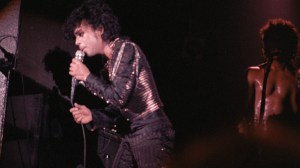
MINNEAPOLIS – AUGUST 3: Prince performs a benefit concert for the Minnesota Dance Theatre at First Avenue nightclub in Minneapolis, Minnesota on August 3, 1983. (Photo by Jim Steinfeldt/Michael Ochs Archives/Getty Images) -
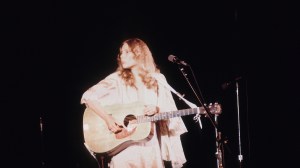
LOS ANGELES – 1974: Singer Joni Mitchell performs in 1974 in Los Angeles, California. (Photo by Donaldson Collection/Michael Ochs Archives/Getty Images) -
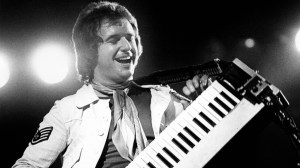
DETROIT, USA – 1st FEBRUARY: Gary Wright performs live on stage in Detroit, Michigan in February 1976. (Photo by Fin Costello/Redferns) -
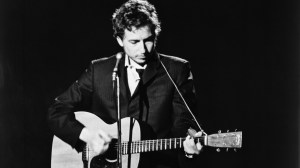
ASHVILLE, TN – JUNE 07: Bob Dylan appearing on "The Johnny Cash Show" for ABC/TV taped at Ryman Auditorium on June 7, 1969 in Tennessee, Nashville. (Photo by Michael Ochs Archives/Getty Images) -
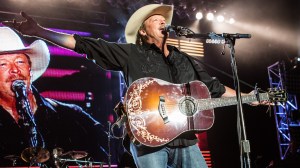
OS ANGELES, CA – JULY 25: Musician Alan Jackson performs at The Greek Theatre on July 25, 2012 in Los Angeles, California. (Photo by Chelsea Lauren/WireImage) -
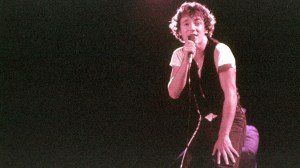
Singer and songwriter performs in 1975 in Los Angeles, California. (Photo by Suzan Carson/Michael Ochs Archives/Getty Images) -
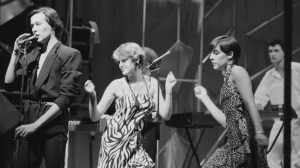
The Human League performing to their single 'Love Action (I Believe In Love)' on the BBC TV music show, 'Top Of The Pops', London, 6th August 1981. Left to right: Phil Oakey, Susanne Sulley and Joanne Catherall. (Photo by Michael Putland/Getty Images) -
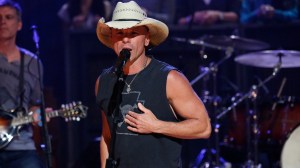
LATE NIGHT WITH JIMMY FALLON — Episode 825 — Pictured: Musical guest Kenny Chesney performs on April 30, 2013 — (Photo by: Lloyd Bishop/NBCU Photo Bank/NBCUniversal via Getty Images via Getty Images)