
Acclaimed songwriter Garland Jeffreys has been known for crafting innovative, socially conscious songs since releasing his debut album Grinder’s Switch Featuring Garland Jeffreys in 1970. Jeffreys has remained socially conscious in his work throughout the years, and that hasn’t changed on his latest record, 14 Steps To Harlem.
Below, Jeffreys discusses his newest album, its nods to his past, and the influence of his friend Lou Reed.
14 Steps To Harlem is out April 28. Jeffreys has already started touring in support of the album.
14 Steps To Harlem discusses your childhood. Was it tough to write about or did you find that it was easy to tap into the past?
I’ve always been an autobiographical writer, and my family and my days growing up in Brooklyn have always been touchstones. It’s not usually tough to write about, because the longer I’m at this game, the more I realize we all only have one story to tell, and that’s our personal experience. I read something that Richard Ford said: “We could all be writers if we were willing to devote ourselves to recording our own responses to our experiences” – or something to that effect. Now that you mention it, there was actually a partial song that didn’t make it onto the album about my mother and her unrealized potential and it makes me wonder if I should go back to that and develop it more. Which leads us to one of the first tenets of songwriting—never throw anything out!
What’s the biggest musical evolution you experienced creating 14 Steps compared to your previous work?
There was more of an incremental evolution. Maybe most significant was the idea that you can let things happen in the studio and allow for more spontaneity. I also surrendered a bit more to my co-producer James Maddock. He suggested the vocal style on 14 Steps To Harlem – a more spoken-word interspersed with singing – and encouraged more improvisation there. My band (Mark Bosch, Tom Curiano, Brian Stanley and Charly Roth) laid down the basics for a number of tracks we ended up keeping, and that was something different, to use the live band and their comfort with one another. I also allowed the lyrics to remain simple on some songs and stuck with the feelings more, especially on “Time Goes Away” with my daughter Savannah, who really shaped that one with her harmonies. So in general, on this record I had a more collaborative approach.
A lot of your previous songs are racially conscious. Does this theme work itself into your newest album?
It’s definitely there on “Colored Boy Said.” That song is a response to the specific issues of today and the institutionalized violence against young black men—not that the issues are any different today, but I feel that the public engagement with racial injustice today is some [sort] of revival of the Civil Rights Movement. It pains me that we are still marching, still protesting, still speaking out about racial injustice, and in a way things haven’t really moved forward as much as we like to tell ourselves. To my mind, the key is in legislation, and pushing back against some of the voting rights rollbacks, the prison system and the segregation in public education and housing.
You met Lou Reed while in school, and Laurie Anderson has a violin solo on your album. Would you cite Reed as a musical influence?
Lou is perhaps an influence on my vocal style at times, the more talky style, but more than anything he was an influence on me personally. To keep going, keep recording and performing and collaborating, and most of all to keep learning.
If you could go back in time and give yourself one piece of musical advice, what would you say?
Interesting question. I guess I’d say I wish I’d worked a bit harder at my guitar playing.
You have an extensive tour coming up in support of 14 Steps To Harlem. How do you plan to incorporate this new material into your live show?
We’re taking it slow, bringing in the new songs a few at a time. So far we’re doing “Venus,” “Help,” “Waiting For The Man,” “Reggae on Broadway” and “When You Call My Name.” We’re excited to bring “Colored Boy Said” into the set because it’s a song with a lot of space and it should be dramatic. I also want to bring in “14 Steps To Harlem” and “Spanish Heart.”
After all of these years, what keeps inspiring you to write songs?
Inspiration is a tricky concept. I wouldn’t say that it’s inspiration that keeps me writing and recording. It’s more like what else am I going to do? It’s literally the only thing I’ve done for almost 50 years and the alternative is to do nothing, which is anathema. In my song “Coney Island Winter” from The King of In Between, I say “don’t wanna die on stage with a microphone in my hand” but the truth is that would be a hell of a way to go.
More Features
-
Photo by Michael Ochs Archives/Getty Images -
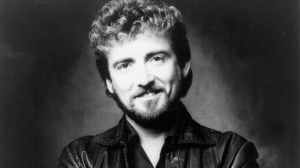
Keith Whitley Portrait Session Country singer and songwriter Keith Whitley poses for and RCA Records publicity still in 1984. (Photo by Michael Ochs Archives/Getty Images) -

Avril Lavigne (Photo by Jeff Kravitz/FilmMagic) -
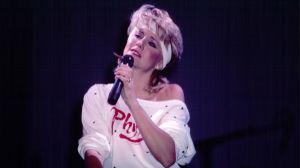
British-born Australian Pop singer Olivia Newton-John (1948 – 2022) performs onstage at Forest Hills Stadium, Queens, New York, New York, August 13, 1982. (Photo by Gary Gershoff/Getty Images) -
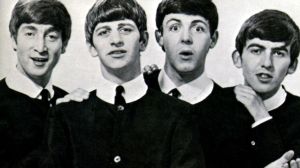
Postcard '900. The Beatles. (Photo by Fireshot/Universal Images Group via Getty Images)