
Associations with all things hedonistic, demonic, and destructive are par for the course for being in a rock ‘n’ roll band. When external tragedies inevitably feed into these narratives, it can be even harder for a band to get out of the shadow of the public’s dark perception of them. Over the course of their decades-long career, nothing illustrates this point quite like The Rolling Stones’ 1968 track “Sympathy For The Devil” and its implications after the Altamont Speedway Free Festival.
Organizers predicted the Altamont Speedway Free Festival would be a West Coast version of Woodstock. However, the event would come to define the end of counterculture, not its perpetuity, after disaster broke out across the festival grounds. At various points throughout the festival, there were hit-and-run car accidents, incidents of drowning, and, most notably, the murder of a young Black man named Meredith Hunter, a frantic and chaotic crime that took place in the middle of the crowd.
Videos by American Songwriter
The Rolling Stones were on stage while this was happening—a violent and tragic consequence of the Hells Angels running security with too few resources and there being too many people (and drugs) at the venue. The band’s proximity to these horrific events inevitably bled into the public’s perception of them and their songs, too.
Mick Jagger Said “Sympathy For The Devil” Felt Different After Altamont
The Altamont Speedway Free Festival effectively marked the end of the counterculture movement. The free love craze had flown too close to the sun, so to speak, and people were finding out about the negative consequences of prolonged psychedelic drug use in real time. The entire experience was like a bucket of ice-cold water, dousing the zeitgeist. People wondered, “Could songs like ‘Sympathy For The Devil’ be to blame?”
Jagger, however biased he may be, would later say the greater societal implications weren’t burdening him too greatly. In a 1995 interview with Rolling Stone, Jagger said the news of Meredith Hunter’s murder was “just awful. You feel a responsibility. How could it all have been so silly and wrong?”
“But I didn’t think of these things that you guys thought of, you, in the press: this great loss of innocence, this cathartic end of the era… I didn’t think any of that. That particular burden didn’t weigh on my mind,” he continued. “It was more how awful how it was to have had this experience and how awful it was for someone to get killed and how sad it was for his family.”
Still, Jagger admitted that he couldn’t help but shy away from songs like “Sympathy For The Devil” after a moment like that. “It became so involved with [Altamont], sort of journalistically and so on.” Black magic, Jagger said, was “not really what I meant.”
Photo by Ron Pownall/Getty Images
More Behind The Song
-
ATLANTA – August 8: Commodores with Lionel Richie perform at The Omni Coliseum in Atlanta Georgia. August 8, 1980 (Photo By Rick Diamond/Getty Images) -
Singer Leo Sayer performing at the Greek Theatre, Los Angeles, California. 26th July 1977. (Photo by Kent Gavin/Mirrorpix via Getty Images) -
NASHVILLE, TN – APRIL 24: Singer-songwriter Eric Church and Katherine Blasingame Church attend Best Cellars Wine Dinner hosted by T.J. Martell Foundation on April 24, 2017 in Nashville, Tennessee. (Photo by Jason Davis/Getty Images for T.J. Martell) -
Keith Whitley Portrait Session Country singer and songwriter Keith Whitley poses for and RCA Records publicity still in 1984. (Photo by Michael Ochs Archives/Getty Images) -
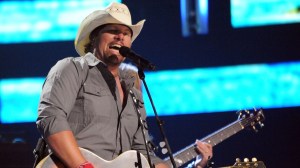
Musician Toby Keith performs on stage during the 2009 CMT Music Awards at the Sommet Center on June 16, 2009 in Nashville, Tennessee. (Photo by Jeff Kravitz/FilmMagic) -
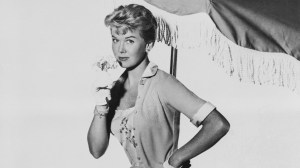
(Original Caption) 2/17/56-Hollywood, California: Singing actress Doris Day models one of the American-girl-look outifts she's designing for Little Miss English Ltd. The full skirt and matching sleeveless camisole blouse are of silk-finish cotton satin in a leaf print on soft blue. The companion sweater, a feature of all Miss Day's designs, picks up one of the leaf colors and is trimmed with French cuffs and Peter Pan collar of the print material. The three pieces may be bought separately. -

Tom Jones at the Metro in Chicago, Illinois, December 2,1994. (Photo by Paul Natkin/Getty Images) -
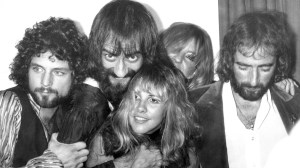
LOS ANGELES – SEPTEMBER 1: Fleetwood Mac (L-R Stevie Nicks, Lindsey Buckingham, Christine McVie, John McVie and Mick Fleetwood) backstage at the Los Angeles Rock Awards on September 1, 1977 in Los Angeles, California. (Photo by Richard Creamer/Michael Ochs Archives/Getty Images)