
Few artists have had a greater impact on the United States rock and country scenes than AC/DC and Shania Twain, respectively. The Australian five-piece and Canadian country-pop star helped redefine the sounds of their specific genres, pushing the boundaries of what mainstream rock and country could sound like. But the connection between these seemingly distant ends of the musical spectrum is deeper than an ability to innovate and blaze trails.
That connection goes back to the man who helped light the torch.
Videos by American Songwriter
The Musical Connection Between AC/DC and Shania Twain
Sonically speaking, there aren’t many readily noticeable similarities between AC/DC and Shania Twain. Electric guitars are a prominent feature in both, sure, but that’s hardly a unique characteristic. However, when one considers the ground each artist broke in their respective genre, a unifying thread begins to appear. Behind every great band or pop star, there’s a great producer. For AC/DC and Shania Twain, that producer was Mutt Lange.
Robert “Mutt” Lange began working with Australian rock band AC/DC while they were recording Highway to Hell in the spring of 1979. The band’s sixth studio album helped break them into the U.S. rock scene, blending the best elements of establishment-defying hard rock and commercially sensible radio music. Lange lent his expertise not only to the album’s arrangements but also to the musicians’ performances. He gave vocalist Bon Scott a lesson in diaphragmatic breathing. He helped guitarist Angus Young build his now iconic solos note for note by pointing at Young’s fretboard while he played.
Lange went on to work with other notable rock acts of the time, including Def Leppard and Bryan Adams. But in the spring of 1993, Lange heard rising Canadian country singer Shania Twain’s eponymous debut and knew he wanted to switch gears. His bread and butter might have been good ol’ fashioned rock and roll. But his passion led him to country music.
How Mutt Lange Helped The Rising Star Blend Genres
Shania Twain’s self-titled 1993 debut had relatively little commercial success in North America. (It performed better in Europe.) Of the three singles Twain released from the debut, only two managed to chart. But while she might not have grabbed the attention of the whole world, she certainly caught the eye of producer Mutt Lange. Lange reached out to Twain to offer his production services, kicking off a strictly-postal relationship that turned into a real-life connection at Nashville’s Fan Fair in June of that year. By December, they were married and working on Twain’s sophomore release.
Lange and Twain would work on several albums together, solidifying the latter artist’s place as a chart-topping, genre-bending star in pop and country music. As the producer and singer’s relationship continued to grow over the years, more of Lange’s rock background made its way to Twain’s music. Twain’s 1997 album, Come On Over, had plenty of rock-centric tracks, including “Man! I Feel Like a Woman” and “That Don’t Impress Me Much.” “I’m Gonna Getcha Good!” from her 2004 album Up was another rock banger, complete with a dystopian music video featuring Twain running away from a robot.
Not everyone loved Twain’s willingness to blend genre lines, with some critics claiming she was diluting the genres she combined. Still, plenty more argued that Twain came to lay the groundwork for future female artists in pop, country, and rock—an influence that, interestingly, can be traced back to AC/DC guitarist Angus Young’s guitar solos in “Highway to Hell.”
Photo by Fin Costello/Redferns
More Features
-

Musician Woody Guthrie poses for a portrait with his guitar circa 1941. (Photo by Michael Ochs Archives/Getty Images) -
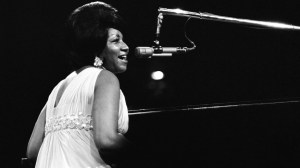
Photo by Jack Robinson/Getty Images -
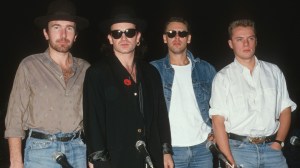
The Edge, Bono, Larry Mullen and Adam Clayton of U2 (Photo by Ron Galella, Ltd./Ron Galella Collection via Getty Images) -
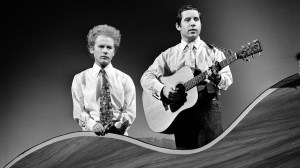
LOS ANGELES – AUGUST 22: American folk-pop musicians (from left) Art Garfunkel and Paul Simon, of the duo Simon and Garfunkel, sing and play guitar as they perform on the CBS variety program 'The Red Skelton Hour,' USA, August 22, 1966. (Photo by CBS via Getty Images) -
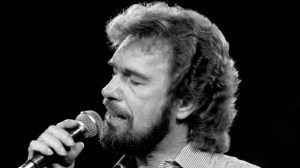
Gene Watson, who had several hits with Dallas Harms songs -
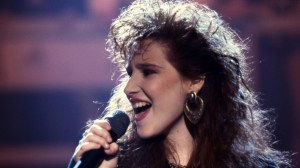
Pop star Tiffany performs on a TV show in 1987 in Los Angeles, California. (Photo by Ron Eisenberg/Michael Ochs Archives/Getty Images) -
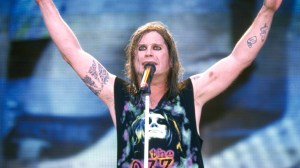
UNITED STATES – JANUARY 01: USA Photo of BLACK SABBATH and Ozzy OSBOURNE, performing live onstage with Black Sabbath on Ozzfest tour (Photo by Mick Hutson/Redferns) -
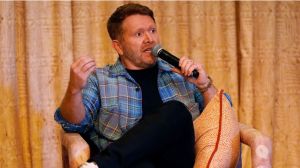
NASHVILLE, TENNESSEE – Shane McAnally speaks onstage during GLAAD's Pride & Progress Event at Soho House Nashville on June 05, 2026 in Nashville, Tennessee. (Photo by Erika Goldring/Getty Images for GLAAD)