Stevie Nicks has always leaned toward the mystical, fantastical, and otherworldly, both in her approach to poetry and music and in her on-stage style. But when rumors began swirling that she was an actual practicing witch, she feared for her safety so much that she implemented an aesthetic change.
In a 2007 interview with CBS Sunday Morning, Nicks traced the rumor back to her 1975 Top 20 hit, “Rhiannon”. This was one of Nicks’ first hits with Fleetwood Mac, having joined the band that same year with her then-partner, Lindsey Buckingham. “Rhiannon” was a strong indication of where the band’s sound was going with the introduction of these two California folk-rockers—a theme that would continue with songs like “Dreams” and “Gypsy”.
Videos by American Songwriter
The only problem with this witchy association was that the Rhiannon on whom Nicks based her song was a mythological Welsh queen, not the traditional “witch” we think of around Halloween. Nevertheless, the general vibe of the song and Nicks’ flowy, all-black stage attire were enough to convince the public she was a witch. And as she told CBS’ Rita Braver, it “freaked her out.”
Stevie Nicks Changed Her Style to Avoid Witch Pushback
These days, identifying as a witch is as common as identifying as, say, a Packers fan or a bird lover. Countless individuals have identified with this descriptor on an aesthetic level, a spiritual level, or both. But when Stevie Nicks first released “Rhiannon” with Fleetwood Mac on their eponymous 1975 album, the world wasn’t exactly welcoming to the occult. Satanic panic was on the horizon, ready to boil over in the 1980s and 90s. Consequently, Nicks worried that associations with witches and the otherworldly would result in some pushback or, even worse, violence or aggression toward her.
After Nicks realized that Rhiannon was a mythological queen and not an actual witch, she realized “I was totally misleading everybody. There was a time when it sort of freaked me out because I wear black—and why? Because we look thin in black—and she has these black wingy things that she wears, and so she must be a witch. I stopped wearing black for about two years.”
“I had all my clothes made into, you know, apricot and pale blue and seafoam green and horrible colors,” Nicks continued, “because I was freaked out that somebody would come and kidnap me because I was a witch. So, this was crazy. I like to think I’m Glinda [the Good Witch from Wizard of Oz] or something, but I’m not like a black magic witch.”
Of course, history would show that Nicks would later return to her all-black attire on stage. Still, the brief change-up is a testament to the fact that public opinion—and outrage—can be more powerful than any witch ever could be.
Photo By Rick Diamond/Getty Images
More Features
-
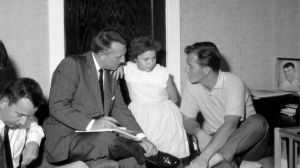
Country singer songwriter and producer Owen Bradley takes notes while collaborating with child country singing superstar Brenda Lee and Pat Boone circa 1960 in Nashville, Tennessee. (Photo by Bob Grannis/Getty Images) -
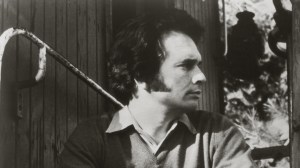
EARLY 1970s: Country singer Merle Haggard poses for a candid portrait in the early 1970's. (Photo by Michael Ochs Archives/Getty Images) -

Photo by Michael Ochs Archives/Getty Images -

16-yr-old pop singer Brenda Lee. (Photo by Don Cravens/Getty Images) -

American singer-songwriter Carole King poses in record producer Lou Adler's office in March 1971 in Los Angeles, California, United States. (Photo by Jim McCrary/Redferns)