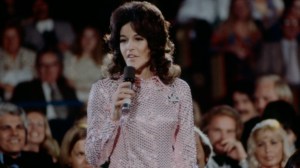
We often compartmentalize the sunny, jangly sounds of 1960s folk-rock and the gritty, overdriven sound of 1970s Southern rock as two distinct, separate moments in the genre’s history. But it’s a small world, after all, and the music world is even smaller, which is how a one-hit wonder from 1967 was inextricably (but invisibly) linked to Lynyrd Skynyrd, a band invariably associated with the 1970s.
The story of Lynyrd Skynyrd’s connection to this late 1960s one-hit wonder, like so many “crossed path” stories, had multiple actors working in tandem to shape history as we know it today. Pre-Skynyrd, a guitarist named Eddie King and a keyboardist named Mark Weitz were working together in a sunshine pop band called Strawberry Alarm Clock. The band’s biggest claim to fame is their 1967 hit, “Incense and Peppermints”, from the album of the same name.
Videos by American Songwriter
Strawberry Alarm Clock’s hit track from their debut record topped the charts in the U.S. and Canada and reached the Top 40 in New Zealand and Australia. This should have been a stunning success for everyone involved in the making of “Incense and Peppermints”, if they had all been given the appropriate credit, which they weren’t.
The Case of the Missing Credits on This 1967 One-Hit Wonder
If you’re only going to have one major hit of your career, you’d better make sure you’re getting credit for it. Unfortunately, that was an industry lesson Strawberry Alarm Clock keyboardist Mark Weitz and guitarist Ed King had to learn the hard way. According to a blog post by Weitz, he and King fleshed out the early stages of “Incense and Peppermints” in about 45 minutes. “[Ed] contributed the bridge, the guitar parts, and helped with the arrangements,” Weitz recalled.
John S. Carter embellished the instrumental track with lyrics alongside his writing partner, Tim Gilbert. And in the end, it was Carter and Gilbert who received sole credit for the track, cheating Weitz and King out of any royalties or ownership. According to Weitz, this decision was a byproduct of “an argument between [band manager] Bill Holmes and [producer Frank] Slay. Holmes wanted nine names on the record. Slay said, ‘That’s silly. Pick four.’”
“They couldn’t come to terms,” Weitz continued. “And ultimately, Slay chose to send the label to printing with only the lyricists Gilbert and Carter as the songwriters. A lawsuit was in the making against Holmes, our manager, but was dropped shortly afterward.” Weitz added that someone told him he couldn’t base a copyright case on chord progressions, saying, “That’s why I never pursued it. They said the case would never hold up, and if I did pursue the lawsuit, it would be the demise of the band.”
So, Where Does Lynyrd Skynyrd Come Into Play?
The twisted saga of Strawberry Alarm Clock’s one major hit, “Incense and Peppermints”, was undoubtedly a memorable experience for both Mark Weitz and Ed King, who had to watch their musical contributions and money bypass them and head straight for John Carter and Tim Gilbert. (The two musicians still don’t have credits for the track as of this writing.) Luckily for King, he didn’t have to wait too long before an even better musical opportunity presented itself to him.
In the late 1960s, Strawberry Alarm Clock was opening for a Floridian band called The One Percent. King made friends with the latter band’s members, which included Ronnie Van Zant, and told them that if they ever needed a guitarist, to let him know. The band, which, at this point, had switched its name to Lynyrd Skynyrd, took King up on his offer in 1972. King would play bass on the first three Lynyrd Skynyrd albums, including (Pronounced ‘Lĕh-‘nérd ‘Skin-‘nérd), Second Helping, and Nuthin’ Fancy.
Lynyrd Skynyrd’s debut alone is chock-full of great hits, including “Simple Man”, “Free Bird”, and “Gimme Three Steps”. “Sweet Home Alabama” and “Don’t Ask Me No Questions” came one album later. With so many hits in such a short amount of time, we don’t doubt the experience helped soothe any lingering sting from King’s experience with Strawberry Alarm Clock.
Photo by Michael Ochs Archives/Getty Images
More Features
-
Photo by Michael Ochs Archives/Getty Images -
UNITED STATES – JANUARY 01: Photo of Nick GILDER (Photo by Richard E. Aaron/Redferns) -
Madonna, who had one of the biggest hit songs of 1985 -
Temptations 050 MichaelOchsArchives.com -

LOS ANGELES, CALIFORNIA – Natalie Maines of The Chicks at The Chicks concert held at Yaamava' Theater on June 12, 2026 in Los Angeles, California. (Photo by Katie Flores/Billboard via Getty Images) -
Bruce Springsteen