On May 15, 1970, Johnny Cash and his wife, June Carter, took the stage at the U.S. Federal Penitentiary in Leavenworth, Kansas. The show was next in succession, following Cash’s jailhouse concert at Folsom Prison in 1968 and San Quentin a year later. Nearby, an 8-year-old Melissa Etheridge could see from her backyard the prison where Cash was set to perform and felt the buzz of the concert even though she couldn’t see one of her heroes perform in person.
As a kid, Etheridge remembers listening to “Boy Named Sue” and “Walk the Line,” and when she got her first guitar, Cash’s music “lit” her fingers and made her want to play “that type” of music.
Videos by American Songwriter
“It was the way he held himself, and it really did make a big impact on me when I grew up in Leavenworth,” says Etheridge, who remembers the effect Cash’s presence had on Leavenworth, a town where there were no places to see live music but the local prison. “Nobody ever comes to Leavenworth, it’s always Kansas City, but he came to play at the prison, and it was all over the newspapers,” she recalls. “At the time, I was thinking prison must be a place of fine entertainment or something. That impact he had on my hometown made a big impact on me.”
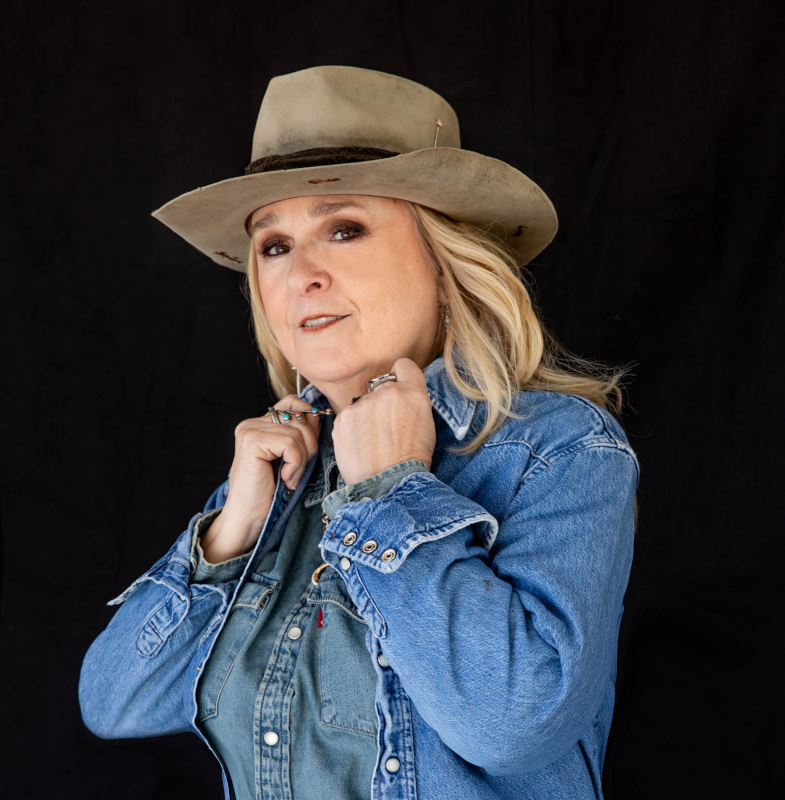
The lasting impression Cash left on Etheridge would later materialize in her own prison performances, including one for incarcerated women at the Topeka Correctional Facility in Kansas, documented in her 2024 film I’m Not Broken, andprompt “Matches.” Shortly after, Etheridge also wrote a nostalgic homage to Cash on her 17th album,Rise.
I said, Mama, let me play with the matches / Oh, he’s like a preacher with the flames in his eyes, Etheridgerecounts with the soulful sermon on Rise, a collection of new songs chronicling some old stories in her life. Etheridge’s first album of new material since The Medicine Show in 2019, Rise is filled with heart and with aches and showcases the power of femininity and the empowerment of falling then rising up, as a woman.
That point comes across right from the start with gospel-tinged “Rise,” and the anthemic “Don’t You Want a Woman,” which was chosen as the official rally song of the Kansas City Current of the National Women’s Soccer League.
“Feminism has gotten such a bad rap and has just been thrown around,” she says. “It’s almost like we keep looking for someone to give us permission to be in charge, to be strong, to be leaders, and we need to give ourselves permission. I’m trying to say, ‘Don’t you want a woman?’ Come on. You want a woman who’s a little crazy. We’re fun to be around, and we make life really interesting and cool.”
While “Tomboy” takes Etheridge back to prouder childhood moments, wanting to be James Dean, the honky tonk “Davina” continues the feminine spirit. “It’s about the divine feminine,” Etheridge says of the latter track, “and there’s a lot of that underneath all this about surviving living and making your choices.”
On the soulful waltz, “To Be a Woman,” Etheridge celebrates “feminine traits” in people, regardless of sex.
“There’s such a wide range of feminine to masculine that we all have in each of us,” she says. “If you can dial into that part of you that is a woman that is feminine, that’s the part where forgiveness and strength, and fear but overcoming, and these feminine traits that everyone has, is what I’m trying to celebrate.”
Throughout Rise, Etheridge doesn’t forget how grateful she is for the life she’s lived, from the bookend opening rocker, “Bein’ Alive,” to “More Love,” a song she wrote for and performed at her daughter Bailey’s wedding in 2025.
“That’s all we’re looking for as we go through all these things that happen to us,” Etheridge says of the closing track. “We’re just looking for more love. And you take the ride into your soul, and you find it right there. You find it within yourself. You are going to make yourself whole.”
She adds, “That’s my whole 65 years of being here. That is what I’ve learned, is that nobody’s going to fill up those holes within you.”
Confronting the loss of her son Beckett, who died in 2020 at age 21, was also something Etheridge had to approach on the album, and it started with the first song she wrote for Rise, “Call You,” a tribute ballad to him.
“It’s about loss,” shares Etheridge, citing the line Since I can’t call you anymore, I’m going to take a drive. “My son used to call me every single day, and we would talk,” Etheridge recalls. “I would go through his life, and sometimes it was hard, sometimes it was sweet, but that’s really the thing you miss when you lose someone, that constant connection with them.
“I knew that to move forward into this album, and to get through this, I needed to state that part of me, the emotional center of what happened to me when I lost my son, and how I feel now and how I’m surviving that.”
“Call You” is a song of survival, and a means of understanding what happened, and writing it helped Etheridge seize songs of joy on the album, like “Bein’ Alive” and “Rise.”
“It was important for me to get that out of the way,” she says. “It’s saying, ‘You know what? Life is full of loss, and I miss you every day. I can’t talk to you every day, but I’m not going to stop living. I’m not going to stop trying. I am still going to find joy. I’m still going to go outside. I’m going to drive. I’m going to do these things, and in it, I will hold you close to me.’”
Chris Stapleton also joins on “The Other Side of Blue,” a rarity for Etheridge, who has never recorded a duet on one of her albums, but did share one with Trace Adkins on “Love Walks Through Rain” from his 2021 release, The Way I Wanna Go.“You get to this point in your life when you’re like ‘Maybe I can do a duet with somebody,” she says.

A longtime Stapleton fan, Etheridge always admired his work as a songwriter before he put out his first album, but had never met him. When both eventually met at RCA Studio B in Nashville, they sat with their guitars and started talking about life, their children, and ended up co-writing two songs, including “The Other Side of Blue.”
Etheridge told Stapleton about losing Beckett. “I said, ‘He was my greatest teacher,’” recalled Etheridge. “And he [Stapleton] looked at me and said, ‘You talk in song.’” Stapleton’s words became the opening line of “The Other Side of Blue”—Sometimes I listen when she talks in song.
“We started writing right there, and within 15 minutes, we were deep in the song,” says Etheridge. Stapleton had only come on as a writer before Etheridge suggested their duet. “After we wrote it,” she adds, “I said, ‘Chris, I really think the world would like to hear us sing together,’ and he agreed.”
Working with Shooter Jennings was another dream for Etheridge, who needed a co-producer to help, “technically,” with arrangements and production.
“Shooter is an artist’s dream,” Etheridge says. “He’s an artist himself, and he was always just there to support what was there. He didn’t ever insert any of his musical ideas. He would just help. Whenever I’d go, “I don’t know,’ he would say, ‘Well, this feels that way.” He was always very supportive, and he just loves music.”
Backed by her longtime band, Etheridge was already dialed into each song and knew that she wanted a “California rock sound.”
“I told Shooter and the band, I’m looking for that Eagles, Fleetwood Mac, Jackson Browne, the music that I grew up on,” says Etheridge, who chronicles life after she moved to Los Angeles during the 1980s and fast forwards to her wife, Linda Wallem, on the bluesy “If You Ever Leave Me.”
“When I got to California in the ‘80s, I was like, ‘OK, I’m here for the California rock,’ and they were all gone,” she adds. “It was all punk and hair metal then, so I was going to make this album now.”
Rise may seem like a lifetime away from her eponymous 1988 debut andbreakout album,Yes I Am, in 1993,but each musical point always returns to a similar platform of songwriting for Etheridge: a notebook and her guitar. “The way that I write and the way that I create is I’m always in a state of being inspired,” she says. “I try to keep inspired by many things: by movies and books and nature and life. I’m always gathering information.”
Songs were always personal, she says, reflecting on earlier hits “Come to My Window” and “I’m the Only One,” there’s just a different connection to some of those stories now. “My songs changed because I changed,” she says. “I’m a different person than I was when I was 30 years old writing ‘I’m the Only One.’ But when I look out, and I see 10,000 people remembering and singing ‘I’m the Only One,’ I love it.
“And yes, I’ve sung ‘Come to My Window’ 400,000 times, but that’s OK, because for some in the audience it’s their first and only time they’re going to experience that. I love it and treat it as such.”
Back then, and especially now, music has remained Etheridge’s healer. “My whole career has been therapy,” she laughs. “So, I’m a very healthy woman.”
Now approaching 65, Etheridge is in a better place in life, in health, in her marriage, and with her three children. She remembers reaching for success, then hitting it by her mid-30s, and realizing later on that she had “missed it” due to how she felt about herself at the time.
“You can have this success that you’ve been striving for, and then you can miss it because you don’t see it and you don’t feel it,” she says.
“Once you start to give that love to yourself and start feeling it and say ‘I don’t need millions of people to tell me that I’m a successful singer songwriter’ … I can feel what that feels like now. What a sacred ride. No matter what, you go up and down. I’m living on the edge, and I’m living the dream, whatever it is. It’s all so amazing, and I wouldn’t give it up for anything. I love this whole journey.”
More Features
-
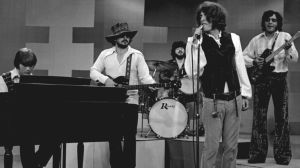
Photo by Michael Ochs Archives/Getty Images -
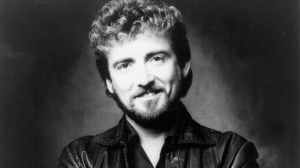
Keith Whitley Portrait Session Country singer and songwriter Keith Whitley poses for and RCA Records publicity still in 1984. (Photo by Michael Ochs Archives/Getty Images) -

Avril Lavigne (Photo by Jeff Kravitz/FilmMagic) -

British-born Australian Pop singer Olivia Newton-John (1948 – 2022) performs onstage at Forest Hills Stadium, Queens, New York, New York, August 13, 1982. (Photo by Gary Gershoff/Getty Images) -
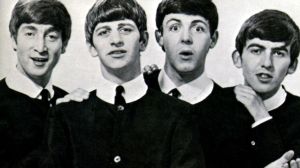
Postcard '900. The Beatles. (Photo by Fireshot/Universal Images Group via Getty Images)