If the world had listened more closely to the album The Beatles released on September 26, 1969, their breakup might not have been so surprising. Nearly every track spoke to the musicians’ desire to break free from Apple, each other, and the heavy burden that was being a Beatle.
The album came only five years after The Beatles’ historic debut on the Ed Sullivan Show. But even that short timespan felt like a lifetime for the Fab Four and their team of producers and engineers. As George Harrison would later recall, “It felt as if we were reaching the end of the line.” So they were.
Videos by American Songwriter
This Iconic 1969 Album Was Technically Their Last
Although its ubiquity can irk the more devoted, deep-cut Beatles fans, Abbey Road from 1969 is inarguably one of the group’s finest works. From individual tracks like “Here Comes the Sun” and “I Want You (She’s So Heavy)” to the B-side medley, The Beatles’ eleventh studio album was one of the group’s most cohesive and expansive works yet. In just ten tracks (eleven, if we’re counting “Her Majesty”), the group spanned a wide musical spectrum, from the whimsy of “Octopus’s Garden” to the pained blues of “Oh! Darling”.
Abbey Road continues to be one of The Beatles’ most popular albums, even decades after its release on September 26, 1969. The album was technically the band’s penultimate release. But because they had already cut the music on Let It Be, the 1969 album was the last the band recorded together.
After two iconic albums like Abbey Road and Let It Be, the Beatles’ breakup was a shock to the vast majority of the public. But if they had listened more closely to the tracks on the former record, the decision might not have been so surprising.
How the Beatles Foreshadowed Their Breakup
Hindsight is always 20/20. But one can easily see how The Beatles were foreshadowing their breakup throughout the track listing of Abbey Road. Some songs were more obvious than others. “You Never Give Me Your Money” encapsulated Paul McCartney’s discontent with The Beatles’ business dealings with Apple. George Harrison wrote “Here Comes the Sun” about his desire to escape from those same, boring legal and financial meetings with which the band was inundated in their final years.
Ringo Starr wrote “Octopus’s Garden” after his temporary resignation from The Beatles. A wistful ode to the carefree life of an octopus living in an underwater garden with all his friends. John Lennon wrote “I Want You (She’s So Heavy)” at least partially about his second wife, Yoko Ono. Knowing how much he desired creative freedom and deeper collaboration with Ono, lines like “I want you so bad, it’s driving me mad” take on new meaning.
Even more disjointed tracks, like “Maxwell’s Silver Hammer”, illustrate how the band was separating creatively. No part of the album exemplifies this fracturing as much as the B-side medley, which quilted several bits of song ideas together. The band was at their tightest and most creative, but their cohesion as a single unit was beginning to falter. Abbey Road was, for all intents and purposes, their last true effort as a band.
“Out of the ashes of all that madness, that last section is one of the finest pieces we put together,” Starr later said.
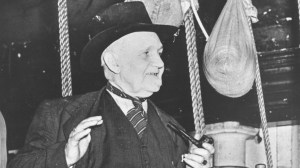
Photo by Keystone-France/Gamma-Rapho via Getty Images
-
MUNICH, GERMANY – Sam Brown performs on stage at the Theaterfabrik in Munich Germany in 1990. (Photo by Bernd Muller/Redferns) -
Waylon Jennings, who had a major hit with a Ray Pennington song -
AUSTIN, TEXAS – Texas Country singer Dale Watson and his Lone Stars perform during the Lynyrd Skynyrd concert at the Cedar Park Center. (Photo by Suzanne Cordeiro/Corbis via Getty Images) -
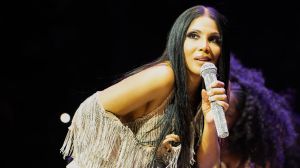
HOUSTON, TEXAS – Toni Braxton performs during the New Edition Way Tour at Toyota Center on April 04, 2026 in Houston, Texas. (Photo by Eugenia R. Washington/Getty Images) -
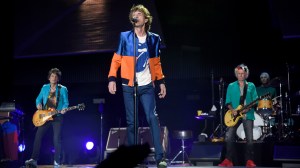
The Rolling Stones at Desert Trip -
Photo by Lester Cohen/Getty Images -

UNITED KINGDOM – NOVEMBER 16: WEMBLEY ARENA Photo of RADIOHEAD and Thom YORKE, Thom Yorke performing live onstage (Photo by Patrick Ford/Redferns)