
Kings and quarterbacks alike were making history on January 14, 1973. The latter was Bob Griese, starting quarterback for the Miami Dolphins for the 1972 season. He was also the starter for Super Bowl VII, which saw the Dolphins take on the Washington Redskins at the Los Angeles Memorial Coliseum that mid-January afternoon. The Dolphins scored their first Super Bowl win 14 to 7 and made history as the first team in NFL history to achieve an undefeated season.
While the Dolphins and Redskins fought it out on the field, the King of Rock ‘n’ Roll was preparing for a groundbreaking concert 2,555 miles away. Elvis Presley was in Honolulu, Hawaii, where he would become the first performer to broadcast a full-length concert over communication satellites. A live recording of the performance would later become Aloha from Hawaii via Satellite, Presley’s penultimate live album and his last chart-topper.
Videos by American Songwriter
Despite the performance taking place in the States, satellites didn’t actually broadcast Presley’s show to the Lower 48. Countries lucky enough to see Elvis’ Hawaii show live included Australia, the Philippines, Japan, South Korea, South Vietnam, and Hong Kong. Pop culture legend would say the U.S. broadcast clashed with the Super Bowl game, but this was more quippy rumor than fact.
Was Elvis Presley’s Hawaii Concert Shafted for a Football Game?
In short, no. On the most surface level, the two events wouldn’t have clashed with one another. Elvis Presley’s Aloha from Hawaii concert took place at 12:30 am Hawaiian time, which would have been 2:30 am in Los Angeles. Super Bowl VII hadn’t even happened yet. Kickoff wasn’t for another ten hours. While the idea of the King of Rock ‘n’ Roll being shafted for a football game, no matter how historic, makes for a compelling story, the truth is far more technical. Scheduling conflicts didn’t limit the Hawaii broadcast. Mechanical limitations did.
The satellite responsible for broadcasting the Elvis Presley concert around the world (or at least to the Eastern Hemisphere) was Intelsat IV F-4, which scientists launched from Cape Canaveral, Florida, in the early 1970s. A single satellite can broadcast only so far from its location, which significantly limited the countries that could watch the Elvis show live. But even if technicians coordinated enough satellites to create a truly worldwide broadcast, time zones would mean some parts of the world would be tuning in during impractical times. (For many Elvis fans, that’d be no problem at all, but still.)
RCA Records released the live album from Elvis’ historic concert in Honolulu, Aloha from Hawaii via Satellite, a couple of weeks after the show on February 1. On April 4 of that year, NBC aired the 90-minute concert footage in its entirety, allowing American Elvis fans to finally match the bedazzled American Eagle Suit to the King’s distinctive, warbling voice crooning hits like “Can’t Help Falling in Love”, “Hound Dog”, and “Suspicious Minds”.
Photo by Gary Null/NBCU Photo Bank/NBCUniversal via Getty Images
-
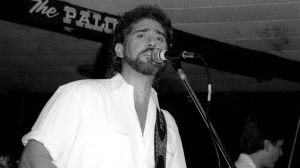
UNSPECIFIED – CIRCA 1970: Photo of Earl Thomas Conley Photo by Michael Ochs Archives/Getty Images -

UNITED STATES – JANUARY 01: NASHVILLE Photo of Alan JACKSON, Alan Jackson performing on stage (Photo by Beth Gwinn/Redferns) -
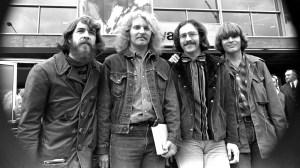
Creedence Clearwater Revival -
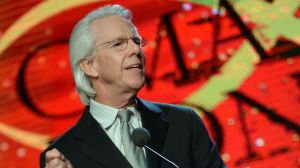
NASHVILLE, TN – Musician Jim Ed Norman speaks onstage during the GMA Honors Celebration and Hall of Fame Induction at the Allen Arena at Lipscomb University on April 29, 2014 in Nashville, Tennessee. (Photo by Rick Diamond/Getty Images for GMA) -
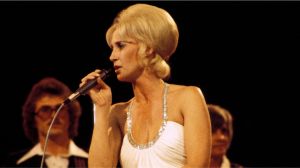
UNITED KINGDOM – WEMBLEY EMPIRE POOL Photo of Tammy WYNETTE, performing live onstage at the Country Music Festival (Photo by Andrew Putler/Redferns) -
UNSPECIFIED – CIRCA 1970: Photo of Stoney Cooper Photo by Michael Ochs Archives/Getty Images