On this day (May 18) in 1974, Ray Stevens started a three-week run at No. 1 on the Billboard Hot 100 with “The Streak.” Streaking, running naked through public places, was a popular prank in the 1970s. Stevens started working on the song when he first heard about the practice. Then, when it became more widespread, he finished the single and released it. One of the most high-profile streakers bared it all at the Oscars less than a week after the single hit the airwaves, likely boosting its popularity.
Stevens released “The Streak” in February 1974 as the lead single from his album Boogity Boogity. It quickly became an international crossover hit. Along with its run at the top of the Hot 100, it reached No. 3 on the country chart. It also topped the charts in Canada, the United Kingdom, and New Zealand.
Videos by American Songwriter
Ray Stevens Pulled “The Streak” from Headlines
“The Streak” was almost as popular as streaking at the time. While incidents of an individual running naked through a public place go back hundreds of years, it became a national fad in the 1970s. By the time Stevens released this hit, college campuses across the country were competing for streaking records. Two years earlier, students at Notre Dame hosted a Streakers’ Olympics. Major media outlets, including Time magazine, covered the fad, with many calling it an epidemic.
According to Songfacts, one of these articles inspired Ray Stevens to write “The Streak.” He first learned about streaking in a magazine article. He immediately thought it would make a great novelty song. So, he wrote a few notes about it and decided he’d finish writing the song later. When the fad became more prominent and media coverage grew, he knew it was time to act.
He finished the song, took it to the studio, and cut it. Then, he took it to a Nashville radio station. The station got a positive response from the song and kept playing it.
“There were about a dozen other records about streaking on the market before I could get mine out, and I was pretty fast,” Stevens said. “I wrote the song the minute I heard about streaking, and got it in the studio and cut it.”
The Stunt That Helped Make “The Streak a Hit”
The 1974 Academy Awards took place five days after Ray Stevens released “The Streak.” That night, Robert Opel, an activist, art gallery owner, and English teacher, ran naked across the awards show stage behind co-host David Niven. The stunt was just one of many Opel pulled as part of an ongoing performance art piece.
Niven’s on-air comment summarizes how widespread streaking was at the time. “Well, ladies and gentlemen, that was almost bound to happen,” he said, according to Entertainment Weekly. “But isn’t it fascinating to think that probably the only laugh that man will ever get in his life is by stripping off and showing his shortcomings?”
The official story is that Opel posed as a journalist to get into the awards show. Then, cut his way through an expensive, seamless curtain and ran across the stage. However, some claim that the stunt was planned.
A Planned Stunt?
Robert Metzler, who served as the business manager and “general troubleshooter” at the Oscars for more than four decades, spoke to the Los Angeles Times about the incident. “I don’t think it was an accident. My wife was here for the dress rehearsals, and David Niven asked her out in the lobby if he could borrow her pen. She gave it to him, and he sat on a step out there and wrote his ad-lib remark about this fellow’s shortcomings,” he revealed. “Then, he told my wife how proud he was about this terse line he’d written. That was two hours before it happened,” he added.
Metzler also pointed out how overzealous the security at the Academy Awards could be. He noted a time when Frank Sinatra was turned away for not having the proper sticker on his windshield. One year, Oscar-winning Jennifer Jones was carried out by security because she didn’t have an access badge. Opel was not apprehended by security or arrested.
No matter what the truth of the matter is, Opel’s stunt made headlines across the United States and added to the general public’s fascination with streaking. This helped boost the popularity of “The Streak,” leading to Ray Stevens ’ second and final No. 1 single.
Featured Image by David Redfern/Redferns/Getty Images
-
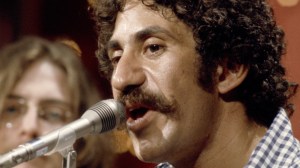
MIDNIGHT SPECIAL — Episode 27 — Aired 7/27/73 — Pictured: (l-r) Maury Muehleisen and Jim Croce perform — Photo by: Gary Null/NBCU Photo Bank -
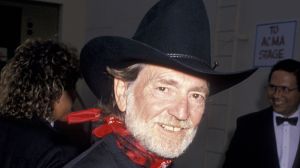
Musician Willie Nelson attends 24th Annual Academy of Country Music Awards on April 10, 1989 at Disney Studios in Burbank, California. (Photo by Ron Galella, Ltd./Ron Galella Collection via Getty Images) -
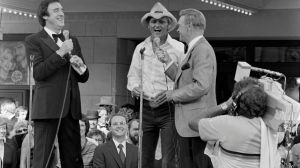
Jim Nabors (L) and Jerry Reed (C) appear onstage during a screening at the Paramount Theatre in Austin, Texas, on July 11, 1982. (Photo by Ken Vaughan/WWD/Penske Media via Getty Images) -

Steve Gulley of Mountain Heart and Grasstowne, September 20, 1962 — August 18, 2020. (Photo courtesy of Facebook) -
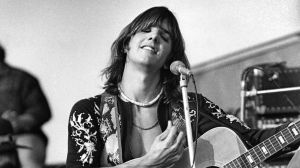
LIVERMORE, CA – Gram Parsons of The Flying Burrito Brothers performs onstage at The Altamont Speedway on December 6, 1969 in Livermore, California. (Photo by Robert Altman/Michael Ochs Archives/Getty Images) -
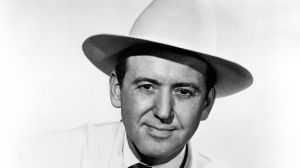
American musician Red Foley poses for a portrait circa 1955. (Photo by Michael Ochs Archives/Getty Images)