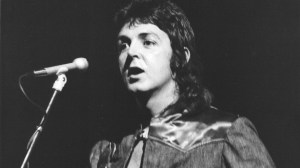
Seeing the forest for the trees can be difficult for anyone elbows deep in a project bigger than themselves, let alone the four musicians who found themselves at the peak of rock ‘n’ roll stardom in the late 1960s. The only thing more impressive and scrutinized than the first tidal wave of Beatlemania in the middle of the decade was The Beatles’ acrimonious split on the cusp of 1970. The end of the Fab Four was a massive blow in the pop culture realm, and everyone—from the band to their global audience—was looking for somebody to blame.
Unfortunately for Paul McCartney, he turned out to be the most useful scapegoat. Despite multiple factors and interpersonal dynamics playing into The Beatles’ dissolution, McCartney was often painted in opposition to the rest of the band. Especially since he was the odd man out when it came to disapproving of Allen Klein’s business dealings with The Beatles. But The Beatles was as much McCartney’s labor of love as anyone else’s, which made this blame more painful.
Videos by American Songwriter
We typically discuss The Beatles’ split in terms of its effect on music history. But off-stage, this messy breakup also saw the disintegration of years-long friendships, most of which started in childhood. In the years that followed, revisiting this tumultuous period in his life proved too painful for McCartney. Decades later, filmmaker Peter Jackson helped McCartney see the band—and himself—in a new light.
Paul McCartney Said That the Documentary Helped Reframe His Position in the Band
After years of hearing narratives that spun Paul McCartney as the reason for The Beatles’ downfall, the musician shied away from revisiting that time in his life. That was despite his having one of the most impressive and influential careers in rock ‘n’ roll history. Speaking to Peter Jackson in the 2021 documentary Get Back, McCartney said that before watching the filmmaker’s footage of their time in the studio, McCartney worried he had been “too bossy.”
He continued, “I had kind of ended up buying into this idea that, you know, ‘Poor old other three,’ and I’m just bossing them around. But when I saw the film, I’m thinking, ‘No, I’m not. It’s okay. It’s just us in the studio, and I’m not bossing them, everyone’s kind of happy to work.’ So, it was a big relief for me, actually. It made me feel really good about that whole period.”
Speaking to Dana Carvey in 2022, McCartney said watching Get Back “was kind of magical for me because that period had, in my memory, had always been a little bit dark because it was to do with The Beatles breaking up.” McCartney recalled telling Jackson that he didn’t like the Let It Be documentary because of how “depressing” it was to watch the band on the cusp of their split. Jackson assured McCartney the documentary would have a different feel, which it did.
McCartney told Carvey that watching old footage of him and Lennon joking around in the studio “really saved my life…I thought, ‘Oh, God. Yeah. That’s how it was. It was fantastic. I loved it. I really loved it.”
Photo by Samir Hussein/WireImage
More Features
-
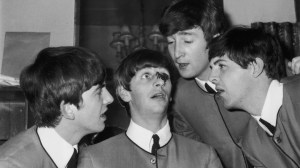
14th October 1963: The other Beatles, from left to right: George Harrison (1943 – 2001), John Lennon (1940 – 1980) and Paul McCartney, stare in disbelief at the plastic spider perched on drummer Ringo Starr's nose, backstage after their Sunday Night at the London Palladium show. (Photo by Peter Hall/Keystone/Getty Images) -
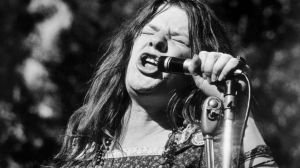
Rock music legend Janis Joplin performs at the free Woodstock Music and Art Fair. The festival took place on Max Yasgur's dairy farm, which he rented to event organizers for $75,000. About 450,000 people attended the three day concert, which turned into chaos due to the crowds, heavy rains, and traffic jams. It is nonetheless romantically remembered as a symbol of the liberal spirit of the hippie generation. (Photo by Henry Diltz/Corbis via Getty Images) -
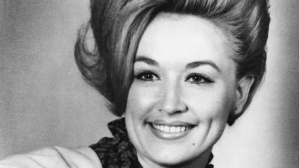
NASHVILLE – 1965: Country singer Dolly Parton poses for a portrait in 1965 in Nashville, Tennessee. (Photo by Michael Ochs Archives/Getty Images) -
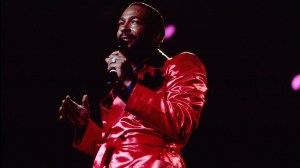
Photo by Gary Gershoff/Getty Images -
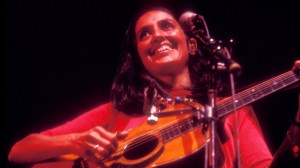
Photo by Christian Rose/Roger Viollet via Getty Images -
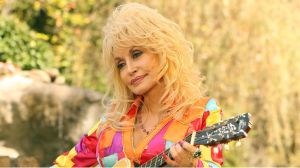
Photo courtesy of Facebook -
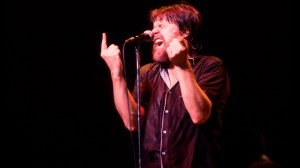
Musician Bob Seger performs at the Poplar Creek Music Theater, Hoffman Estates, Illinois, July 9, 1983. (Photo by Paul Natkin/Getty Images)