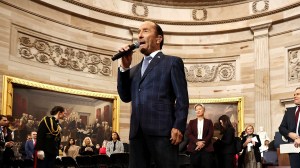
It is no secret that Paul McCartney and John Lennon had a competitive relationship. However, when we hear about this relationship, it’s typically through eyes that have not shared the same lived experience. In other words, it’s not being told through a professional musician’s perspective. That being so, facts are misinterpreted, moments are embellished, and ultimately, the foundational truth is partially lost. One musician with a similar disposition who once set the record straight on the matter was Paul Simon.
When it comes to the greatest songwriters of all time, Paul Simon is certainly one of them, and do you think he got there without a competitive drive? No, as competition is arguably embedded in every endeavor, obtaining a great ambitious mission. Now, that competition doesn’t necessarily need to be against another person, as that competition can also be simply against yourself.
Videos by American Songwriter
Regarding this drive, Simon states in the book Paul Simon: The Life by Robert Hilburn, “I wanted my own parade. That’s a competitive drive I had, for whatever reason, whether it was in my nature or it came from my family or from my neighborhood — probably a father thing.”
The Relatable Lens Looked Through by Paul Simon
Competition is not a bad thing. While some artists might view it as an adulterant to the pure artistic process, others view it as fuel on the fire. Simon, Paul McCartney, and John Lennon were seemingly of the latter school of thought. According to Simon, the two Beatles were better off for having this healthy creative rivalry.
“Simply wanting to make the best music can make you competitive,” said Simon. “You have no idea how competitive John Lennon was around Paul McCartney. When I first met them, I felt like someone had taken all the oxygen out of the room. I almost couldn’t breathe, they were so competitive, and that’s what made them so great. They wouldn’t settle for just good. That was me, too,” he added.
When it comes to creating truly great art, everyone has their process. Some folks like to keep it light and unserious; others, including the individuals above, wanted to have an edge and stakes that set the bar, and consequently, their aim, higher. We can all likely agree that this competition benefited all the parties mentioned in this article. While detriments might have come from it, they did in fact make history in part because of it.
Photo of Paul Simon Photo by Michael Ochs Archives/Getty Images
More Features
-
1986: Singer Mick Hucknall of Simply Red performing. (Photo by BSR Agency/Gentle Look via Getty Images) -
Leonard Cohen, who had a long relationship with Marianne Ihlen -
UNSPECIFIED – JANUARY 01: Wynonna Judd of The Judds performs on stage in 1989. (Photo by David Redfern/Redferns) -
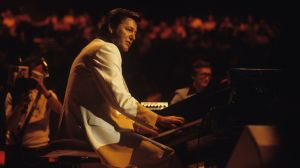
LONDON, UNITED KINGDOM – Pianist Floyd Cramer performs on stage at the Country Music Festival held at Wembley Arena, London in April 1979. (Photo by David Redfern/Redferns) -
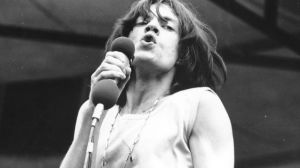
CIRCA 1972: Singer Mick Jagger of the rock and roll band "The Rolling Stones" performs onstage in circa 1972. (Photo by Michael Ochs Archives/Getty Images) -
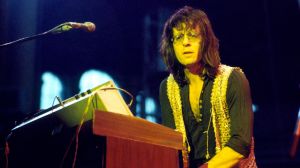
UNITED KINGDOM – AUGUST 05: ALEXANDRA PALACE FESTIVAL Photo of MANFRED MANNS EARTHBAND and MANFRED MANN, performing live onstage with Manfred Mann's Earth Band (Photo by David Redfern/Redferns)UNITED KINGDOM – AUGUST 05: ALEXANDRA PALACE FESTIVAL Photo of MANFRED MANNS EARTHBAND and MANFRED MANN, performing live onstage with Manfred Mann's Earth Band (Photo by David Redfern/Redferns) -
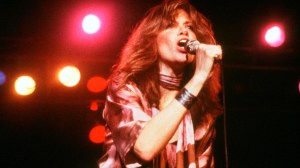
Carly Simon performs on stage, New York, April 1978. (Photo by Michael Putland/Getty Images)