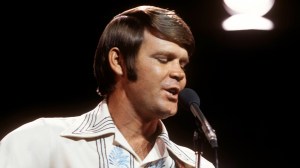
To become a legendary artist, you must have the talent. But it’s also crucial that you know when it is that a career pivot is necessary, lest you fall into a rut at an integral part of your recording career.
Elton John displayed the latter skill relatively early in his career. Sensing his music was becoming too ornate, he worked with his touring band on an earthier approach, leading to the 1972 smash Honky Chateau.
Videos by American Songwriter
Commercial Letdown
Some artists throughout music history have written and recorded music without much regard for how their songs might correlate to sales. Elton John, by his admission, has never been one of those artists. John wanted the pop music brass ring, which is why he wasn’t afraid to turn on a dime and change things up if needed.
John especially wanted success in the United States, where so much of the music he loved originated. In 1971, he enjoyed his singles’ breakthrough with the heartfelt ballad “Your Song”, which went to the Top 10 in both America and the UK.
His 1971 album Madman Across The Water was very much a studio creation, with John utilizing the orchestration of Paul Buckmaster to prop up singles “Tiny Dancer” and “Levon”. But neither turned into a big hit, and album sales stagnated. It was time for a change in approach.
French Cooking
John made the decision to record his next album with his touring band, with whom he’d developed a great rapport in recent years. He also decided they’d record the album not in a London studio, where they had to watch the clock, but on location where there’d be no pressure.
They chose the Château d’Herouville in France, a remote location that came equipped with state-of-the-art recording equipment. Bernie Taupin typed out lyrics and dropped them on John’s piano, John whipped up melodies, and the band worked up the arrangements on the fly. The album, titled Honky Chateau, was recorded in a matter of a couple of weeks in January 1972.
Heroic ‘Honky’
With Honky Chateau, Elton John made full use of his band’s various qualities. The massive hit single “Rocket Man” wouldn’t have soared so high without the gorgeous vocal harmonies they provided. Davey Johnstone’s mandolin work delivers chills on “Mona Lisas And Mad Hatters”.
John himself was at the top of his game as well, whether instrumentally (his ridiculously funky playing on “Honky Cat”) or vocally (the actorly touches he brings to “I Think I’m Going To Kill Myself”). The songwriting quality from Taupin and John also reached new heights on this record.
On top of its artistic brilliance, Honky Chateau proved that John’s gambit was wise from a commercial perspective. The album rocketed (pun intended) to the peak of the album charts in the United States. That’s a spot that Elton occupied on the next five albums he released.
(Photo by Michael Putland/Getty Images)
More Features
-
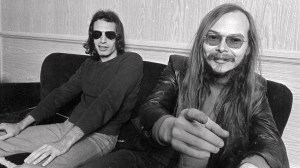
Steely Dan, 1976. Walter Becker en Donald Fagan. Albums Aja, Pretzel Logic, Royal Scam. Singers, songwriters, composers. -
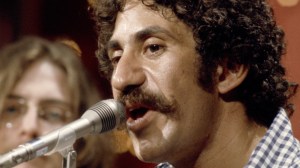
MIDNIGHT SPECIAL — Episode 27 — Aired 7/27/73 — Pictured: (l-r) Maury Muehleisen and Jim Croce perform — Photo by: Gary Null/NBCU Photo Bank -
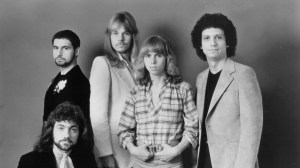
CIRCA 1977: Dennis DeYoung, Chuck Panozzo, James Young Tommy Shaw, John Panozzo of the rock quintet "Styx" pose for a portrait in circa 1977. (Photo by Michael Ochs Archives/Getty Images) -
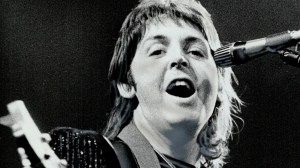
Photo by Doug Griffin/Toronto Star via Getty Images -
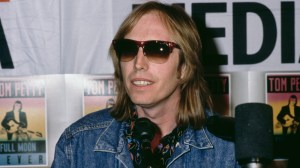
American singer, songwriter and musician Tom Petty (1950-2017) attends a press conference for his debut solo album 'Full Moon Fever', 1989. (Photo by Vinnie Zuffante/Getty Images) -

(Original Caption) A singer called Joni. Joni Mitchell, Canadian singer-songwriter, United Kingdom, 1968. The guitar-pickin' gal is Joni Mitchell, a long blonde haired Canadian folk singer. Pictured last night outside the Revolution club, Joni is here (until 1st October) for radio, television and concert appearances. Apart from concert appearances, 25 year old Joni will be heard on "Top Gear" on Radio One and "The Monday Show" on BBC 1. (Photo by © Hulton-Deutsch Collection/CORBIS/Corbis via Getty Images) -
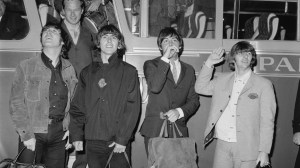
English rock band the Beatles arrive at London Airport from the USA, with their manager Brian Epstein (1934 – 1967, in coach doorway), 2nd September 1965. From left to right, John Lennon (1940 – 1980), George Harrison (1943 – 2001), Paul McCartney and Ringo Starr. (Photo by George Stroud/Express/Hulton Archive/Getty Images)