
Few would say that the 1960s were not an influential time in music. It was the decade in which rock and roll transformed into blues rock, hard rock, and even the early tinglings of heavy metal. Many who were alive during that decade say that “everything changed in the 1960s,” and that’s certainly true for music. Decades later, genres like grunge and alternative rock still boast echoes of influence from the 1960s era.
So what made the 1960s the most influential decade for rock music? To put it simply, it was the era when the genre (and its many subgenres) came into its own.
Videos by American Songwriter
Rock Music Started Its Many Evolutions in the 1960s
Think of the “greats” of 1960s rock music that remain influential today. There’s The Beatles, who were heavily inspired by Chuck Berry, Buddy Holly, and even Elvis Presley. The Rolling Stones formed because of Mick Jagger and Keith Richards’ shared love of Muddy Waters and Chuck Berry. Jimi Hendrix, before he was the rock guitar legend of the century, learned to play the ukulele by ear by playing along to Presley’s “Hound Dog”.
They all have one thing in common: inspiration and influence from 1950s rock and roll music and blues, and primarily Black musicians. It all started with the then-innovative sounds of rock and roll music. Which, by the 1960s, had spread across the world to the ears of young soon-to-be rock stars.
But it wasn’t just the predecessors of rock music that inspired a decade of innovation when it came to the genre. There were cultural, technological, and political elements at play. Electric guitars were becoming more accessible in the 1960s, to start. The culture globally, particularly in the US and UK, was rapidly changing as well. War raged on in Vietnam. The countercultural movement had formed rapidly, composed of youths who were sick of the state of the world. I can’t think of a better recipe for new, innovative, and passionately creative music than that.
There’s also a point to be made that after World War II, the US experienced an economic (and baby) boom of sorts. That brought radios and record players, and with it, more time to enjoy music. Most baby boomers were influenced by music heard during that era, and with the “prosperity” of the time in the 1960s, despite the raging Vietnam War, more young people were investing time into music.
In the end, a lot of factors contributed to making the 1960s the most influential and fast-evolving period of rock music. I’m certainly thankful for it.
Photo by David Redfern/Redferns
More Features
-
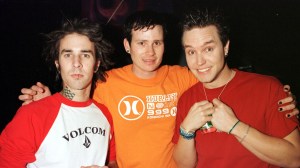
Blink 182 during MTV New Year's Eve Bash 2000 at MTV Studios in Times Square in New York City, New York, United States. (Photo by KMazur/WireImage) -

Photo by Adam Ritchie/Redferns -
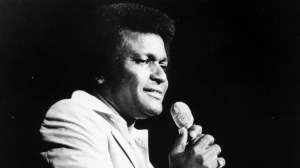
UNSPECIFIED – CIRCA 1970: Photo of Charley Pride Photo by Michael Ochs Archives/Getty Images -

English rock band Procol Harum posed outside the Centre Point office building at St Giles Circus in London in May 1967. Members of the group are, from left, Ray Royer, Bobby Harrison (1939-2022), David Knights, Gary Brooker (1945-2022) and Matthew Fisher. (Photo by Ivan Keeman/Redferns) -
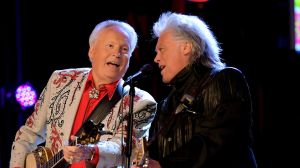
NASHVILLE, TENNESSEE – Buck Trent performs with Marty Stuart and his Fabulous Superlatives at the second of three Marty Stuart Artist-in-Residence Shows at Country Music Hall of Fame and Museum on September 18, 2019 in Nashville, Tennessee. (Photo by Jason Kempin/Getty Images for Country Music Hall of Fame and Museum) -
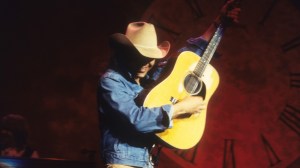
MINNEAPOLIS, MN – JULY 11: Dwight Yoakam performs at Northrup Auditorium at the University of Minnesota in Minneapolis, Minnesota on July 11, 1993. (Photo by Jim Steinfeldt/Michael Ochs Archives/Getty Images)