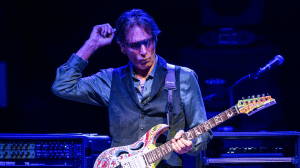
When Stevie Nicks and Lindsey Buckingham were writing the songs for Buckingham Nicks back in the early 70s, they didn’t have access to a fancy recording studio at first.
Luckily, for them, Buckingham’s dad, Morris H. Buckingham, was the president of the Alexander-Ballert Company of San Francisco, which produced roasted coffee beans. He was willing to let the duo use a room in his coffee plant in Palo Alto to record and write music as they needed.
Videos by American Songwriter
As Nicks explained in a Q and A, she and Buckingham would be up in the early morning hours making music. “So when every all the workers would go home at 6:30, Lindsey and I’d go up there about 9 o’clock and we’d stay until 3 o’clock in the morning,” she shared.
It was there, in that “creepy coffee plant” as she explained, that they would record songs using a four-track Ampex tape recorder. Sometimes, when Nicks wrote a song, she would leave a cassette for Buckingham by their coffee pot at home with a note, telling him that he was allowed to produce the song but not change anything.
“I was never open to writing with Lindsey or anyone else because I felt that the writing of a song was very selfishly my own,” Nicks told fans. “You know, I wanted to go in the room, light the incense, I wanted to cry, I didn’t really want to share that with anyone.”
The Long Road to Success Before Fleetwood Mac
In 1971, after the breakup of their band, Fritz, Nicks and Buckingham made the decision to move to L.A. and pursue music as a duo. A few years later, after achieving minimal success with their debut project, Buckingham Nicks, the duo reached a new breaking point when their label, Polydor, dropped them.
Then, in 1975, things changed when they joined Fleetwood Mac at the request of the band’s drummer, Mick Fleetwood.
“But up until that point I had been thinking of quitting it all and going back to school ’cause I was sick of being miserable and I hate being poor,” Nicks said in a 1994 interview. “When they [Polydor] dropped that record, we were completely depressed. Then three months later Mick Fleetwood called.”
In 1976, the band would get their first No. 1 album on the Billboard Hot 100 chart with their self-titled album, following the success of songs like “Rhiannon”.
Photo by: Richard E. Aaron/Redferns
More Features
-
Portrait of American R&B & Disco singer Minnie Riperton (1947 – 1979), Los Angeles, California, 1975. (Photo by Steve Schapiro/Corbis via Getty Images) -
Brielpoort – Deinze – Belgium – 13/12/1985 Simple Minds: Jim Kerr Photo gie Knaeps -
American country singer Jeannie C. Riley performs at the International Festival of Country Music at Wembley Arena, London, UK, 12th April 1982. (Photo by Keystone/Hulton Archive/Getty Images) -
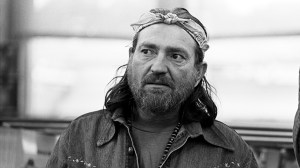
Country music singer-songwriter Willie Nelson promotes his "Red Headed Stranger" album at Peaches Records and leaves his footprints in concrete on October 28, 1975 in Atlanta, Georgia. (Photo by Tom Hill/Getty Images) -
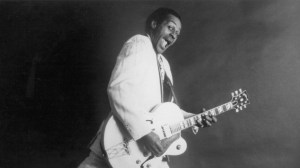
CIRCA 1958: Rock and roll musician Chuck Berry poses for a portrait holding his Gibson hollowbody electric guitar in circa 1958. (Photo by Michael Ochs Archives/Getty Images) -
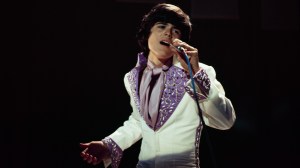
UNSPECIFIED – JANUARY 01: Donny Osmond of The Osmonds performs on stage circa 1972. (Photo by David Redfern/Redferns) -
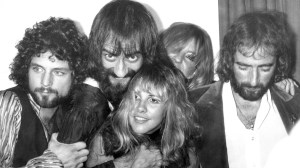
LOS ANGELES – SEPTEMBER 1: Fleetwood Mac (L-R Stevie Nicks, Lindsey Buckingham, Christine McVie, John McVie and Mick Fleetwood) backstage at the Los Angeles Rock Awards on September 1, 1977 in Los Angeles, California. (Photo by Richard Creamer/Michael Ochs Archives/Getty Images)