Joni Mitchell is a songwriter who always minds dualities, whether exploring the beauty of heartache or including seedier elements in a love song. “A Case of You” can be sentimental if you don’t mind her walking away from the subject of her affection in a sardonic huff in the first verse. “My Old Man” is a sweet testament to domesticity while also being a subtle jab at the idea of marriage validating such living arrangements in any meaningful way.
Another track in her love-adjacent song repertoire was one Mitchell didn’t even enjoy that much when it first came out, despite its seemingly heartfelt vulnerability.
Videos by American Songwriter
Joni Mitchell Called This Love Song A “Throwaway”
Four years after releasing Ladies of the Canyon, which included one of her most well-known hits, “Big Yellow Taxi,” Joni Mitchell released her sixth and what would come to be the most commercially successful album of her entire career, Court and Spark. The 11-track album blends Mitchell’s early folk sounds with jazz, soft rock, and honky tonk. For the second track, “Help Me,” Mitchell implemented dreamy jazz chords and her inimitable vocal delivery.
Help me, I think I’m falling in love again. When I get that crazy feeling, I know I’m in trouble again, Mitchell begins. The song’s romantic sentiment and groove made it an instant fan favorite and worthy inclusion in the list of Mitchell love songs. But it certainly wasn’t love at first sight for her.
In a 1988 interview with Timothy White, Mitchell called “Help Me” a “throwaway song, but it was a good radio record. My record companies always had a tendency to take my fastest songs on albums for singles, thinking they’d stand out because they did on the LPs. Meantime, I’d feel that the radio is crying for one of my ballads!”
Her Idea Of Radio-Worthy Music Differed From Record Execs
Joni Mitchell might consider her second Court and Spark single, “Help Me,” to be a throwaway track, but the stats on this love song speak for themselves. The jazzy ode to a rambler and a gambler and a sweet-talking ladies’ man became the Canadian singer-songwriter’s biggest hit single, peaking at #1 on the Easy Listening chart. It was also Mitchell’s only Billboard Top 10 hit. The song reached No. 7 in June 1974, four months after its release.
Mitchell likely had no way of knowing “Help Me” would take off the way it did, but even if she had, she said it wouldn’t have mattered. “I have nothing to do with the choosing of tracks for singles,” she told Timothy White. “Generally speaking, I don’t agree with the selections. There are tracks that never get played on the radio that I regret won’t get that exposure. So, I like the idea of well-received singles and am sorry when they don’t get a chance to happen.”
If Mitchell had her way, the lead singles from Court and Spark would have been “Car on the Hill,” “Trouble Child,” and “Just Like This Train.” She added that although she enjoyed the song “Big Yellow Taxi,” she wasn’t necessarily a fan of her version of it. “Ladies’ Man,” from Mitchell’s pop-oriented 1982 record, Wild Things Run Fast, was “another song radio missed,” Mitchell said. “And it’s a song that Aretha Franklin could have sung.”
Photo by Watal Asanuma/Shinko Music/Getty Images
More Behind The Song
-
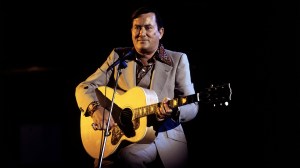
DON GIBSON, Country Sänger, 70er. (Photo by kpa/United Archives via Getty Images) -

Photo by Hulton Archive/Getty Images -

THE TONIGHT SHOW WITH JAY LENO — — Pictured: Musician Trace Adkins performing on April 8, 1998 — (Photo by: Margaret Norton/NBCU Photo Bank/NBCUniversal via Getty Images via Getty Images) -

CIRCA 1960 Rock and Roll singer Dion DiMucci of "Dion And The Belmonts" poses for publicity photo after going solo circa 1960. (Photo by: Michael Ochs Archives/Getty Images) -

LONDON, UNITED KINGDOM – JANUARY 11: Debbie Harry of Blondie performs on stage at Hammersmith Odeon on January 11th, 1980 in London United Kingdom. (Photo by Pete Still/Redferns) -
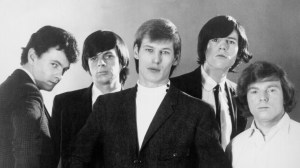
LONDON – 1965: Rock band "Them" featuring Van Morrison (right) and an ever changing line up of session musicians pose for a portrait in 1965 in London, England. (Photo by Michael Ochs Archives/Getty Images) -
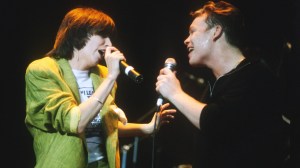
Pretenders, Chrissie Hynde and UB40, T/W, Torhout/Werchter, Belgium, 5th July 1986. (Photo by Goedefroit Music/Getty Images)