There have been countless moments throughout rock ‘n’ roll history that were one split-second decision away from never happening. Bands that almost never formed. Musicians that almost called it quits. Songs almost left on the cutting room floor. For Rod Stewart, he encountered one of his most fortuitous brushes with fate when he decided—against his record label’s judgment, and indeed, partially his own—to include “Maggie May” on his third album.
As Stewart explained during a 2013 appearance on the Howard Stern Show, he was in the process of making Every Picture Tells A Story, but he needed one more track to complete the album. Mercury, his label, asked if he had any songs on the back burner he could possibly use. Stewart did: “Maggie May”, a song he wrote about losing his virginity to an older woman at the Beaulieu Jazz Festival.
Videos by American Songwriter
“I didn’t think it was much good,” Stewart admitted. “It was just so rambling. It didn’t have a catch chorus like you needed.” Neither Stewart nor Mercury were ready to find out just how wrong they both were.
“Maggie May” Became Rod Stewart’s Signature, Career-Defining Song
Rod Stewart drew from several influences—in varying degrees of sordidness—while writing his future hit single. First, he began singing an old Liverpudlian folk tune about a prostitute named Maggie Mae. (He had heard The Beatles reference the song in “Let It Be” the previous year.) “As I sang, the idea of a hooker popped into my head, then the jazz festival when I was sixteen, and then losing my virginity. It all flooded back, and I started coming up with words,” he explained during a 2015 interview with The Wall Street Journal.
Through Mercury, Stewart released “Maggie May” as the B-side to the lead single off Every Picture Tells A Story, “Reason To Believe”, in July 1971. The A-side didn’t perform especially well in the United States, peaking at No. 62 on the Billboard Hot 100. However, once radio DJs started playing the B-side, “Maggie May” took off, topping the charts in the States. (In Stewart’s native United Kingdom, “Reason To Believe” and “Maggie May” topped the charts as a double A-side, à la The Beatles and, later, Queen.)
Despite trepidations from both the artist and his label, “Maggie May” was a smash hit. Stewart later recalled, “At first, I didn’t think much of [it]. I guess that’s because the record company didn’t believe in the song. I didn’t have much confidence then; I figured it was best to listen to the guys who knew better. What I learned is that sometimes they do, and sometimes they don’t.”
“Maggie May” was certainly one of the latter times. The song became synonymous with Stewart’s musical legacy, becoming a signature song and earning a double-platinum certification in the U.S.
Photo by Fin Costello/Redferns
More Behind The Song
-
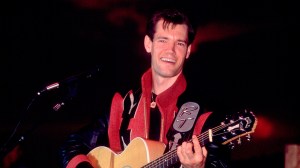
American Country musician Randy Travis plays guitar as he performs onstage at the Wisconsin State Fair, Milwaukee, Wisconsin, July 15, 1988. (Photo by Paul Natkin/Getty Images) -
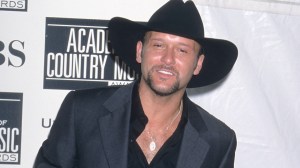
UNIVERSAL CITY, CA – MAY 3: Singer Tim McGrawl attends the 35th Annual Academy of Country Music Awards on May 3, 2000 at the Universal Amphitheatre in Universal City, California. (Photo by Ron Galella, Ltd./Ron Galella Collection via Getty Images) -
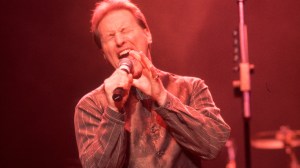
American country and western music singer Collin Raye performs at the Rialto Theater in Joliet, Illinois, November 25, 1996. (Photo by Paul Natkin/Getty Images) -
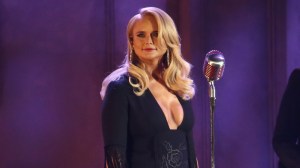
NASHVILLE, TN – NOVEMBER 08: (FOR EDITORIAL USE ONLY) Miranda Lambert performs onstage during the 51st annual CMA Awards at the Bridgestone Arena on November 8, 2017 in Nashville, Tennessee. (Photo by Terry Wyatt/FilmMagic) -
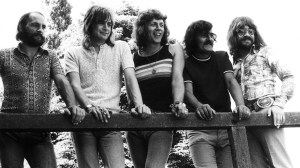
English pop group The Moody Blues, group portrait, 1972, (L-R) Mike Pinder, Justin Hayward, John Lodge, Ray Thomas and Graeme Edge. (Photo by Michael Putland/Getty Images) -
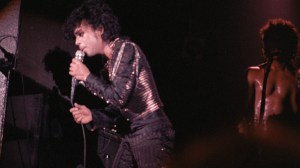
MINNEAPOLIS – AUGUST 3: Prince performs a benefit concert for the Minnesota Dance Theatre at First Avenue nightclub in Minneapolis, Minnesota on August 3, 1983. (Photo by Jim Steinfeldt/Michael Ochs Archives/Getty Images) -
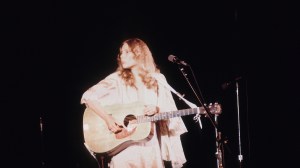
LOS ANGELES – 1974: Singer Joni Mitchell performs in 1974 in Los Angeles, California. (Photo by Donaldson Collection/Michael Ochs Archives/Getty Images) -
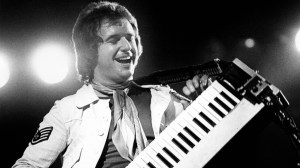
DETROIT, USA – 1st FEBRUARY: Gary Wright performs live on stage in Detroit, Michigan in February 1976. (Photo by Fin Costello/Redferns)