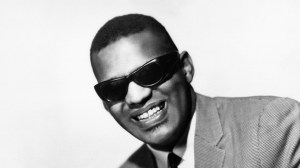
On this day (November 17) in 2003, revered country music songwriter Don Gibson, 75, died of natural causes at Baptist Hospital in Nashville. Dubbed the “Sad Poet”, Gibson favored simple expressions of heartbreak and melancholy in his lyrics. Between 1956 and 1980, he sent more than 80 songs to the U.S. country charts, including genre-defining chart-toppers like “Oh Lonesome Me” (1958) and “I Can’t Stop Loving You” from the same year. Multiple artists, including Ray Charles have covered the latter.
Today, we’re diving into the remarkable legacy of Don Gibson on the 23rd anniversary of his passing.
Videos by American Songwriter
Don Gibson Sought Refuge in Country Music
On April 3, 1928, Donald Eugene Gibson was born into a family of sharecroppers in Shelby, North Carolina. A painfully shy child, he loathed farm work from a young age and vowed to get as far away from agriculture as possible.
Gibson stopped attending school regularly after second grade, finding solace in a local pool hall that featured country music. He bought a cheap guitar at age 14 and went to work teaching himself to play the songs of Red Foley and Tennessee Ernie Ford.
Through a friend, Gibson also discovered the work of jazz guitarist Django Reinhardt, prompting him to experiment with different styles as a teenager.
Professional Beginnings
Don Gibson got his start in a band called the Sons of Soil. They built up a regional following before recording for Mercury in 1949.
In 1950, he took over the band and renamed them Don Gibson & His King Cotton Kinfolks. Meanwhile, Gibson continued to perform on local radio and at Esslinger’s Club in Tennessee. After Acuff-Rose co-founder Wesley Rose caught a performance at the venue, he offered the young musician a songwriting contract. Gibson accepted only on the condition that he was also allowed to record music.
His Breakthrough
Initially, Don Gibson made several unsuccessful recordings for Columbia. However, he continued writing, finally breaking through in 1955 with the ballad “Sweet Dreams.”
Gibson’s own recording of the song reached the Top 10, but was overshadowed by Faron Young’s rendition, which climbed to No. 2. Patsy Cline would also score a Top 5 hit with “Sweet Dreams” in 1963. Still, this marked the first time Nashville began to take notice of Gibson’s songwriting talents.
According to lore, Gibson wrote his two career-making hits — “Oh, Lonesome Me” and “I Can’t Stop Loving You” — in the same afternoon. The young wordsmith was living in a trailer park in Knoxville, Tennessee, and put pen to paper after seeing his vacuum cleaner repossessed.
“When I wrote those two songs, I couldn’t have been any closer to the bottom,” he once said.
In 1957, Gibson traveled to Nashville to record “Oh, Lonesome Me” and “I Can’t Stop Loving You” for RCA Victor with legendary producer Chet Atkins.
The former spent eight non-consecutive weeks at the top of the U.S. country chart, also peaking at No. 8 on the pop chart. It was also one of the earliest examples of the glossy “Nashville Sound” that began to overtake country music in the late 1950s and ’60s.
“Oh Lonesome Me” kicked off a string of RCA hits for Gibson, including “Blue Blue Day” (1958), “Who Cares” (1959), “Sea of Heartbreak” (1961), and “Rings of Gold” (1969).
Don Gibson Left Behind a Legacy
Don Gibson’s career fell off a bit in the 1960s as he spiraled into alcohol and drug use. However, he regained his footing in the 1970s, charting hits like “Country Green”, Woman (Sensuous Woman)”, “One Day at a Time” and “Bring Back Your Love to Me”.
A member of the Grand Ole Opry, he gained entry into the Nashville Songwriters Hall of Fame in 1973. In 2001, he became a member of the Country Music Hall of Fame
Featured image by Michael Ochs Archives/Getty Images
-
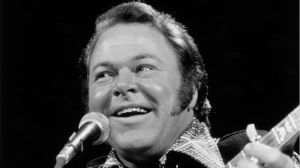
circa 1975: American country musician Roy Clark sings and plays banjo at a microphone on stage during a concert performance. Clark was co-host of the country music variety television series, 'Hee-Haw.' (Photo by Fotos International/Getty Images) -

NASHVILLE, TENNESSEE – APRIL 28: Dann Huff performs onstage during the Musicians Hall of Fame & Museum Concert and Induction Ceremony at The Fisher Center for the Performing Arts on April 28, 2026 in Nashville, Tennessee. (Photo by Terry Wyatt/Getty Images) -
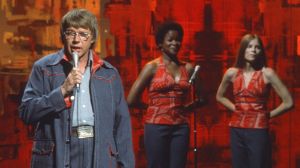
THE TONIGHT SHOW STARRING JOHNNY CARSON — Pictured: C.W McCall during a performance on May 20th, 1975 — (Photo by: Ron Tom/NBCU Photo Bank/NBCUniversal via Getty Images via Getty Images) -
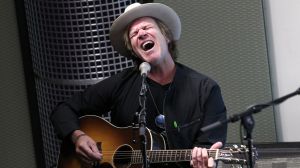
NASHVILLE, TN – SEPTEMBER 23: Singer-songwriter Jack Ingram performs during the "America's Most Wanted" special at the Sirius XM Studios for SiriusXM's Outlaw Country channel on September 23, 2016 in Nashville, Tennessee. (Photo by Terry Wyatt/Getty Images for SiriusXM) -
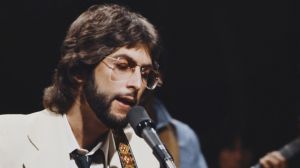
American musician Stephen Bishop performs on stage, New York, USA, 1978. (Photo by Michael Putland/Getty Images)