
Societal expectations of women and female stereotypes have informed art since time immemorial, and classic country is certainly no exception. Whether through patriarchal consequence or the age-old folk tradition of repeating stories with new characters, women have come to define several country tropes, some notably more flattering than others.
The beautiful girl of the singer’s dreams, a lover gone too soon, a no-good cheater, the forlorn mother: these common characterizations reflected society’s perception of a woman’s place and value in the world. But starting in the 1960s, second-wave feminism began pushing back against these beliefs.
Videos by American Songwriter
The subsequent rising popularity of classic country songs that defied female stereotypes (and pushback against those that didn’t) reflected women’s eagerness to break free from these molds.
“It Wasn’t God Who Made Honky Tonk Angels” by Kitty Wells
If there were any indication that women were tired of the unfaithful floozie stereotype, it’s Kitty Wells’ meteoric rise to the top of the charts with the classic country single “It Wasn’t God Who Made Honky Tonk Angels.” The first No. 1 Billboard country hit for a female artist was a direct response to Hank Thompson’s “The Wild Side of Life,” which described a woman who was lured by “the glamor of the gay nightlife” where “wine and liquor flow.”
“It’s a shame that all the blame is on us women,” Kitty Wells sings in her response song from 1952. “It’s not true that only you men feel the same. From the start, most every heart that’s ever broken was because there always was a man to blame.”
“Harper Valley P.T.A.” by Jeannie C. Riley
Jeannie C. Riley’s 1968 classic country track, “Harper Valley P.T.A.”, pushes back against female stereotypes surrounding promiscuity and suggestive clothing, exemplifying the adage that people living in glass houses shouldn’t be throwing stones. The song tells the story of a mother whose daughter comes home from school with a note that condemns the mother for wearing short skirts and hanging out with men.
The narrator arrives at the PTA meeting that afternoon, takes the podium, and berates the parents for judging her when she had plenty of reasons to judge them, too. “Then you have the nerve to tell me you think that as a mother I’m not fit,” she sings in the last verse. “Well, this is just a little Peyton Place, and you’re all Harper Valley hypocrites.”
“The Pill” by Loretta Lynn
Despite not considering herself a feminist and having six children (four of whom were born before she was 20 years old), Loretta Lynn changed the narrative around women’s reproductive health forever with the release of her 1975 track, “The Pill”. Because birth control was still very much taboo, particularly in the more conservative and Christian world of country music, “The Pill” quickly became one of Lynn’s most controversial tracks.
Nevertheless, her song helped women in rural communities realize that they did have a say in their bodily autonomy if they wanted it. “The old maternity dress I’ve got is going in the garbage. The clothes I’m wearing now won’t take up so much yardage. Miniskirts, hot pants, and a few fancy little frills, yeah, I’m making up for all those years since I’ve got the pill.”
“Stand By Your Man” by Tammy Wynette
Other classic country songs did little to challenge female stereotypes, and, according to some critics, even perpetuated them. One such divisive song is Tammy Wynette’s “Stand by Your Man” from 1968. Some claimed Wynette’s song, which she considered nothing more than a “pretty love song,” was regressive and encouraged women to stay with men who were unfaithful, toxic, or otherwise being an unsupportive and lousy partner.
Wynette always pushed back against this criticism. She wrote in her autobiography, “I don’t see anything in that song that implies a woman [should] sit home and raise babies while a man goes out and raises hell. To me, it means: be supportive of your man, show him you love him and you’re proud of him, and be willing to forgive him if he doesn’t always live up to your image of what he should be.”
Photo by William Lovelace/Daily Express/Hulton Archive/Getty Images
More The List
-
LOS ANGELES – AUGUST 1977: R and B group The Emotions (L-R Pamela Hutchinson, Wanda Hutchinson and Sheila Hutchinson) pose for a portrait on the set of the TV show 'Soul Train' in August 1977 in Los Angeles, California. (Photo by Michael Ochs Archives/Getty Images) -
Bob Dylan (b. 1941) the cult American singer and songwriter, best known for his folk protest music during the 1960's. (Photo by © Hulton-Deutsch Collection/CORBIS/Corbis via Getty Images) -
THE TONIGHT SHOW WITH JAY LENO — Tim McGraw — Air Date 05/15/2003 — Episode 2490 — Pictured: (l-r) Musical guest Tim McGraw performs on May 15, 2000 (Photo by Paul Drinkwater/NBCU Photo Bank/NBCUniversal via Getty Images via Getty Images) -
MEXICO CITY, MEXICO – OCTOBER 27: Singer Steven Tyler of Aerosmith performs onstage at Arena Ciudad de Mexico on October 27, 2016 in Mexico City, Mexico. (Photo by Victor Chavez/WireImage) -
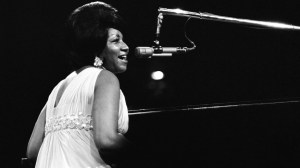
Photo by Jack Robinson/Getty Images -
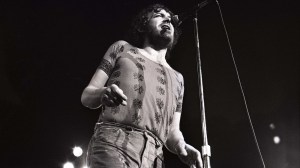
NITED STATES – JANUARY 01: Photo of Joe COCKER; Joe Cocker performing on stage (Photo by Robert Knight Archive/Redferns) -
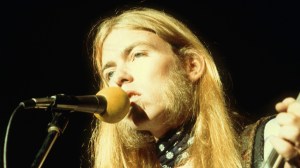
INGLEWOOD, CA – NOVEMBER 07: Gregg Allman live in concert with the Allman Brothers Band at The Forum on November 7, 1974 in Inglewood, California. (Photo by Jeffrey Mayer/Getty Images) -
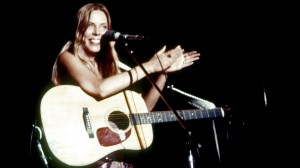
BERKELEY, CA – MARCH 1: Joni Mitchell performs at the Community Center in Berkeley, California on March 1, 1974. (Photo by Larry Hulst/Michael Ochs Archives/Getty Images)